

4 zecchini – Malta
Add to wishlist
Malta
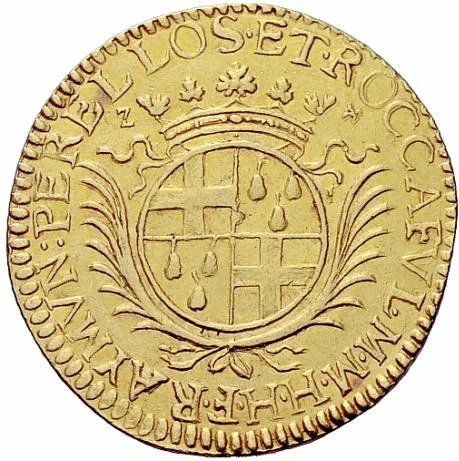
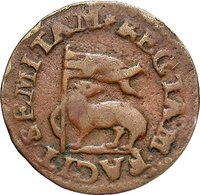
Obverse
Description:
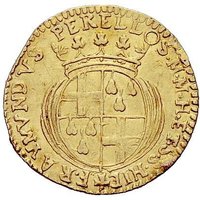
Crowned arms amid palms.
Inscription:
F·RAYMVN:PERELLOS·ET·ROCAFVL·M·M·H·H·
Script: Latin
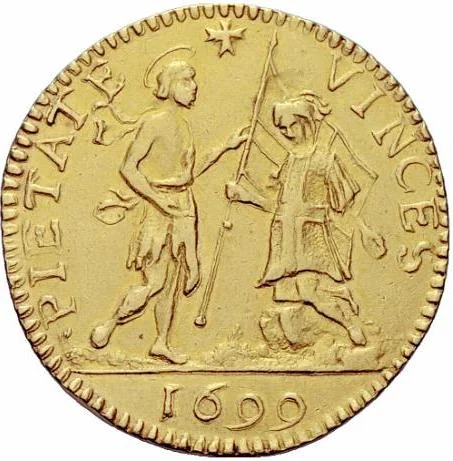
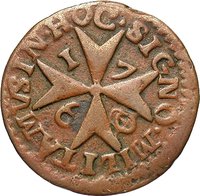
Reverse
Description:
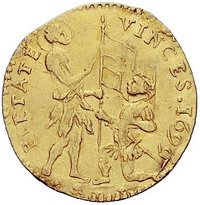
St. John bestows banner upon kneeling Grand Master.
Inscription:
PIETATE VINCES
1699
1699
Script: Latin
Edge
Mintings
| Year | Mint Mark | Mintage | Quality | Collection |
|---|---|---|---|---|
| 1699 | — | — | ||
| 1705 | — | — |
Historical background
In 1699, Malta’s currency situation was complex and challenging, characterized by a chaotic circulation of diverse foreign coins. As a key trading hub in the Mediterranean under the rule of the Knights of St. John, the island saw a constant influx of currencies from commercial partners across Europe and the Barbary Coast. The most commonly used coins included Spanish pieces of eight, Venetian sequins, French écus, and Turkish piastres, creating a marketplace where merchants and officials had to constantly assess both the metallic content and the fluctuating exchange rates of this multinational coinage.
This monetary pluralism led to significant problems, including widespread clipping and counterfeiting of coins, which eroded trust in transactions. The Knights’ own mint struggled to assert authority, as its limited issues of copper grani and silver scudi were insufficient to dominate the money supply. Consequently, the intrinsic value of a coin (its weight in silver or gold) often diverged from its official face value, leading to confusion, arbitrage, and economic instability. The situation was exacerbated by the fact that the best full-weight coins tended to be hoarded or exported, leaving the degraded and inferior coins in common circulation—a classic example of Gresham’s Law.
Recognizing the detrimental impact on commerce and public finance, the Order undertook a significant monetary reform in 1699. Grand Master Ramon Perellos y Roccaful initiated a major recoinage, calling in the old, debased silver pieces and issuing new, full-weight silver scudi bearing his effigy. This reform aimed to standardize the currency, restore confidence, and solidify the Knights' fiscal sovereignty. While not an instant cure, the 1699 recoinage marked a pivotal attempt to bring order to Malta’s monetary system, stabilizing the economy at the close of the 17th century.
This monetary pluralism led to significant problems, including widespread clipping and counterfeiting of coins, which eroded trust in transactions. The Knights’ own mint struggled to assert authority, as its limited issues of copper grani and silver scudi were insufficient to dominate the money supply. Consequently, the intrinsic value of a coin (its weight in silver or gold) often diverged from its official face value, leading to confusion, arbitrage, and economic instability. The situation was exacerbated by the fact that the best full-weight coins tended to be hoarded or exported, leaving the degraded and inferior coins in common circulation—a classic example of Gresham’s Law.
Recognizing the detrimental impact on commerce and public finance, the Order undertook a significant monetary reform in 1699. Grand Master Ramon Perellos y Roccaful initiated a major recoinage, calling in the old, debased silver pieces and issuing new, full-weight silver scudi bearing his effigy. This reform aimed to standardize the currency, restore confidence, and solidify the Knights' fiscal sovereignty. While not an instant cure, the 1699 recoinage marked a pivotal attempt to bring order to Malta’s monetary system, stabilizing the economy at the close of the 17th century.
✨ Legendary