

1 Guinea – England
United Kingdom
Context
Years: 1686–1688
Country: United Kingdom 
Issuer: England 
Ruler: James II
Currency:
(1158—1970)
Demonetized: Yes
Material
References
KM: #Click to copy to clipboard459.1
Numista: #12948
Value
Bullion value: $1285.36
Obverse
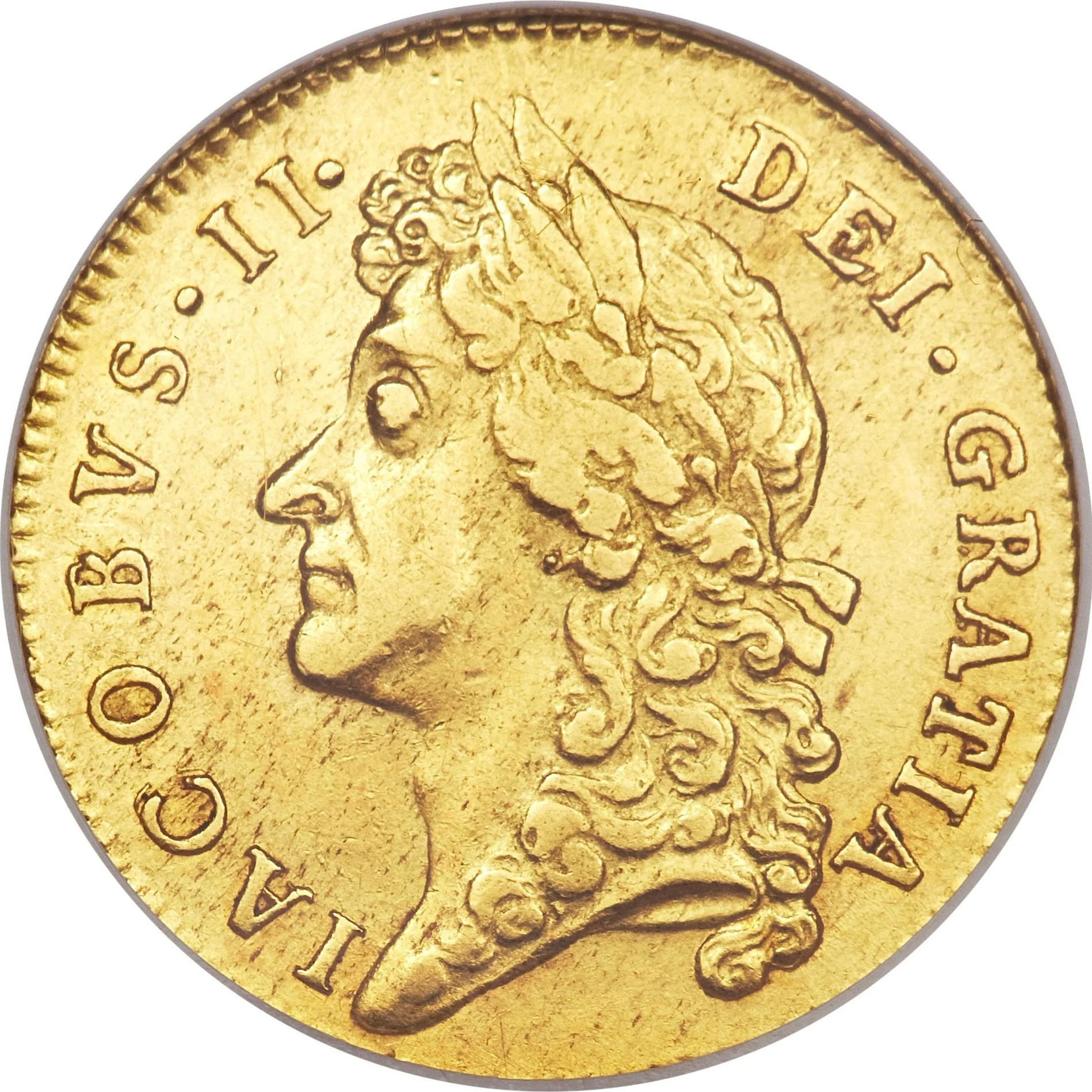
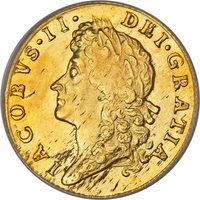
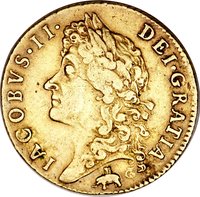
Description:
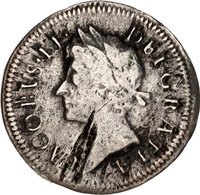
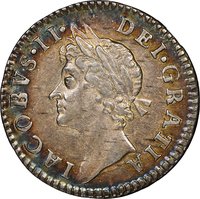
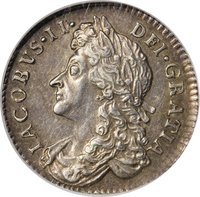
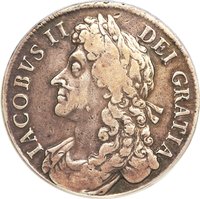
King James II bust left, legend surrounding.
Inscription:
IACOBVS·II· DEI·GRATIA
Script: Latin
Engraver: John Roettier
Reverse
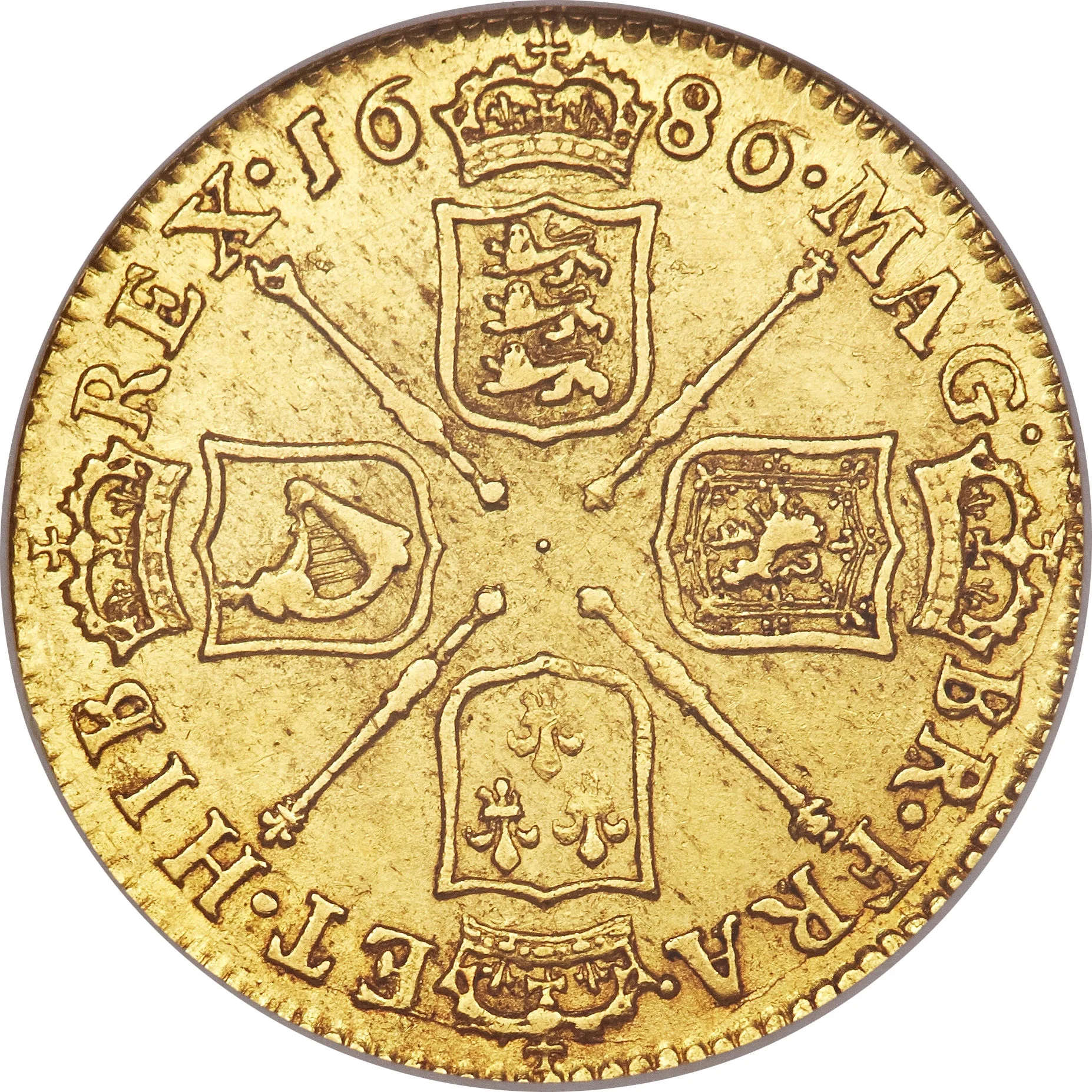
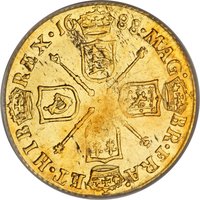
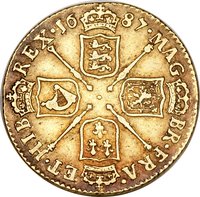
Description:
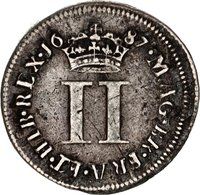
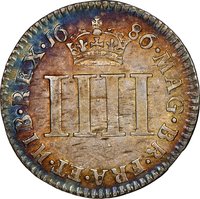
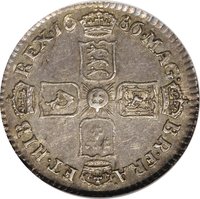
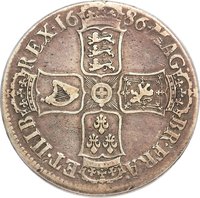
Crowned shields with sceptres in corners, date above, legend around.
Inscription:
MAG· BR·FRA· ET·HIB· REX·16 86·
Script: Latin
Engraver: John Roettier
Edge
Milled
Mintings
| Year | Mint Mark | Mintage | Quality | Collection |
|---|---|---|---|---|
| 1686 | — | — | ||
| 1687 | — | — | ||
| 1688 | — | — |
Historical background
In 1686, England’s currency system was in a state of significant strain and transition, caught between a medieval past and a nascent financial future. The economy operated on a bimetallic standard of silver and gold, but the system was plagued by two major issues: widespread clipping and counterfeiting of silver coins, and a misalignment between the official mint price of silver and its higher market value abroad. For decades, people had been illegally shaving the edges of silver coins to harvest precious metal, resulting in a circulating currency that was underweight, degraded, and untrustworthy. This "bad money" drove full-weight, good coins out of circulation, as they were either hoarded or exported, a phenomenon described by Gresham's Law.
The situation posed a direct threat to both commerce and royal authority. For King James II, who had ascended to the throne in 1685, the unreliable currency disrupted tax revenues, complicated the payment of his armies, and undermined general economic confidence. While the need for a comprehensive recoinage was widely acknowledged by officials like the Mint Master, the process was politically and logistically daunting. A full recoinage would require the government to recall all old silver coins and replace them with new, milled-edge pieces that were difficult to clip, but at a tremendous short-term cost to the Treasury, which would have to accept degraded silver at its full face value.
Consequently, 1686 was a year of deliberation rather than decisive action. The government, under the Lord Treasurer Rochester, engaged in extensive consultations with financiers and merchants, weighing various proposals. The critical decision—to proceed with a massive and expensive recoinage—would not be taken until the mid-1690s, under the government of William and Mary. Thus, the currency of 1686 remained a tangible symbol of the Crown’s financial weaknesses, a problem festering while England inched toward the revolutionary fiscal solutions, including the founding of the Bank of England, that would define the following decade.
The situation posed a direct threat to both commerce and royal authority. For King James II, who had ascended to the throne in 1685, the unreliable currency disrupted tax revenues, complicated the payment of his armies, and undermined general economic confidence. While the need for a comprehensive recoinage was widely acknowledged by officials like the Mint Master, the process was politically and logistically daunting. A full recoinage would require the government to recall all old silver coins and replace them with new, milled-edge pieces that were difficult to clip, but at a tremendous short-term cost to the Treasury, which would have to accept degraded silver at its full face value.
Consequently, 1686 was a year of deliberation rather than decisive action. The government, under the Lord Treasurer Rochester, engaged in extensive consultations with financiers and merchants, weighing various proposals. The critical decision—to proceed with a massive and expensive recoinage—would not be taken until the mid-1690s, under the government of William and Mary. Thus, the currency of 1686 remained a tangible symbol of the Crown’s financial weaknesses, a problem festering while England inched toward the revolutionary fiscal solutions, including the founding of the Bank of England, that would define the following decade.
Series: 1686 England circulation coins
✨ Legendary