

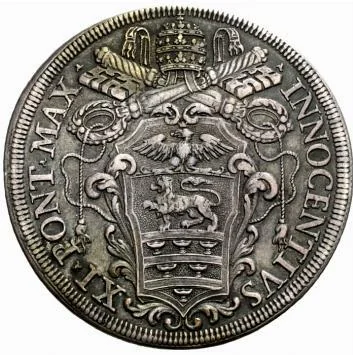
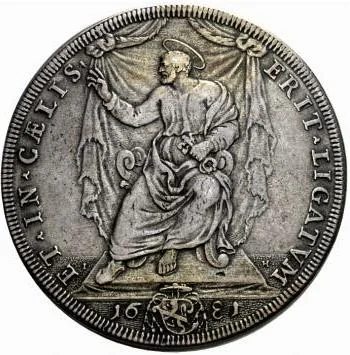
1 Piastra – Papal States
Vatican City
Context
Years: 1680–1681
Country: Vatican City 
Issuer: Papal States
Ruler: Innocent XI
Currency:
(1534—1835)
Demonetized: Yes
Material
Diameter: 44.55 mm
Weight: 31.57 g
Silver weight: 28.95 g
Shape: Round
Composition: 91.7% Silver
Standard: Silver ounce
Magnetic: No
Alignment: Medal alignment
flip
References
KM: #Click to copy to clipboard421.1
Numista: #129396
Value
Bullion value: $83.46
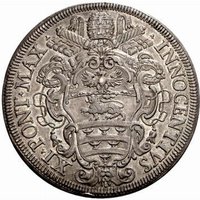
Obverse
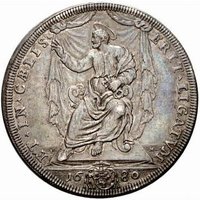
Reverse
Description:
St. Peter enthroned over split date and coat of arms.
Inscription:
ET·IN·CÆLIS· ERIT·LIGATVM
16 81
16 81
Script: Latin
Edge
Mintings
| Year | Mint Mark | Mintage | Quality | Collection |
|---|---|---|---|---|
| 1680 | — | — | ||
| 1681 | — | — |
Historical background
In 1680, the currency situation within the Papal States was a complex system reflecting both its temporal sovereignty and its deep integration into wider Italian and European economic networks. The primary unit of account was the scudo, specifically the scudo di moneta, which was divided into 100 baiochi, each of which was further subdivided into 10 quattrini. However, a multitude of physical coins circulated, including the silver giulio (worth 10 baiochi), the copper baiocco, and the gold scudo d'oro, which had a fluctuating value against the accounting scudo. This created a dual system where prices were set in the stable money of account (scudo di moneta), but daily transactions used a variable array of physical coins, leading to frequent calculations and potential confusion.
The integrity of the coinage was a persistent challenge. The Papal Mint in Rome faced constant pressure from the debasement of coinage in neighboring Italian states, which drove good Papal coins out of circulation (Gresham's Law). Furthermore, the financial demands of maintaining Rome's infrastructure, the papal court, and military expenditures often tempted the Apostolic Camera (the treasury) to engage in slight debasements or to alter exchange rates between coins to generate seigniorage revenue. This practice, while providing short-term fiscal relief, undermined confidence in the currency and complicated commerce, especially for the large population of pilgrims and international merchants in Rome.
Despite these challenges, the Papal States' currency in this period was relatively stable compared to the preceding century of more severe crises. The administration of Pope Innocent XI (elected 1676) was notably frugal and sought to curb excess spending, which indirectly supported monetary stability. Ultimately, the system functioned due to the sheer economic weight of Rome as an ecclesiastical and cultural capital, ensuring a constant demand for its currency within its borders, even as its complex and sometimes manipulated nature remained a source of complaint for traders and the populace alike.
The integrity of the coinage was a persistent challenge. The Papal Mint in Rome faced constant pressure from the debasement of coinage in neighboring Italian states, which drove good Papal coins out of circulation (Gresham's Law). Furthermore, the financial demands of maintaining Rome's infrastructure, the papal court, and military expenditures often tempted the Apostolic Camera (the treasury) to engage in slight debasements or to alter exchange rates between coins to generate seigniorage revenue. This practice, while providing short-term fiscal relief, undermined confidence in the currency and complicated commerce, especially for the large population of pilgrims and international merchants in Rome.
Despite these challenges, the Papal States' currency in this period was relatively stable compared to the preceding century of more severe crises. The administration of Pope Innocent XI (elected 1676) was notably frugal and sought to curb excess spending, which indirectly supported monetary stability. Ultimately, the system functioned due to the sheer economic weight of Rome as an ecclesiastical and cultural capital, ensuring a constant demand for its currency within its borders, even as its complex and sometimes manipulated nature remained a source of complaint for traders and the populace alike.
✨ Legendary