

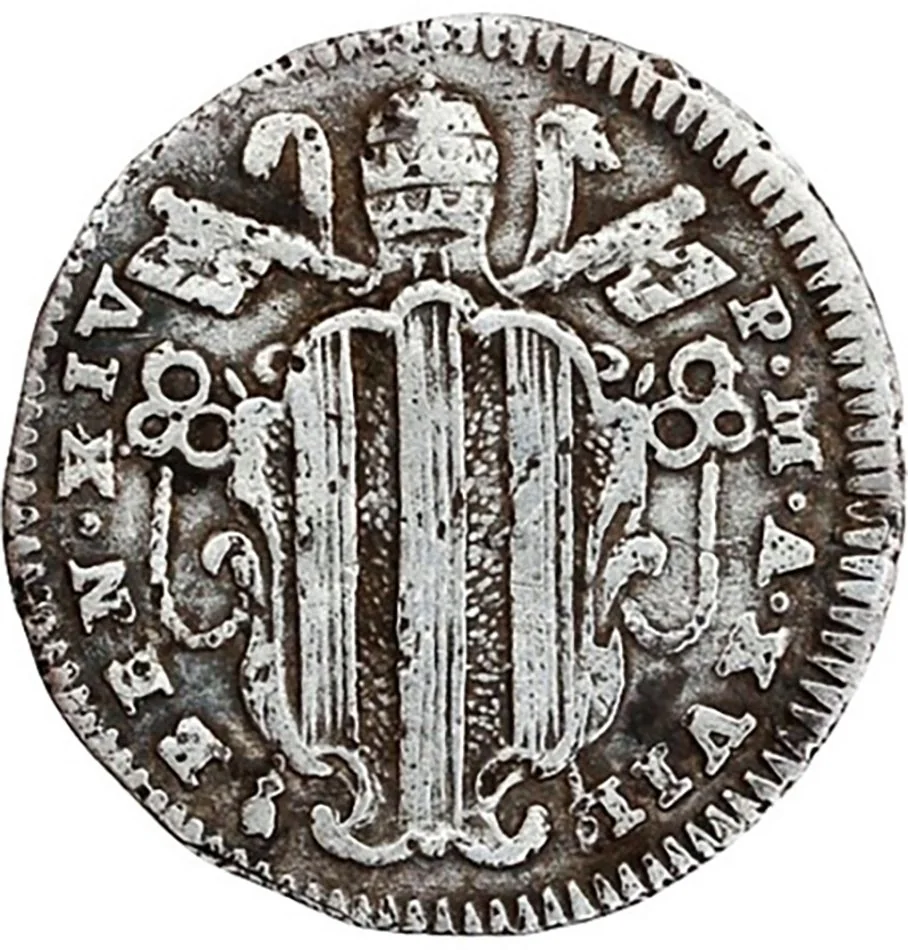
½ Grosso – Papal States
Vatican City
Context
Year: 1757
Country: Vatican City 
Issuer: Papal States
Ruler: Benedict XIV
Currency:
(1534—1835)
Demonetized: Yes
Material
References
KM: #Click to copy to clipboard975
Numista: #129261
Value
Bullion value: $1.44
Obverse
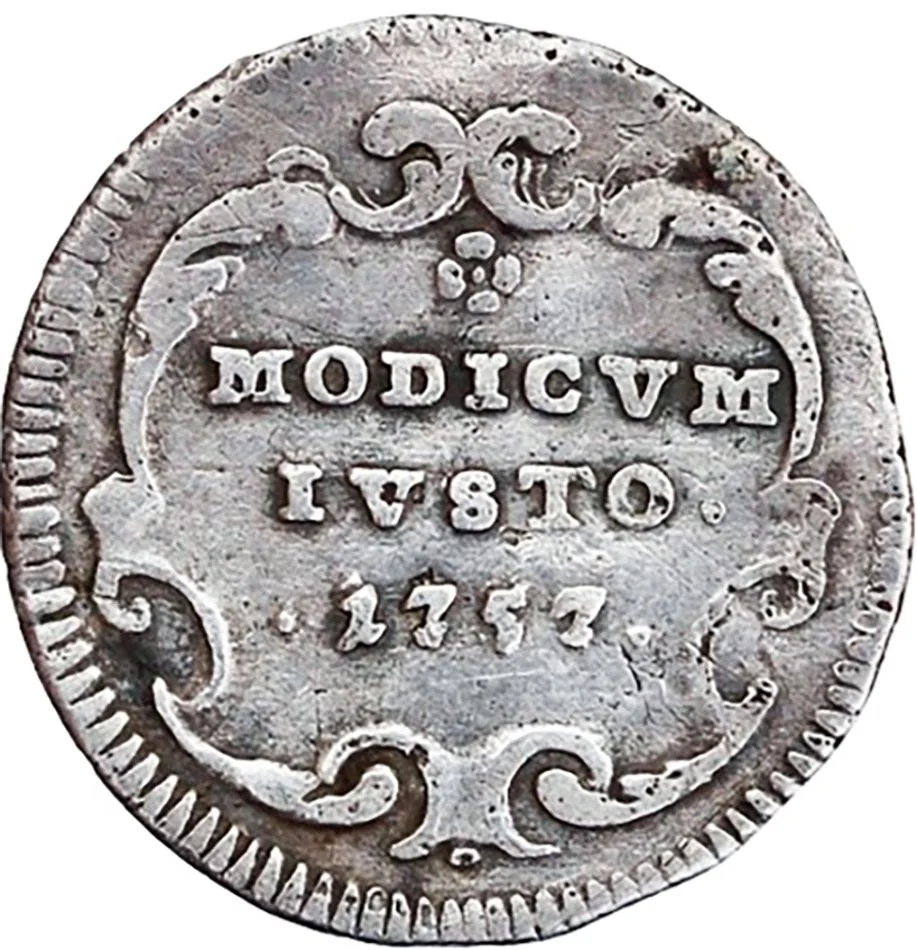
Reverse
Description:
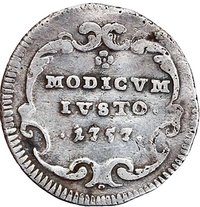
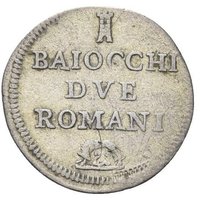
Dated three-line inscription in ornate frame.
Inscription:
MODICVM
IVSTO·
·1757·
IVSTO·
·1757·
Script: Latin
Edge
Categories
| Symbol> Crown |
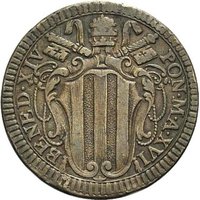
| Symbols> Coat of Arms |
Mints
| Name | Mark |
|---|---|
| Rome | — |
Mintings
| Year | Mint Mark | Mintage | Quality | Collection |
|---|---|---|---|---|
| 1757 | — | — |
Historical background
In 1757, the Papal States’ monetary system was a complex and fragmented reflection of its political structure, operating under a bimetallic standard of gold and silver but plagued by chronic instability. The central mint in Rome produced coins like the scudo (silver) and the doppia (gold), but numerous other papal mints in cities like Bologna and Ferrara also issued currency, leading to variations in weight and fineness. This lack of uniformity, combined with the widespread circulation of foreign coins from neighboring states, created a confusing and inefficient marketplace where exchange rates fluctuated locally.
The root of the monetary troubles lay in persistent fiscal deficits. The Papacy financed its administration and ambitious artistic projects through heavy borrowing and, when strained, often resorted to debasement—reducing the precious metal content in coins while maintaining their face value. This practice, a form of hidden taxation, eroded public trust in the currency, spurred inflation, and encouraged hoarding of older, purer coins (Gresham’s Law). Furthermore, the state’s reliance on customs duties and consumption taxes (like the gabella) provided an inconsistent revenue stream, perpetuating the cycle of debt and monetary manipulation.
Pope Benedict XIV (1740-1758), reigning in 1757, was acutely aware of these problems and was one of the more reform-minded pontiffs of the century. He had already enacted some fiscal reforms and sought to curb excesses, but the deeply entrenched systems of noble privilege, local autonomy, and bureaucratic inertia limited profound change. Thus, in 1757, the currency situation remained a fragile patchwork—a source of daily economic friction for its subjects and a significant challenge to governance, poised between the pressures of Enlightenment-era reform and the weight of entrenched tradition.
The root of the monetary troubles lay in persistent fiscal deficits. The Papacy financed its administration and ambitious artistic projects through heavy borrowing and, when strained, often resorted to debasement—reducing the precious metal content in coins while maintaining their face value. This practice, a form of hidden taxation, eroded public trust in the currency, spurred inflation, and encouraged hoarding of older, purer coins (Gresham’s Law). Furthermore, the state’s reliance on customs duties and consumption taxes (like the gabella) provided an inconsistent revenue stream, perpetuating the cycle of debt and monetary manipulation.
Pope Benedict XIV (1740-1758), reigning in 1757, was acutely aware of these problems and was one of the more reform-minded pontiffs of the century. He had already enacted some fiscal reforms and sought to curb excesses, but the deeply entrenched systems of noble privilege, local autonomy, and bureaucratic inertia limited profound change. Thus, in 1757, the currency situation remained a fragile patchwork—a source of daily economic friction for its subjects and a significant challenge to governance, poised between the pressures of Enlightenment-era reform and the weight of entrenched tradition.
✨ Legendary