

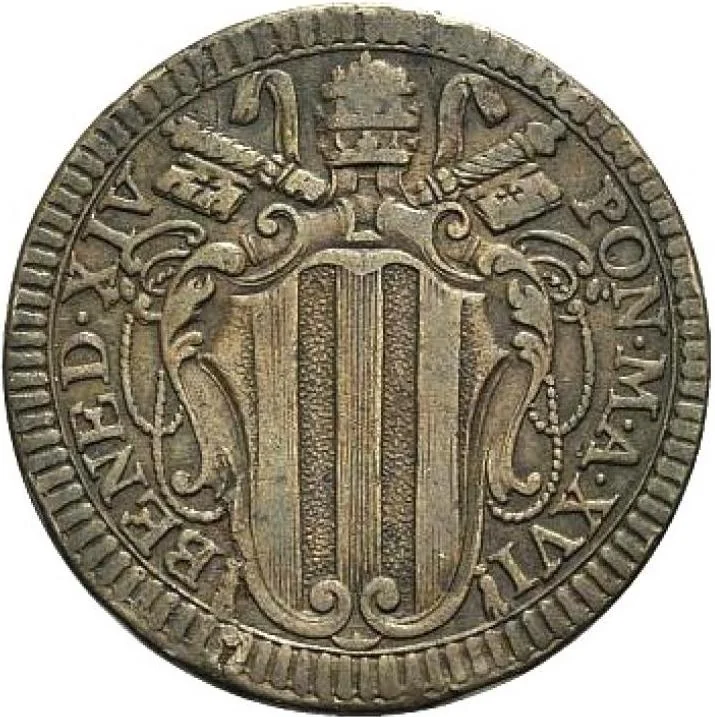
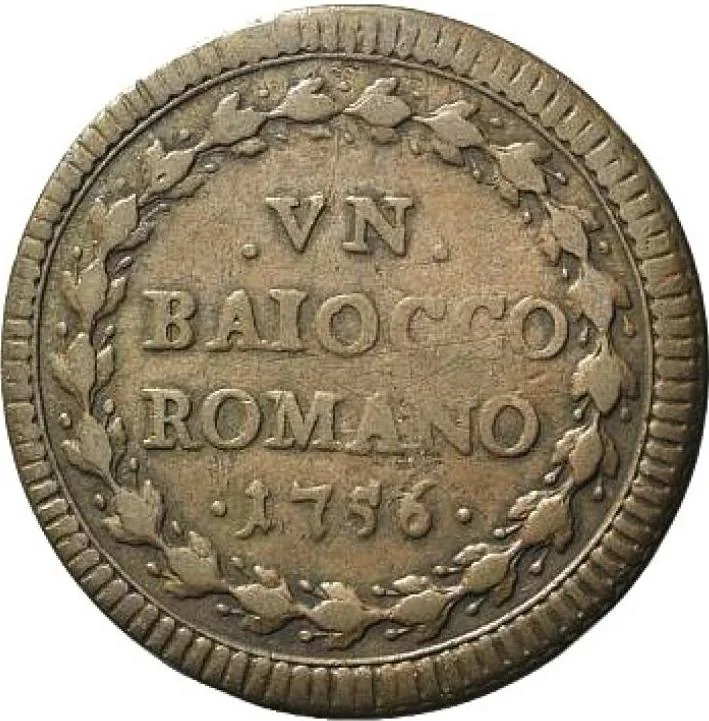
1 baiocco – Papal States
Add to wishlist
Vatican City
Context
Year: 1756
Country: Vatican City
Issuer: Papal States
Ruler: Benedict XIV
Currency:
(1534—1835)
Demonetized: Yes
Material
References
KM: #
Numista: #84910
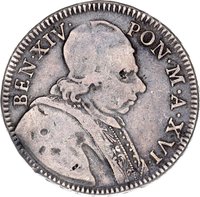
Obverse
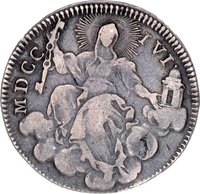
Reverse
Edge
Plain
Mints
| Name | Mark |
|---|---|
| Rome | — |
Mintings
| Year | Mint Mark | Mintage | Quality | Collection |
|---|---|---|---|---|
| 1756 | — | — |
Historical background
In 1756, the Papal States operated under a complex and often chaotic monetary system, a legacy of centuries of decentralized minting rights and fiscal strain. The primary unit was the Papal Scudo, a silver coin, but its value and purity were under constant pressure. The real circulating medium for most daily transactions was a bewildering array of copper and billon (low-grade silver) coins, such as baiocchi and quattrini. Critically, the value of these smaller coins was not fixed to the scudo but was instead subject to periodic proclamation by the papal authorities, leading to instability and confusion in commerce.
This system was plagued by two major issues: chronic debasement and widespread counterfeiting. Facing persistent budget deficits from lavish building projects and administrative costs, the Papacy frequently reduced the silver content in its coinage or arbitrarily increased the nominal value of copper coins to generate seigniorage revenue. This practice eroded public trust and sparked inflation. Furthermore, the long, porous borders of the Papal States were flooded with inferior foreign and counterfeit coins, which circulated freely alongside official issues, further degrading the monetary standard and harming local economies.
The situation in the mid-18th century, particularly under Pope Benedict XIV (1740-1758), was one of recognized crisis and attempted reform. Benedict, a more fiscally prudent ruler, was acutely aware of the problems and had initiated efforts to stabilize the currency. However, by 1756, these reforms—which included recalling debased coinage and issuing new, purer pieces—were ongoing and only partially successful. The fundamental structural weaknesses of a fragmented Italian state reliant on monetary manipulation for income meant that true stability remained elusive, leaving the Papal States' economy hindered by an unreliable and cumbersome currency system.
This system was plagued by two major issues: chronic debasement and widespread counterfeiting. Facing persistent budget deficits from lavish building projects and administrative costs, the Papacy frequently reduced the silver content in its coinage or arbitrarily increased the nominal value of copper coins to generate seigniorage revenue. This practice eroded public trust and sparked inflation. Furthermore, the long, porous borders of the Papal States were flooded with inferior foreign and counterfeit coins, which circulated freely alongside official issues, further degrading the monetary standard and harming local economies.
The situation in the mid-18th century, particularly under Pope Benedict XIV (1740-1758), was one of recognized crisis and attempted reform. Benedict, a more fiscally prudent ruler, was acutely aware of the problems and had initiated efforts to stabilize the currency. However, by 1756, these reforms—which included recalling debased coinage and issuing new, purer pieces—were ongoing and only partially successful. The fundamental structural weaknesses of a fragmented Italian state reliant on monetary manipulation for income meant that true stability remained elusive, leaving the Papal States' economy hindered by an unreliable and cumbersome currency system.
✨ Legendary