

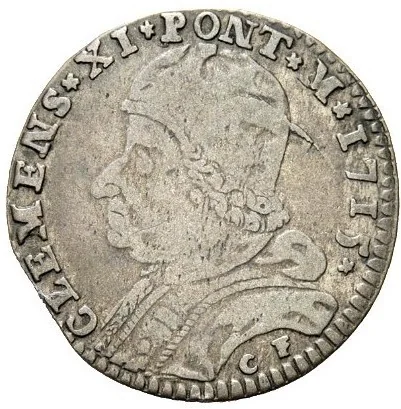
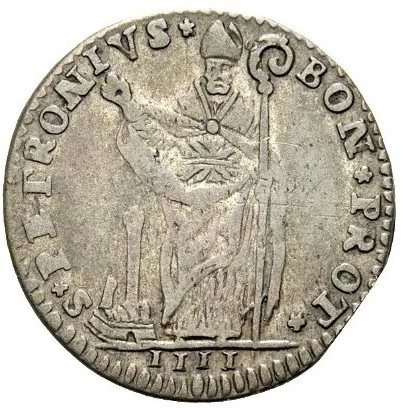
4 Bolognini – Bologna
Italy

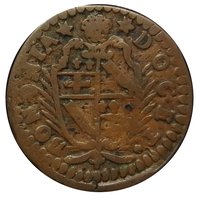
Obverse
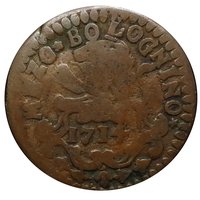
Reverse
Edge
Categories
| Symbol> Hand |
| Object> Hat |
| Religion> Religious objects |
| Person> Monarch |
| Person> Religious figure |
Mintings
| Year | Mint Mark | Mintage | Quality | Collection |
|---|---|---|---|---|
| 1709 | CF | — | ||
| — | — | — | ||
| — | EH | — | ||
| 1710 | CF | — | ||
| 1711 | CF | — | ||
| 1712 | CF | — | ||
| 1713 | CF | — | ||
| 1714 | CF | — | ||
| 1715 | CF | — | ||
| 1716 | — | — | ||
| 1716 | CF | — |
Historical background
In 1709, Bologna found itself navigating a complex and unstable currency landscape, deeply entangled with the wider economic and political turmoil of the War of the Spanish Succession. The city, part of the Papal States, was officially under the monetary authority of the Pope, meaning its primary unit of account was the papal scudo. However, the reality in circulation was a chaotic jumble of physical coins from various Italian and European states, including Spanish pieces of eight, Venetian ducats, and French Louis d’or. The value of these coins was not fixed by their metal content alone but fluctuated based on proclamations (grida) issued by local magistrates, leading to confusion and frequent disputes in commerce.
This monetary fragmentation was severely exacerbated by the war. Military campaigns in Northern Italy led to heavy taxation and the deliberate debasement of coinage by various warring powers to finance their armies. Consequently, Bologna experienced a severe shortage of "good" high-silver coinage, as it was hoarded or exported, while clipped, worn, and counterfeit coins flooded the market. This situation, known as "bad money driving out good" (Gresham's Law), crippled everyday transactions and sowed distrust among merchants, artisans, and the populace, who struggled to ascertain the true value of their payments.
Local authorities, particularly the Assunteria di Magistrati overseeing monetary policy, were caught in a difficult position. Their periodic grida attempted to stabilise the situation by setting and adjusting exchange rates between the myriad coins and the notional papal scudo. However, these edicts were often reactive, struggling to keep pace with market forces and the influx of debased currency. The result was a persistent state of monetary instability that inflated prices, hampered trade, and placed a significant burden on Bologna’s economy at the dawn of the 18th century.
This monetary fragmentation was severely exacerbated by the war. Military campaigns in Northern Italy led to heavy taxation and the deliberate debasement of coinage by various warring powers to finance their armies. Consequently, Bologna experienced a severe shortage of "good" high-silver coinage, as it was hoarded or exported, while clipped, worn, and counterfeit coins flooded the market. This situation, known as "bad money driving out good" (Gresham's Law), crippled everyday transactions and sowed distrust among merchants, artisans, and the populace, who struggled to ascertain the true value of their payments.
Local authorities, particularly the Assunteria di Magistrati overseeing monetary policy, were caught in a difficult position. Their periodic grida attempted to stabilise the situation by setting and adjusting exchange rates between the myriad coins and the notional papal scudo. However, these edicts were often reactive, struggling to keep pace with market forces and the influx of debased currency. The result was a persistent state of monetary instability that inflated prices, hampered trade, and placed a significant burden on Bologna’s economy at the dawn of the 18th century.
✨ Legendary