

1 quattrino – Bozzolo
Add to wishlist
Italy
Context
Years: 1657–1667
Country: Italy
Issuer: Bozzolo
Ruler: Scipione Gonzaga
Currency:
(1497—1670)
Demonetized: Yes
Material
References
KM: #
Numista: #128923
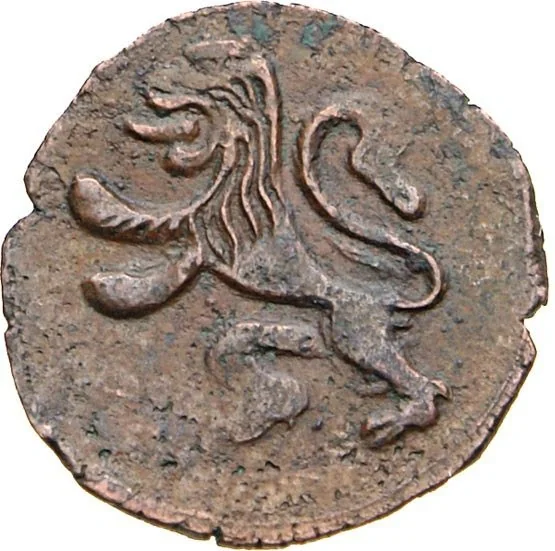
Obverse
Description:
Left-facing rampant lion.
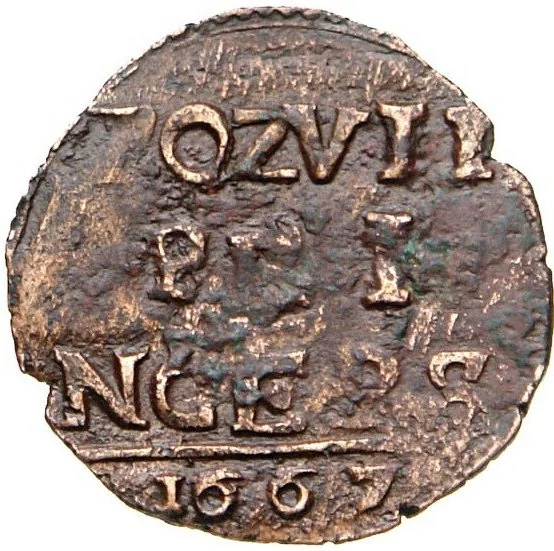
Reverse
Edge
Mints
| Name | Mark |
|---|---|
| Bozzolo | — |
Mintings
| Year | Mint Mark | Mintage | Quality | Collection |
|---|---|---|---|---|
| 1657 | — | — | ||
| 1665 | — | — | ||
| 1667 | — | — |
Historical background
In 1657, the Duchy of Mantua, of which Bozzolo was a small but independent satellite state, was emerging from decades of severe economic strain. The region had been devastated by the War of the Mantuan Succession (1628–31) and subsequent bouts of plague, which crippled agricultural output and trade. This period saw a chronic shortage of full-weight, high-value coinage in circulation, a common problem across the Italian peninsula. Everyday transactions in Bozzolo’s market were therefore heavily reliant on a chaotic mix of worn domestic coins and a plethora of foreign currencies, particularly Spanish reales and various northern Italian issues, whose values fluctuated unpredictably.
The monetary situation was further complicated by the policies of Duke Ferdinando Gonzaga of Mantua. Facing a depleted treasury, he had repeatedly resorted to debasement—reducing the precious metal content in coins like the sesino and soldo while maintaining their nominal face value. This practice, intended to create short-term fiscal revenue, led to rampant inflation and a loss of public trust. In Bozzolo, local authorities struggled to enforce official exchange rates against the reality of market valuations, where "bad money" (debased coin) drove "good money" (full-weight coin) into hoards or out of the state entirely.
Consequently, the economic life of Bozzolo in 1657 was characterized by instability and uncertainty. Merchants and peasants alike faced the daily challenge of assessing the true worth of a jumbled purse of coins, with disputes over payments common. This environment stifled commerce and investment, perpetuating a cycle of local poverty. While not unique, Bozzolo’s currency crisis was a microcosm of the broader struggle for monetary sovereignty and stability in the fractured states of early modern Italy.
The monetary situation was further complicated by the policies of Duke Ferdinando Gonzaga of Mantua. Facing a depleted treasury, he had repeatedly resorted to debasement—reducing the precious metal content in coins like the sesino and soldo while maintaining their nominal face value. This practice, intended to create short-term fiscal revenue, led to rampant inflation and a loss of public trust. In Bozzolo, local authorities struggled to enforce official exchange rates against the reality of market valuations, where "bad money" (debased coin) drove "good money" (full-weight coin) into hoards or out of the state entirely.
Consequently, the economic life of Bozzolo in 1657 was characterized by instability and uncertainty. Merchants and peasants alike faced the daily challenge of assessing the true worth of a jumbled purse of coins, with disputes over payments common. This environment stifled commerce and investment, perpetuating a cycle of local poverty. While not unique, Bozzolo’s currency crisis was a microcosm of the broader struggle for monetary sovereignty and stability in the fractured states of early modern Italy.

✨ Legendary