

50 centesimi – Vatican City
Add to wishlist
Vatican City
Context
Years: 1940–1941
Issuer: Vatican City
Ruler: Pius XII
Currency:
(1929—2001)
Demonetized: Yes
Total mintage: 232,000
Material
Diameter: 24.2 mm
Weight: 6 g
Thickness: 2 mm
Shape: Round
Composition: Stainless steel
Technique: Milled
Alignment: Coin alignment
flip
References
KM: #
Numista: #12061
Value
Exchange value: 0.50 VAL
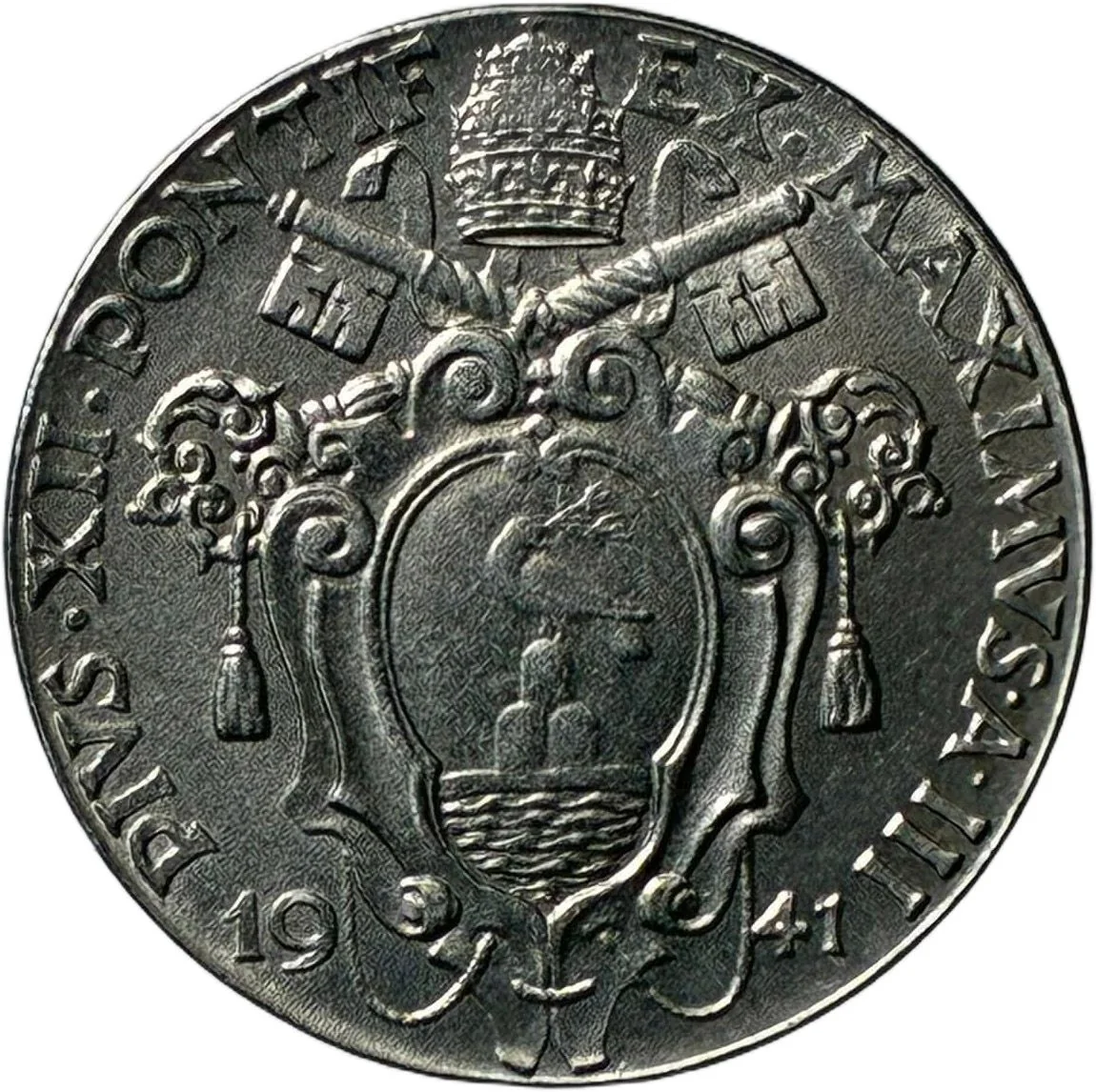
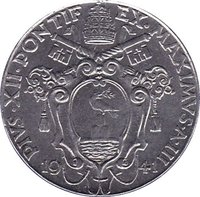
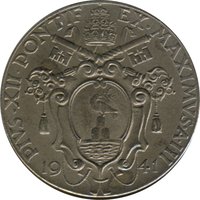
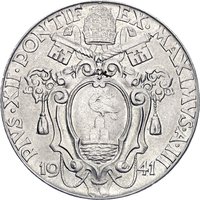
Obverse
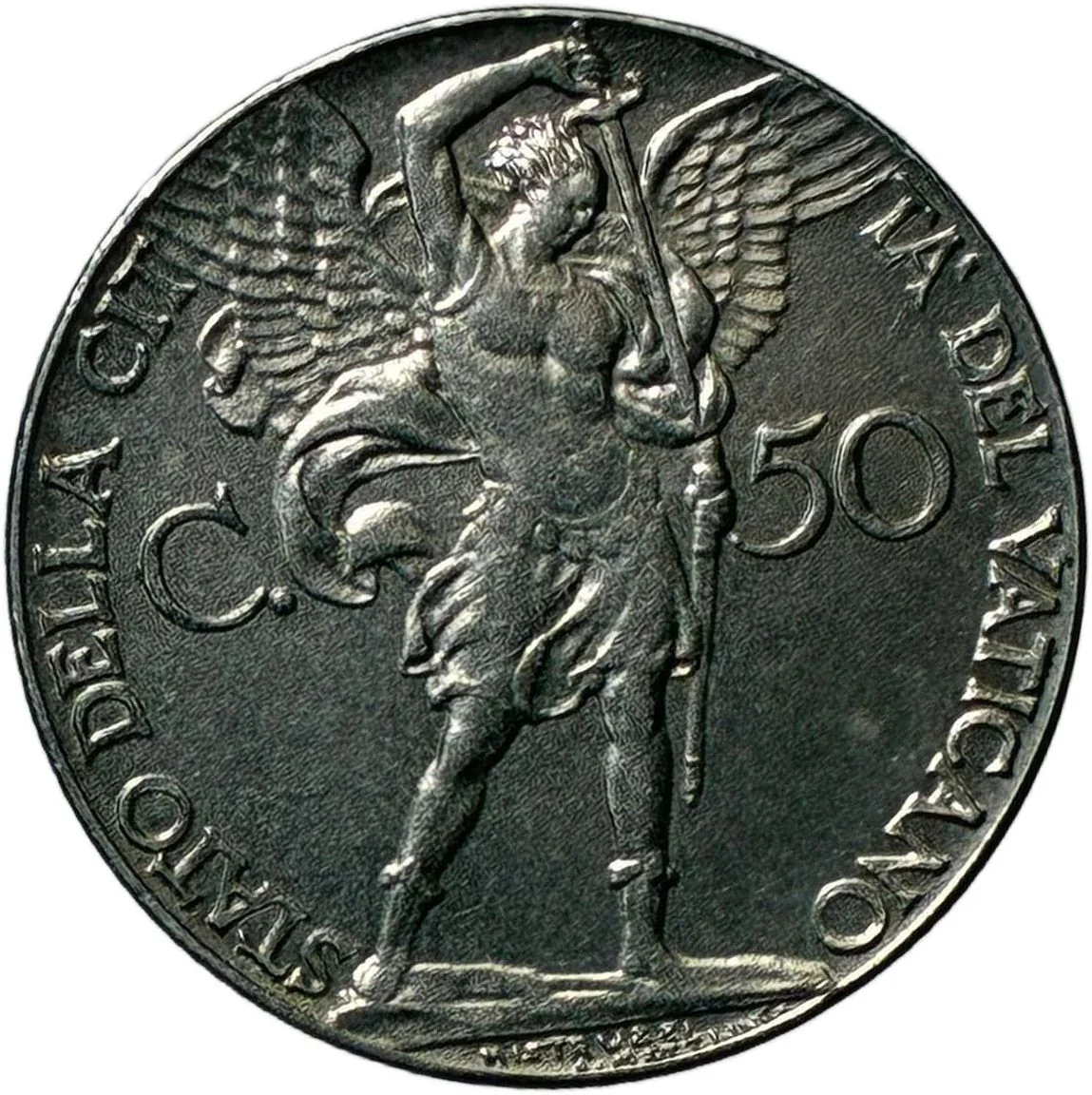
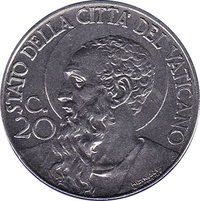
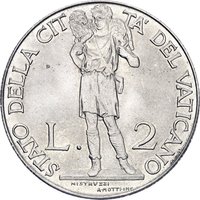
Reverse
Description:
Defender of Heaven.
Inscription:
STATO DELLA CITTÀ DEL VATICANO
C.50
C.50
Translation:
State of the Vatican City
C.50
C.50
Script: Latin
Language: Italian
Engraver: Aurelio Mistruzzi
Edge
Reeded
Categories
| Person> Religious figure |
| Symbols> Coat of Arms |
| Object> Cold weapons |
Mintings
| Year | Mint Mark | Mintage | Quality | Collection |
|---|---|---|---|---|
| 1940 | — | 52,000 | ||
| 1941 | — | 180,000 |
Historical background
In 1940, Vatican City’s currency situation was uniquely complex, shaped by its sovereign status as an independent city-state and its geographical and political encirclement by Fascist Italy. The Lateran Treaty of 1929, which established Vatican City, granted it the right to issue its own coinage. Consequently, the Vatican lira was introduced, pegged at par with the Italian lira and legally interchangeable within Italy. This arrangement meant the Vatican's monetary system was effectively a satellite of the Italian system, relying on Italy for broader financial infrastructure and the production of its coins, which were minted in Rome.
The outbreak of World War II in 1939 and Italy’s entry as a belligerent in June 1940 placed severe strains on this arrangement. While the Vatican maintained official neutrality, it was physically and economically constrained within a wartime Axis power. Inflation, shortages, and strict economic controls implemented by Mussolini’s regime directly impacted the Vatican’s finances. The practical utility of the Vatican lira was largely confined to internal transactions, souvenirs for pilgrims (whose numbers dwindled drastically), and numismatic collections, as its circulation outside the tiny state was minimal.
Despite these constraints, the Vatican continued to issue its own coinage in 1940, albeit in reduced quantities. These coins, bearing the portrait of Pope Pius XII, served more as a symbolic assertion of sovereignty than as a functional independent currency. The Holy See’s real financial operations, essential for its global diplomatic and charitable activities, relied heavily on foreign assets, gold reserves held outside Italy, and transactions in more stable international currencies like the US dollar or Swiss franc, navigating complex wartime financial networks to maintain its operational independence.
The outbreak of World War II in 1939 and Italy’s entry as a belligerent in June 1940 placed severe strains on this arrangement. While the Vatican maintained official neutrality, it was physically and economically constrained within a wartime Axis power. Inflation, shortages, and strict economic controls implemented by Mussolini’s regime directly impacted the Vatican’s finances. The practical utility of the Vatican lira was largely confined to internal transactions, souvenirs for pilgrims (whose numbers dwindled drastically), and numismatic collections, as its circulation outside the tiny state was minimal.
Despite these constraints, the Vatican continued to issue its own coinage in 1940, albeit in reduced quantities. These coins, bearing the portrait of Pope Pius XII, served more as a symbolic assertion of sovereignty than as a functional independent currency. The Holy See’s real financial operations, essential for its global diplomatic and charitable activities, relied heavily on foreign assets, gold reserves held outside Italy, and transactions in more stable international currencies like the US dollar or Swiss franc, navigating complex wartime financial networks to maintain its operational independence.
🌱 Common