

6 kreuzers – Austrian Empire
Add to wishlist
Austria
Context
Years: 1661–1665
Country: Austria
Issuer: Austrian Empire
Ruler: Leopold I
Currency:
(1520—1754)
Demonetized: Yes
Material
References
KM: #
Numista: #125894
Value
Bullion value: $8.79
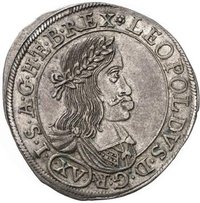
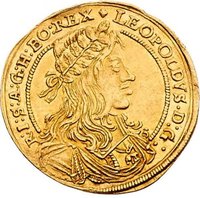
Obverse
Description:
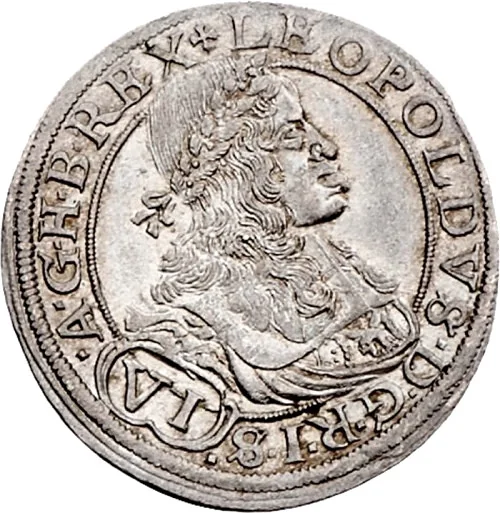
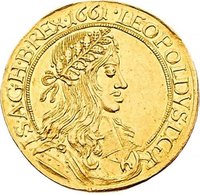
Laureate facing right, Roman numeral value below.
Inscription:
LEOPOLDVS D G R I S (VI) A G H B REX
Script: Latin
Engraver: Andreas Cetto
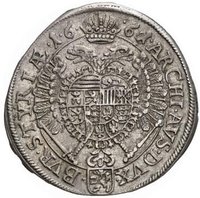
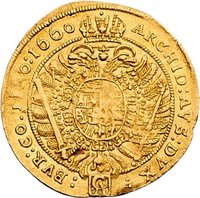
Reverse
Description:
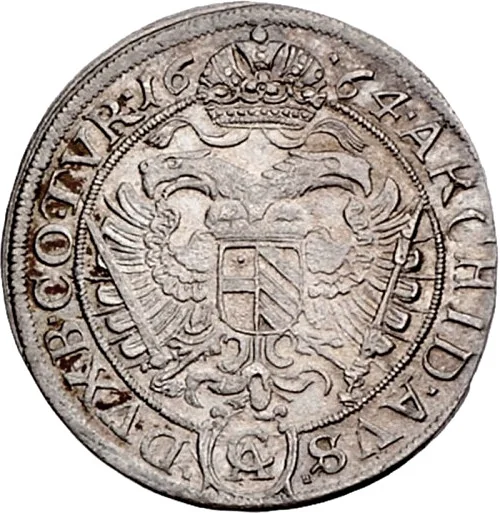
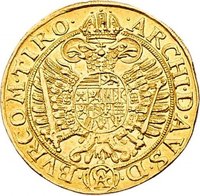
Double-headed imperial eagle with Austrian arms on a flat shield, mint mark beneath.
Inscription:
ARCHID AVS (CA) DVX B CO TYR
Script: Latin
Edge
Mints
| Name | Mark |
|---|---|
| Münze Österreich | CA |
Historical background
In 1661, the Austrian Habsburg monarchy faced a severe monetary crisis, the culmination of decades of financial strain primarily caused by the immense costs of the Thirty Years' War (1618-1648). To fund its military campaigns, the state had increasingly resorted to debasing its coinage, notably the small-denomination Kreuzer and Groschen used in daily life. By reducing the precious metal content in these coins while officially maintaining their face value, the Habsburg treasury generated short-term profit but triggered rampant inflation, a loss of public confidence, and economic chaos within its hereditary lands.
The situation reached a critical point with the issuance of so-called Kipper- und Wipperzeit coinage (named for the practice of "tipping" and "weighing" bad coins) and, most notoriously, the Bankozettel in 1659. These were not true banknotes but rather interest-bearing copper bonds or promissory notes, mandated to be accepted as currency. Their rapid over-issuance, without sufficient backing, led to a catastrophic devaluation. By 1661, these Bankozettel had lost most of their value, causing a breakdown in trade and widespread hardship, as ordinary people and merchants refused to accept the virtually worthless paper.
In response, Emperor Leopold I's government was forced to enact a drastic monetary reform in 1661. The state demonetized the Bankozettel, redeeming them at a massive loss to holders, and returned to a silver-based coinage. This stabilization, however, came at a high social cost, ruining many creditors and deepening public distrust in the state's financial integrity. The crisis of 1661 thus stands as a pivotal example of early modern fiscal mismanagement and a hard-learned lesson that would influence Habsburg economic policy for decades to come.
The situation reached a critical point with the issuance of so-called Kipper- und Wipperzeit coinage (named for the practice of "tipping" and "weighing" bad coins) and, most notoriously, the Bankozettel in 1659. These were not true banknotes but rather interest-bearing copper bonds or promissory notes, mandated to be accepted as currency. Their rapid over-issuance, without sufficient backing, led to a catastrophic devaluation. By 1661, these Bankozettel had lost most of their value, causing a breakdown in trade and widespread hardship, as ordinary people and merchants refused to accept the virtually worthless paper.
In response, Emperor Leopold I's government was forced to enact a drastic monetary reform in 1661. The state demonetized the Bankozettel, redeeming them at a massive loss to holders, and returned to a silver-based coinage. This stabilization, however, came at a high social cost, ruining many creditors and deepening public distrust in the state's financial integrity. The crisis of 1661 thus stands as a pivotal example of early modern fiscal mismanagement and a hard-learned lesson that would influence Habsburg economic policy for decades to come.
💎 Extremely Rare