

5 Ducats – Austrian Empire
Austria
Context
Year: 1669
Country: Austria 
Issuer: Austrian Empire
Ruler: Leopold I
Currency:
(1520—1754)
Demonetized: Yes
Material
References
KM: #Click to copy to clipboard1263
Numista: #125736
Value
Bullion value: $2861.21
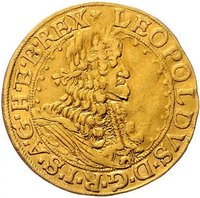
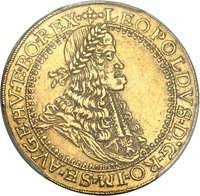
Obverse
Description:
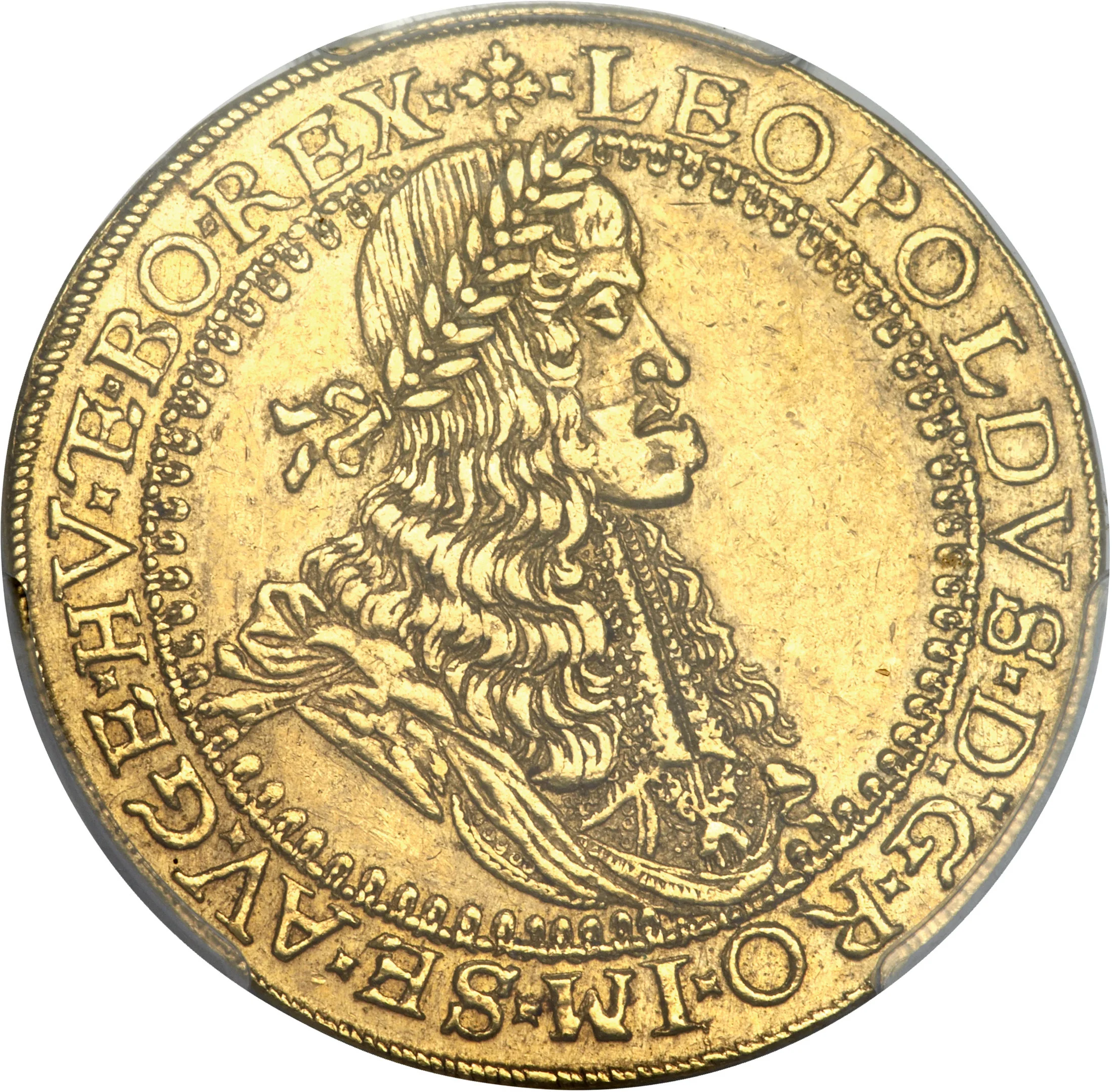
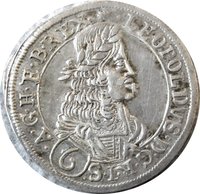
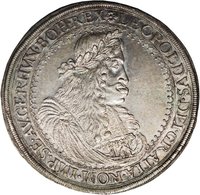
Laureate bust right within ornate circle. Legend around.
Inscription:
LEOPOLDVS D G RO IM SE AV GE HV ET BO REX
Script: Latin
Engraver: Franz Faber von Rosenstock
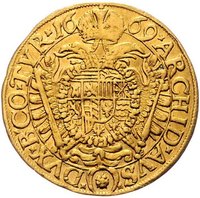
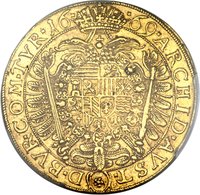
Reverse
Description:
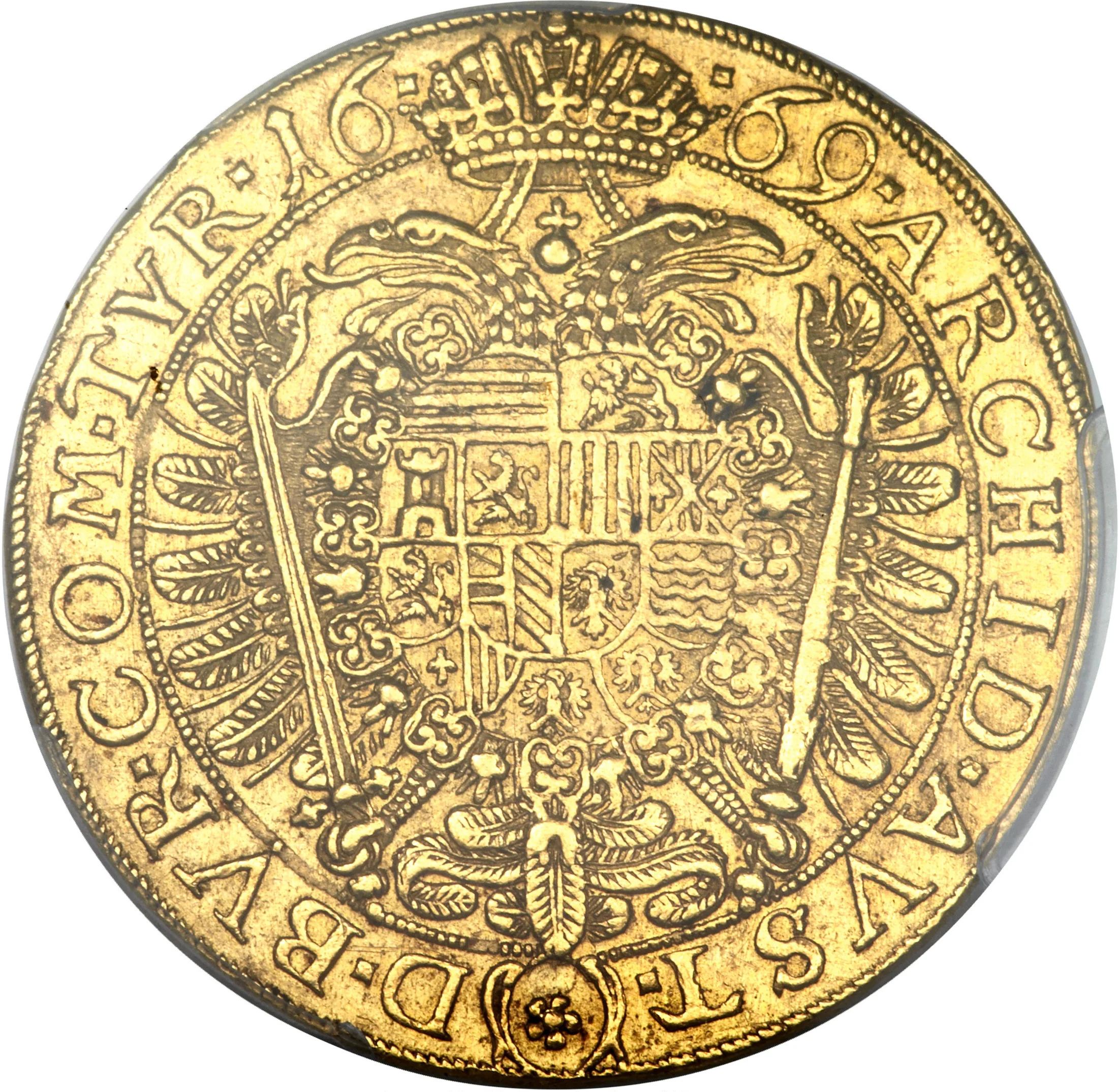
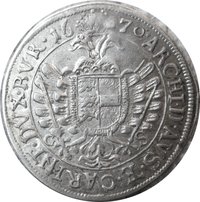
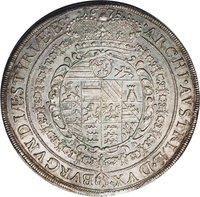
Double-headed eagle with composite arms on an oval shield, surrounded by the Golden Fleece chain. Mint mark divides the legend. Date divided by crown above.
Inscription:
ARCHID AVST (*) D BVR COM TYR
Script: Latin
Edge
Mints
| Name | Mark |
|---|---|
| Münze Österreich | — |
Mintings
| Year | Mint Mark | Mintage | Quality | Collection |
|---|---|---|---|---|
| 1669 | — | — |
Historical background
In 1669, the Austrian Habsburg monarchy, a sprawling and diverse empire, faced significant and chronic monetary instability. The primary currency in circulation was the silver Reichsthaler, but the reality was a chaotic mix of domestic and foreign coins of varying purity. Decades of financial strain, particularly from the ongoing wars against the Ottoman Empire, had led successive emperors to repeatedly debase the coinage. By lowering the silver content in minted coins like the Kreuzer, the state sought to create more money from the same amount of bullion, a short-term fix that eroded public trust and sparked inflation.
This period fell under the reign of Leopold I, whose government grappled with the consequences of earlier debasements and the economic disruption of the Thirty Years' War. The situation was exacerbated by the empire's fragmented administrative structure; different regions, such as the Kingdom of Hungary and the Austrian hereditary lands, often had their own minting rights and monetary practices. This lack of a unified imperial currency system made commerce difficult and facilitated the circulation of underweight or counterfeit coins, further confusing the monetary landscape.
While a major monetary reform was urgently needed, it would not materialize until the 1690s. Therefore, in 1669, the empire was in a transitional and unstable phase. The government's reliance on seigniorage (profit from minting) continued to undermine the currency's integrity, causing hardship for ordinary people and complicating state finances. The period is best characterized as one of persistent weakness in the monetary system, a key challenge for the Habsburg state as it sought to maintain its great power status amidst continuous military and fiscal pressures.
This period fell under the reign of Leopold I, whose government grappled with the consequences of earlier debasements and the economic disruption of the Thirty Years' War. The situation was exacerbated by the empire's fragmented administrative structure; different regions, such as the Kingdom of Hungary and the Austrian hereditary lands, often had their own minting rights and monetary practices. This lack of a unified imperial currency system made commerce difficult and facilitated the circulation of underweight or counterfeit coins, further confusing the monetary landscape.
While a major monetary reform was urgently needed, it would not materialize until the 1690s. Therefore, in 1669, the empire was in a transitional and unstable phase. The government's reliance on seigniorage (profit from minting) continued to undermine the currency's integrity, causing hardship for ordinary people and complicating state finances. The period is best characterized as one of persistent weakness in the monetary system, a key challenge for the Habsburg state as it sought to maintain its great power status amidst continuous military and fiscal pressures.
✨ Legendary