

1 Testern – India - British
India
Context
Years: 1600–1601
Country: India 
Issuer: India - British
Ruler: Elizabeth I
Currency:
(1600—1601)
Subdivision: 1 Testern = 1 Real
Demonetized: Yes
References
KM: #Click to copy to clipboardT1
Numista: #124315
Value
Bullion value: $9.14
Obverse
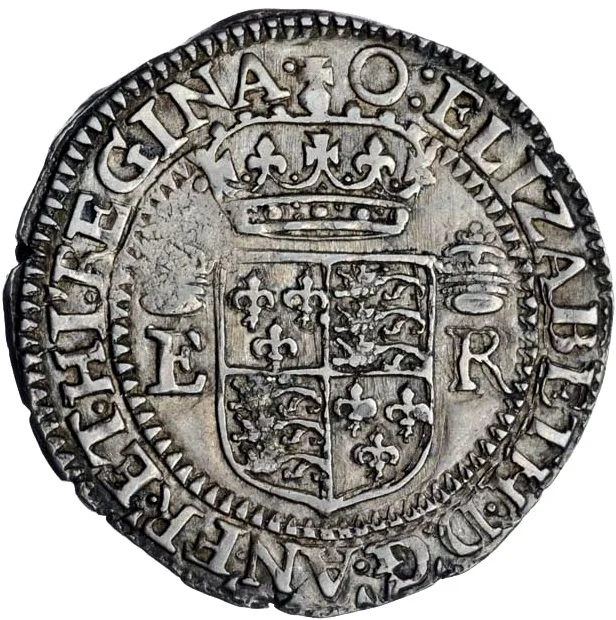
Description:
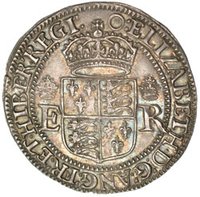
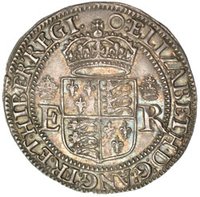
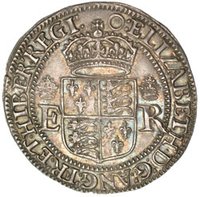
Royal shield flanked by crowned 'ER'.
Inscription:
O:ELIZABETH•D:G:AN:FR:ET•HI:REGINA
Script: Latin
Reverse
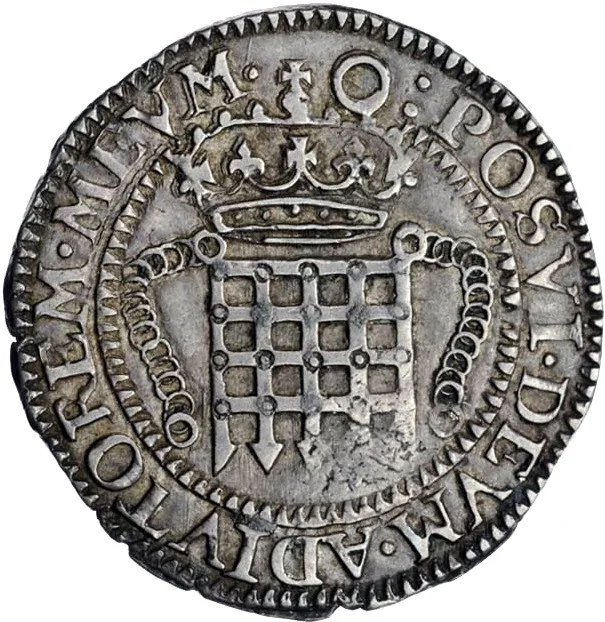
Description:
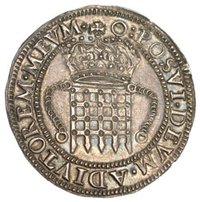
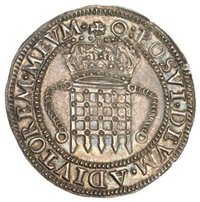
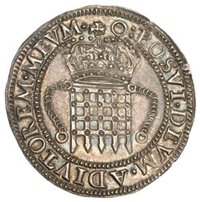
Crowned portcullis with chains, encircled by teeth and outer legend.
Inscription:
O:POSVI • DEVM • ADIVTOREM • MEVM •
Script: Latin
Edge
Mints
| Name | Mark |
|---|---|
| Royal Mint (Tower of London) | — |
Mintings
| Year | Mint Mark | Mintage | Quality | Collection |
|---|---|---|---|---|
| — | — | — |
Historical background
In the early 1600s, India under the Mughal Empire possessed a sophisticated and stable monetary system, primarily based on the silver rupee. This coin, meticulously minted with a high degree of purity, was the backbone of a vast and prosperous economy, facilitating both grand imperial transactions and regional trade. Alongside the rupee, a complementary system of smaller copper and gold coins existed for local and high-value exchanges, respectively. The system was largely decentralized, with provincial mints operating under imperial standards, reflecting the economic strength and administrative reach of the Mughal state.
The British presence, initiated by the East India Company's arrival in 1600, was initially commercial and financially peripheral. The Company operated within the existing Indian monetary framework, using locally minted rupees to purchase textiles, spices, and other goods for export. Their early trading posts (factories) on the coasts did not challenge the currency system; instead, they engaged in complex arbitrage, bringing in silver bullion from the Americas and Europe to exchange for rupees, as Europe had few goods desired by the advanced Indian economy. This influx of silver actually reinforced the Mughal system for over a century.
However, this period laid the groundwork for future transformation. The Company's need for large-scale, predictable transactions began to intertwine its financial operations with local banking and credit networks (hundis). The granting of the right to coin money at the Bombay mint in the 1670s, producing rupees imitative of Mughal designs, marked a subtle but significant step towards monetary influence. Thus, the 17th century saw the British not as currency masters, but as integrated participants whose growing economic entanglement would, in later centuries, become the lever for eventual control over India's entire financial system.
The British presence, initiated by the East India Company's arrival in 1600, was initially commercial and financially peripheral. The Company operated within the existing Indian monetary framework, using locally minted rupees to purchase textiles, spices, and other goods for export. Their early trading posts (factories) on the coasts did not challenge the currency system; instead, they engaged in complex arbitrage, bringing in silver bullion from the Americas and Europe to exchange for rupees, as Europe had few goods desired by the advanced Indian economy. This influx of silver actually reinforced the Mughal system for over a century.
However, this period laid the groundwork for future transformation. The Company's need for large-scale, predictable transactions began to intertwine its financial operations with local banking and credit networks (hundis). The granting of the right to coin money at the Bombay mint in the 1670s, producing rupees imitative of Mughal designs, marked a subtle but significant step towards monetary influence. Thus, the 17th century saw the British not as currency masters, but as integrated participants whose growing economic entanglement would, in later centuries, become the lever for eventual control over India's entire financial system.
✨ Legendary