

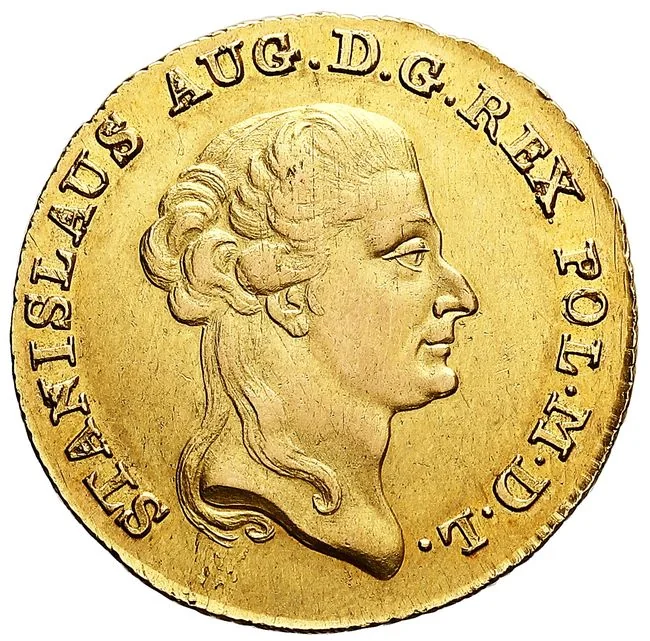
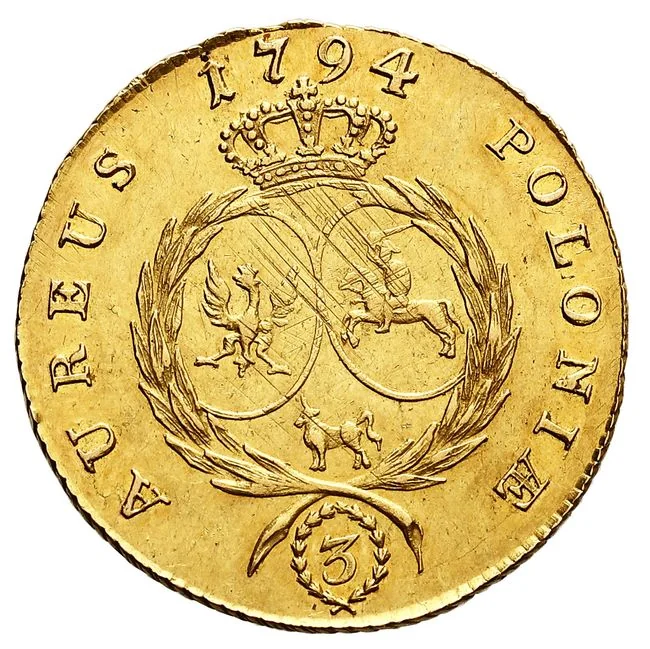
3 ducats – Polish–Lithuanian Commonwealth
Add to wishlist
Poland
Context
Year: 1794
Country: Poland
Issuer: Polish–Lithuanian Commonwealth
Ruler: Stanisław II Augustus
Currency:
(1573—1795)
Demonetized: Yes
Total mintage: 5,256
Material
References
KM: #
Numista: #123414
Value
Bullion value: $1914.95
Obverse
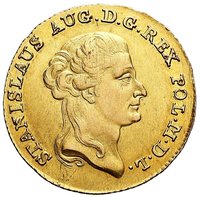
Inscription:
STANISLAUS AUG D G REX POL M D L
Script: Latin
Reverse
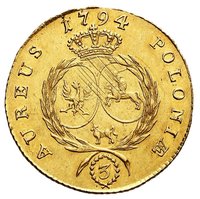
Inscription:
AUREUS – 1794 – POLONIÆ
3
3
Script: Latin
Edge
Mints
| Name | Mark |
|---|---|
| Mint of Poland | — |
Mintings
| Year | Mint Mark | Mintage | Quality | Collection |
|---|---|---|---|---|
| 1794 | — | 5,256 |
Historical background
By 1794, the currency situation in the Polish–Lithuanian Commonwealth was catastrophic, a direct reflection of the state's political disintegration. The system was a chaotic mix of coins issued by the Commonwealth's own treasury, alongside vast quantities of foreign specie, particularly Prussian and Russian coins, which circulated freely due to the political and military dominance of these neighboring powers. The state's own minting was debased and unreliable, having been severely compromised by the financial demands of the Confederation of Targowica (1792) and the subsequent Russian occupation. This lack of a stable, sovereign currency crippled commerce and state finances, symbolizing the loss of economic sovereignty.
The immediate trigger for the crisis was the immense cost of the Kościuszko Uprising, which began in March 1794. Facing a desperate need to fund the insurrection against Russian and Prussian forces, the Kościuszko government, under the direction of Treasury Director Hugo Kołłątaj, resorted to the emergency issuance of paper money. These were the first Polish banknotes, known as bilety skarbowe (treasury notes). They were not backed by precious metal reserves but by the future confiscation of properties from the Targowica confederates and by the national forests. While a necessary wartime measure, this instantly introduced inflationary pressure into an already fragile monetary system.
Ultimately, the currency collapse mirrored the political fate of the Commonwealth. The bilety skarbowe rapidly depreciated as public confidence waned alongside the military fortunes of the uprising. Following the defeat of the Kościuszko Uprising at the Battle of Maciejowice in October 1794 and the subsequent fall of Warsaw, the currency became virtually worthless. The final partition of the Commonwealth in 1795 erased the state entirely, and its chaotic monetary system was replaced by the currencies of the partitioning powers: Russia, Prussia, and Austria, marking a definitive end to Poland's independent financial history for over a century.
The immediate trigger for the crisis was the immense cost of the Kościuszko Uprising, which began in March 1794. Facing a desperate need to fund the insurrection against Russian and Prussian forces, the Kościuszko government, under the direction of Treasury Director Hugo Kołłątaj, resorted to the emergency issuance of paper money. These were the first Polish banknotes, known as bilety skarbowe (treasury notes). They were not backed by precious metal reserves but by the future confiscation of properties from the Targowica confederates and by the national forests. While a necessary wartime measure, this instantly introduced inflationary pressure into an already fragile monetary system.
Ultimately, the currency collapse mirrored the political fate of the Commonwealth. The bilety skarbowe rapidly depreciated as public confidence waned alongside the military fortunes of the uprising. Following the defeat of the Kościuszko Uprising at the Battle of Maciejowice in October 1794 and the subsequent fall of Warsaw, the currency became virtually worthless. The final partition of the Commonwealth in 1795 erased the state entirely, and its chaotic monetary system was replaced by the currencies of the partitioning powers: Russia, Prussia, and Austria, marking a definitive end to Poland's independent financial history for over a century.
✨ Legendary