

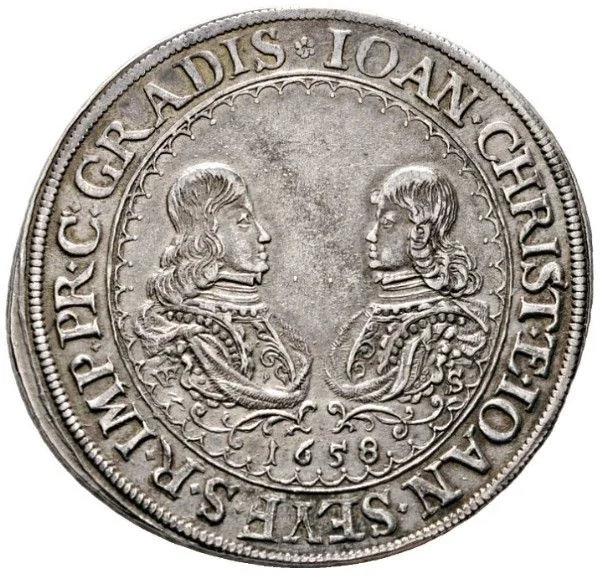
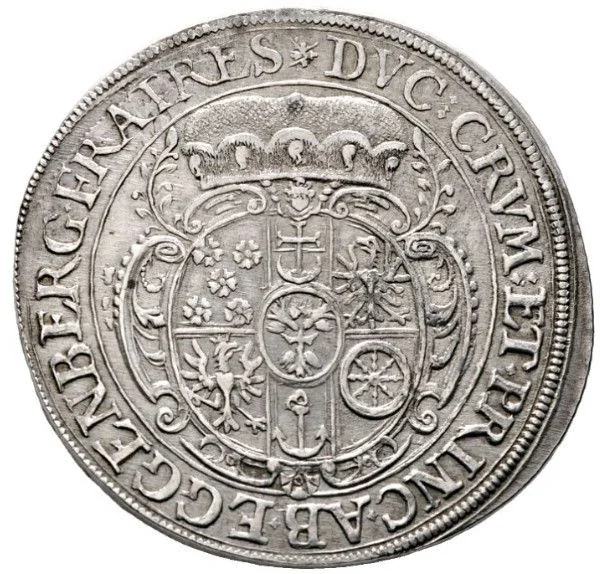
1¼ Thaler – Duchy of Krummau
Context
Year: 1658
Country: Bohemia
Issuer: Duchy of Krummau
Ruler: John Christian of Eggenberg
Currency:
(1625—1688)
Demonetized: Yes
References
KM: #Click to copy to clipboard46
Numista: #122770
Value
Bullion value: $109.56
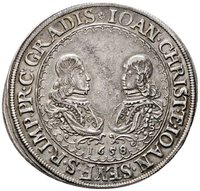
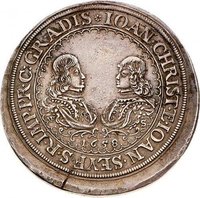
Obverse
Inscription:
IOAN CHRIST E IOAN SEYF S R IMP PR C GRADIS
Script: Latin
Reverse
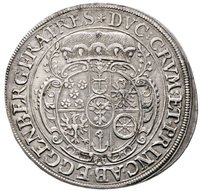
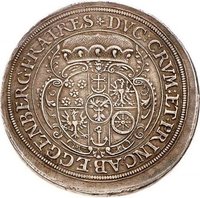
Inscription:
DVC CRVM ET PRINC AB EGGENBERG FRATES
Script: Latin
Edge
Mintings
| Year | Mint Mark | Mintage | Quality | Collection |
|---|---|---|---|---|
| 1658 | — | — |
Historical background
In 1658, the Duchy of Krummau (Český Krumlov), a major estate within the Kingdom of Bohemia, operated within a complex and strained monetary system. As part of the Habsburg lands, its official currency was the Bohemian silver groschen and the thaler, but the Thirty Years' War (1618-1648) had severely disrupted the regional economy. The decade following the war was marked by widespread debasement of coinage, where ruling authorities reduced the precious metal content in coins to fund state debts, leading to inflation and a loss of public trust in official currency.
The local monetary reality in Krummau was therefore one of heterogeneity and uncertainty. Alongside official but often debased Habsburg coinage, older, more reliable pre-war thalers circulated at a premium, and a variety of foreign coins from neighboring German states and trade partners were in common use. This created a challenging environment for commerce, requiring constant evaluation and exchange of disparate coins. As a major administrative and economic center of the Rosenberg (and later, Eggenberg) family's vast holdings, the Duchy’s merchants and treasury officials had to navigate this chaotic system daily.
Furthermore, the situation was exacerbated by the broader Habsburg financial policy. The central government in Vienna, seeking to stabilize the realm’s finances, was attempting to reassert control over currency and impose standardization, but with limited immediate success. Thus, in 1658, the Duchy of Krummau existed in a transitional period, caught between the legacy of wartime fiscal emergency and the slow, uneven process of post-war monetary reform, relying on a patchwork of coins whose true value was often a matter of negotiation.
The local monetary reality in Krummau was therefore one of heterogeneity and uncertainty. Alongside official but often debased Habsburg coinage, older, more reliable pre-war thalers circulated at a premium, and a variety of foreign coins from neighboring German states and trade partners were in common use. This created a challenging environment for commerce, requiring constant evaluation and exchange of disparate coins. As a major administrative and economic center of the Rosenberg (and later, Eggenberg) family's vast holdings, the Duchy’s merchants and treasury officials had to navigate this chaotic system daily.
Furthermore, the situation was exacerbated by the broader Habsburg financial policy. The central government in Vienna, seeking to stabilize the realm’s finances, was attempting to reassert control over currency and impose standardization, but with limited immediate success. Thus, in 1658, the Duchy of Krummau existed in a transitional period, caught between the legacy of wartime fiscal emergency and the slow, uneven process of post-war monetary reform, relying on a patchwork of coins whose true value was often a matter of negotiation.

✨ Legendary