

½ ducat – Polish–Lithuanian Commonwealth
Add to wishlist
Poland
Context
Years: 1664–1665
Country: Poland
Issuer: Polish–Lithuanian Commonwealth
Ruler: John II Casimir Vasa
Currency:
(1573—1795)
Demonetized: Yes
Material
Diameter: 15 mm
Weight: 1.72 g
Gold Weight:: 1.72 g
Shape: Irregular round
Composition: Gold
Magnetic: No
Technique: Hammered
References
KM: #
Numista: #122632
Value
Bullion value: $263.88
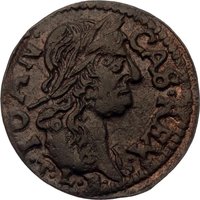
Obverse
Description:
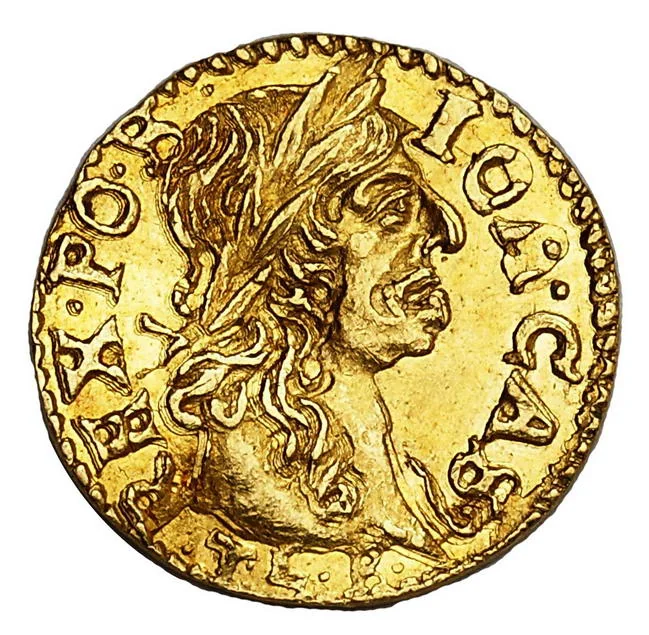
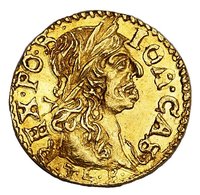
Laureate bust right, legend divided. Mint official's initials below.
Inscription:
IOA ∙ CAS ∙ REX ∙ PO ∙ S ∙
∙T∙L∙B∙
∙T∙L∙B∙
Script: Latin
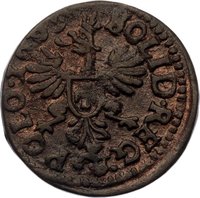
Reverse
Description:
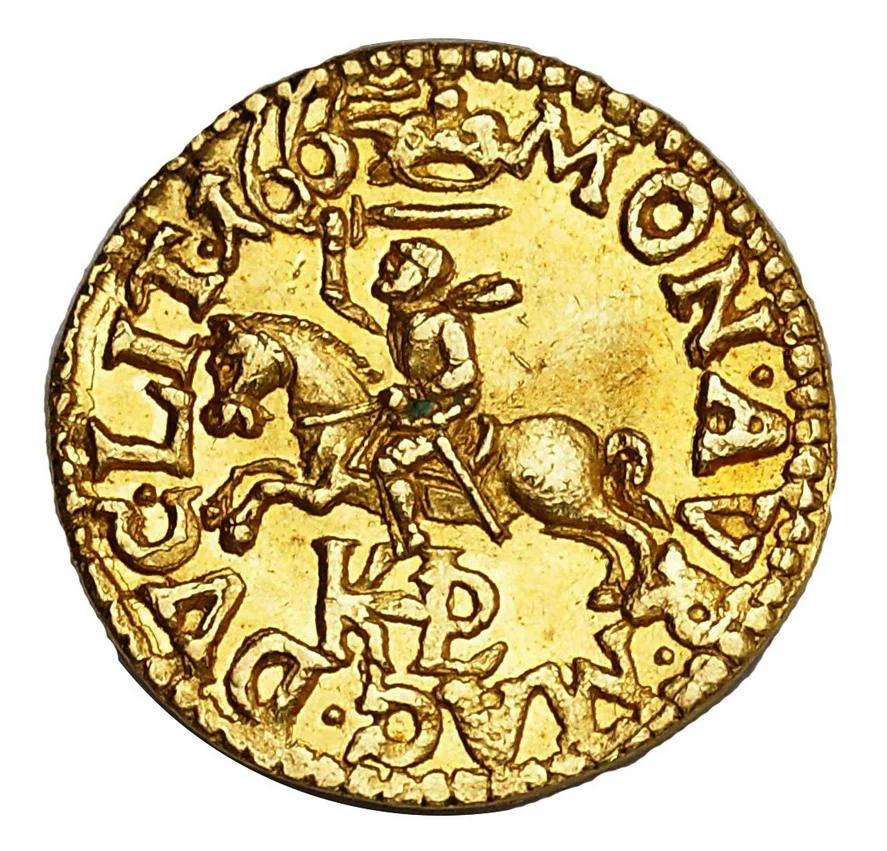
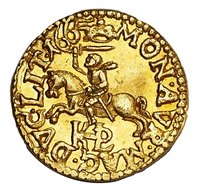
Lithuanian knight (Vytis) on horseback left, initials below.
Inscription:
MON∙AVR∙MAG∙DVC∙LIT∙1665
HKPL
HKPL
Script: Latin
Edge
Mints
| Name | Mark |
|---|---|
| Vilnius | — |
Mintings
| Year | Mint Mark | Mintage | Quality | Collection |
|---|---|---|---|---|
| 1664 | — | — | ||
| 1665 | — | — |
Historical background
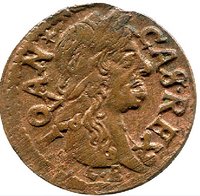
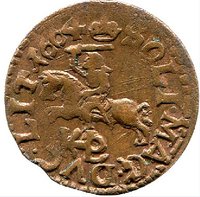
In 1664, the Polish–Lithuanian Commonwealth was in the midst of a severe monetary crisis, primarily driven by decades of debasement and the proliferation of counterfeit coinage. The core of the problem lay in the proliferation of small denomination coins, particularly copper szelągs (shillings), minted in enormous quantities to finance the Commonwealth's exhausting wars with Sweden, Russia, and Cossack uprisings. These coins, known as boratynki after the minting entrepreneur Tito Livio Burattini, flooded the market with little intrinsic value, leading to rampant inflation and a collapse of public trust in the currency.
This monetary chaos created a dual-system economy where foreign coins, especially high-quality silver thalers from the German states, became the preferred medium for large transactions and savings, while the devalued domestic coinage was used for everyday local trade. The situation was exacerbated by widespread counterfeiting, both within the Commonwealth and abroad, which further eroded the value of the already weak currency. The Sejm (parliament) attempted reforms, but they were largely ineffective due to the state's financial desperation and the decentralized nature of the Commonwealth's governance, which gave powerful magnates and cities significant autonomy over economic matters.
Consequently, by 1664, the monetary system was in a state of dysfunction, severely hampering trade, destabilizing the state's finances, and contributing to broader social and economic decline. The crisis underscored the weakening of central authority and became a persistent problem that would plague the Commonwealth for decades, reflecting the broader "Deluge" of mid-17th-century catastrophes that critically weakened the once-powerful state.
This monetary chaos created a dual-system economy where foreign coins, especially high-quality silver thalers from the German states, became the preferred medium for large transactions and savings, while the devalued domestic coinage was used for everyday local trade. The situation was exacerbated by widespread counterfeiting, both within the Commonwealth and abroad, which further eroded the value of the already weak currency. The Sejm (parliament) attempted reforms, but they were largely ineffective due to the state's financial desperation and the decentralized nature of the Commonwealth's governance, which gave powerful magnates and cities significant autonomy over economic matters.
Consequently, by 1664, the monetary system was in a state of dysfunction, severely hampering trade, destabilizing the state's finances, and contributing to broader social and economic decline. The crisis underscored the weakening of central authority and became a persistent problem that would plague the Commonwealth for decades, reflecting the broader "Deluge" of mid-17th-century catastrophes that critically weakened the once-powerful state.
✨ Legendary