

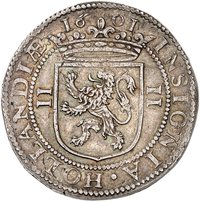
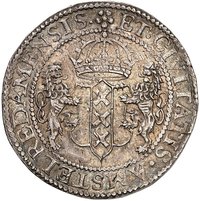
1 ducaton – Netherlands East Indies
Add to wishlist
Indonesia
Context
Year: 1631
Country: Indonesia
Issuer: Netherlands East Indies
Period:
(1602—1800)
Currency:
(1601—1694)
Demonetized: Yes
Total mintage: 1
References
KM: #
Numista: #122286
Obverse
Reverse
Edge
Mintings
| Year | Mint Mark | Mintage | Quality | Collection |
|---|---|---|---|---|
| 1631 | — | 1 |
Historical background
In 1631, the currency situation in the Netherlands East Indies (NEI) was a complex and often chaotic blend of official policy, local tradition, and international trade. The Dutch East India Company (VOC), which governed the territory, officially valued trade and transactions in the Dutch guilder. However, physical Dutch coinage was scarce in the archipelago. The VOC's primary focus was extracting profit, and it preferred to export precious metals back to Europe, creating a chronic shortage of official, trusted coinage for the local economy.
To facilitate everyday trade, a multitude of foreign coins circulated, their values fluctuating based on weight, purity, and local acceptance. The most important of these were Spanish silver "reales" or "pieces of eight" and Mexican "cobs," which served as the de facto international trade currency. Alongside these, various Asian coins were ubiquitous, including Japanese koban gold coins, silver rupees from the Mughal Empire, and a plethora of local tin and copper "doits" and Chinese copper cash. This created a multi-currency system where merchants and Company officials constantly dealt with complex exchange rates and assays.
The VOC attempted to impose order by setting official exchange rates for these foreign coins against the guilder and by occasionally minting its own limited token coinage for local use. However, these measures were only partially successful. Counterfeiting was rampant, and the Company's own financial practices, such as paying its employees and local suppliers in a mix of overvalued coin and kind, added to the monetary confusion. Thus, the 1631 monetary landscape was one of pragmatic adaptation, where the VOC's theoretical control was constantly challenged by the practical realities of a thriving, multi-ethnic trading hub.
To facilitate everyday trade, a multitude of foreign coins circulated, their values fluctuating based on weight, purity, and local acceptance. The most important of these were Spanish silver "reales" or "pieces of eight" and Mexican "cobs," which served as the de facto international trade currency. Alongside these, various Asian coins were ubiquitous, including Japanese koban gold coins, silver rupees from the Mughal Empire, and a plethora of local tin and copper "doits" and Chinese copper cash. This created a multi-currency system where merchants and Company officials constantly dealt with complex exchange rates and assays.
The VOC attempted to impose order by setting official exchange rates for these foreign coins against the guilder and by occasionally minting its own limited token coinage for local use. However, these measures were only partially successful. Counterfeiting was rampant, and the Company's own financial practices, such as paying its employees and local suppliers in a mix of overvalued coin and kind, added to the monetary confusion. Thus, the 1631 monetary landscape was one of pragmatic adaptation, where the VOC's theoretical control was constantly challenged by the practical realities of a thriving, multi-ethnic trading hub.
✨ Legendary