

40 bolognini – Bozzolo
Add to wishlist
Italy
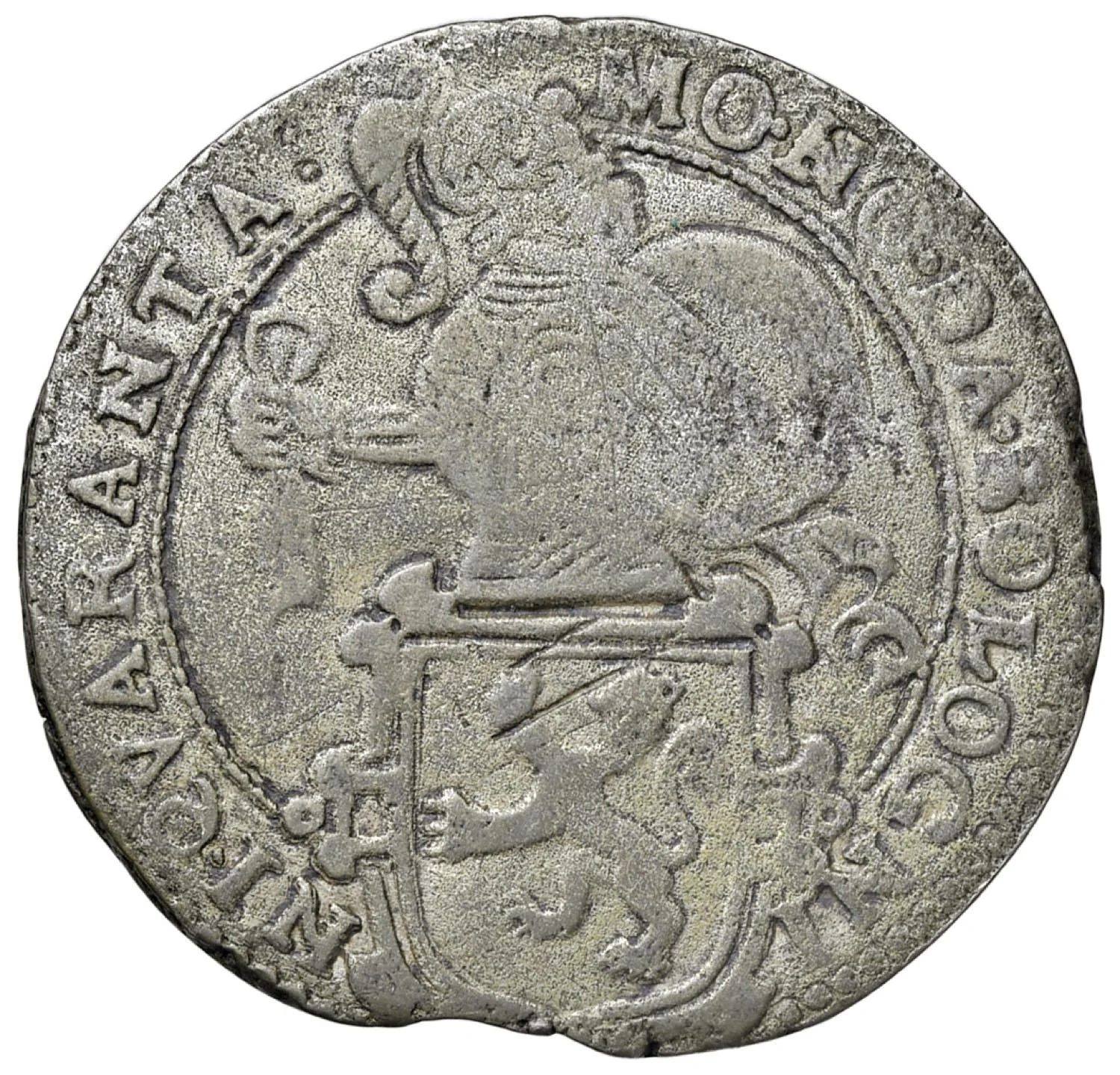
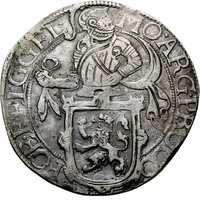
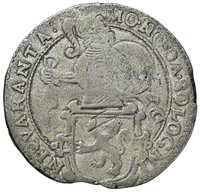
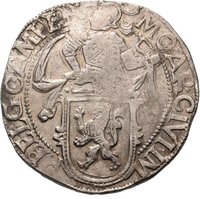
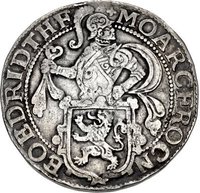
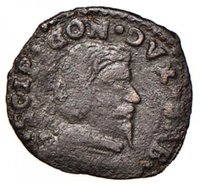
Obverse
Description:
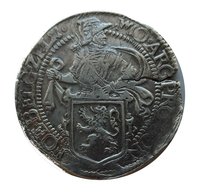
Knight in armor facing right, with draped crest, before a lion shield bearing legend.
Inscription:
MO · NO · DA BOLOGNI · NI · QVARANTA
Script: Latin
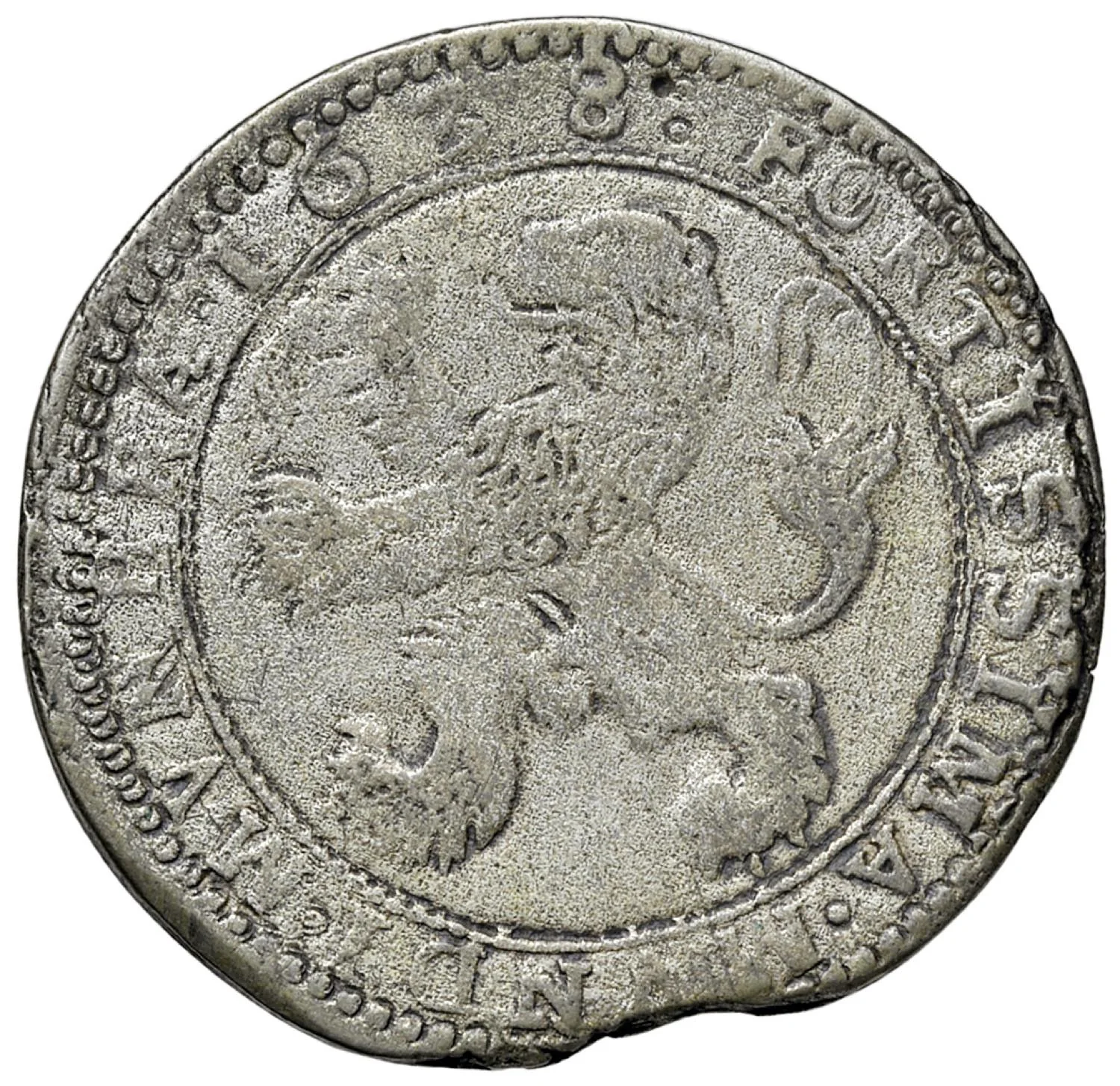
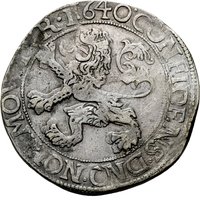
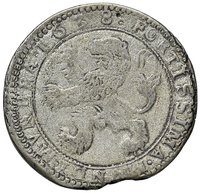
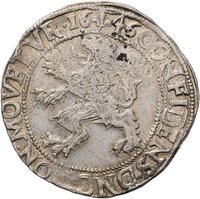
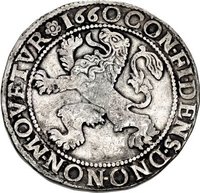
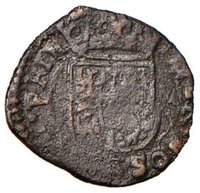
Reverse
Description:
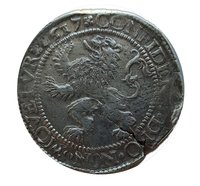
Rampant lion within beaded circle, date above.
Inscription:
FORTISSIMA MVNDI MVNERA 1638
Script: Latin
Edge
Categories
| Animal> Feline |
| Symbols> Coat of Arms |
Mints
| Name | Mark |
|---|---|
| Bozzolo | — |
Mintings
| Year | Mint Mark | Mintage | Quality | Collection |
|---|---|---|---|---|
| 1638 | — | — |
Historical background
In 1638, the small northern Italian Duchy of Bozzolo, ruled by the Gonzaga family, operated within a complex and fragmented monetary system typical of the Italian peninsula during the early modern period. The state itself had limited minting authority, and daily commerce relied heavily on a bewildering array of circulating coins from other Italian and European states. Spanish reales, Venetian ducats, Florentine florins, and Milanese scudi all passed through the hands of merchants and peasants alike, their values constantly shifting based on metallic weight and the volatile reputation of their issuing powers. This created a persistent challenge for trade and taxation, as officials and merchants required up-to-date exchange lists (tariffe) to conduct business.
The local economy was further strained by the broader context of the Thirty Years' War (1618-1648), which, while not directly fought in Bozzolo, disrupted trade routes and caused severe fluctuations in the supply of precious metals. The practice of "clipping" or shaving metal from coin edges was rampant, degrading the value of circulating currency. Consequently, there was a chronic shortage of "good money" (full-weight coin), which was often hoarded or exported, leaving a preponderance of worn and debased coinage for local use—a phenomenon known as Gresham's Law, where bad money drives out good.
Duke Ferrante II Gonzaga and his council would have been preoccupied with managing this chaotic system, attempting to set legal exchange rates to stabilize revenues and control market prices. However, their power was limited against larger economic forces. The currency situation in Bozzolo in 1638 was thus one of inherent instability, a microcosm of a pre-national monetary world where the value of money was not guaranteed by a single state but was a tangible, physical commodity subject to wear, fraud, and the geopolitical tides of war and commerce.
The local economy was further strained by the broader context of the Thirty Years' War (1618-1648), which, while not directly fought in Bozzolo, disrupted trade routes and caused severe fluctuations in the supply of precious metals. The practice of "clipping" or shaving metal from coin edges was rampant, degrading the value of circulating currency. Consequently, there was a chronic shortage of "good money" (full-weight coin), which was often hoarded or exported, leaving a preponderance of worn and debased coinage for local use—a phenomenon known as Gresham's Law, where bad money drives out good.
Duke Ferrante II Gonzaga and his council would have been preoccupied with managing this chaotic system, attempting to set legal exchange rates to stabilize revenues and control market prices. However, their power was limited against larger economic forces. The currency situation in Bozzolo in 1638 was thus one of inherent instability, a microcosm of a pre-national monetary world where the value of money was not guaranteed by a single state but was a tangible, physical commodity subject to wear, fraud, and the geopolitical tides of war and commerce.
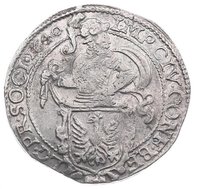
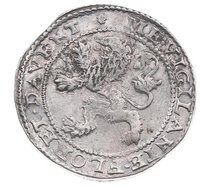
Series: Leeuwendaalder

✨ Legendary