

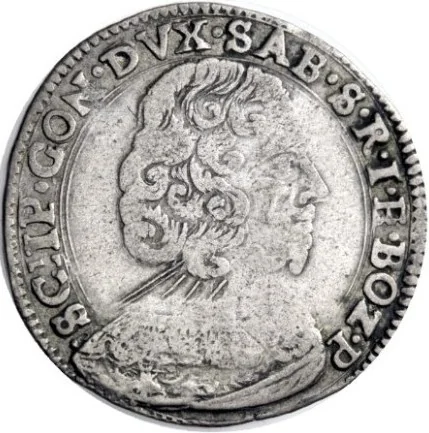
30 Soldi – Bozzolo
Italy
Context
Years: 1636–1670
Country: Italy 
Issuer: Bozzolo
Ruler: Scipione Gonzaga
Currency:
(1497—1670)
Demonetized: Yes
References
KM: #Click to copy to clipboard30
Numista: #121843
Value
Bullion value: $15.94
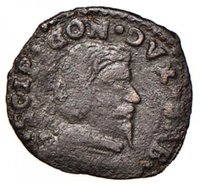
Obverse
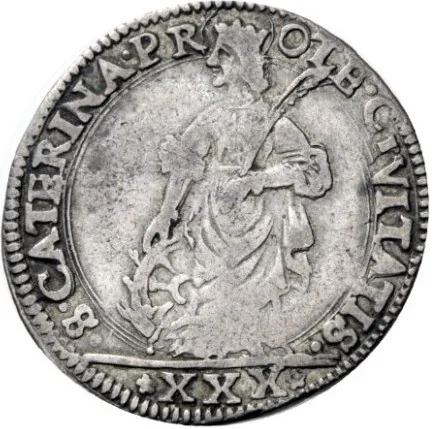
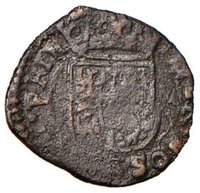
Reverse
Description:
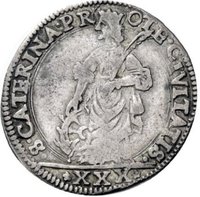
Seated Saint Catherine with palms, value below.
Inscription:
S·CATERINA·PR OTE·CIVITATIS·
·XXX·
·XXX·
Script: Latin
Edge
Mints
| Name | Mark |
|---|---|
| Bozzolo | — |
Mintings
| Year | Mint Mark | Mintage | Quality | Collection |
|---|---|---|---|---|
| — | — | — |
Historical background
In 1636, the Duchy of Mantua, which included the small lordship of Bozzolo, was emerging from the devastating War of the Mantuan Succession (1628–1631). This conflict, a bloody theater of the larger Thirty Years' War, left the region's economy in ruins, its fields ravaged, and its population decimated by famine and plague. The financial foundation of the state was shattered, leading to a severe debasement of the Mantuan currency. Consequently, Bozzolo in 1636 operated within a chaotic and inflationary monetary environment, where the official coinage issued by the ducal mint in Mantua had significantly lost its intrinsic silver content and, thus, its public trust.
The currency situation on the ground was one of extreme complexity. While debased scudi, lire, and soldi from Mantua remained the official legal tender, in practice a multitude of foreign coins circulated. Spanish silver reales, Florentine piastras, and Venetian ducats—all seen as more stable and reliable—were commonly used for significant transactions and trade. This created a dual system: daily market haggling involved calculating the ever-shifting exchange rates between the poor local coinage and these stronger foreign currencies, a task that fell to money-changers whose expertise was both essential and lucrative.
For the residents of Bozzolo, from the local lord to the peasantry, this monetary instability translated into profound hardship. Prices for essential goods were volatile and often soared, as merchants sought to protect themselves against the declining value of Mantuan coin. Savings held in local currency eroded rapidly, and wage earners found their purchasing power diminished. This financial turmoil stifled economic recovery and placed an invisible but heavy tax on all transactions, exacerbating the social and material scars left by the recent war and hindering any meaningful reconstruction of daily life.
The currency situation on the ground was one of extreme complexity. While debased scudi, lire, and soldi from Mantua remained the official legal tender, in practice a multitude of foreign coins circulated. Spanish silver reales, Florentine piastras, and Venetian ducats—all seen as more stable and reliable—were commonly used for significant transactions and trade. This created a dual system: daily market haggling involved calculating the ever-shifting exchange rates between the poor local coinage and these stronger foreign currencies, a task that fell to money-changers whose expertise was both essential and lucrative.
For the residents of Bozzolo, from the local lord to the peasantry, this monetary instability translated into profound hardship. Prices for essential goods were volatile and often soared, as merchants sought to protect themselves against the declining value of Mantuan coin. Savings held in local currency eroded rapidly, and wage earners found their purchasing power diminished. This financial turmoil stifled economic recovery and placed an invisible but heavy tax on all transactions, exacerbating the social and material scars left by the recent war and hindering any meaningful reconstruction of daily life.
Series: 1636 Bozzolo circulation coins
✨ Legendary