

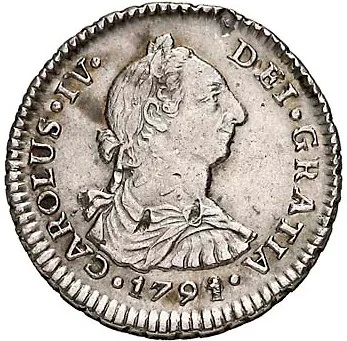
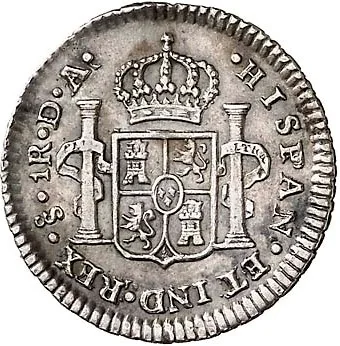
1 real – Chile
Add to wishlist
Chile
Context
Years: 1789–1791
Issuer: Chile
Ruler: Charles IV
Currency:
(1541—1852)
Demonetized: Yes
Total mintage: 168,000
Material
References
KM: #
Numista: #121284
Value
Bullion value: $7.73
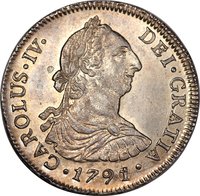
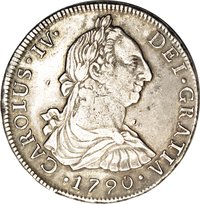
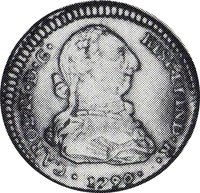
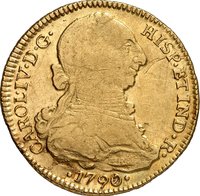
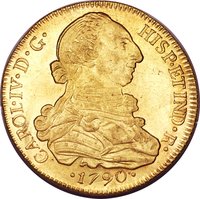
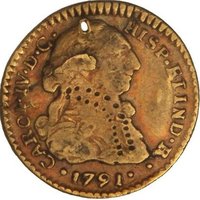
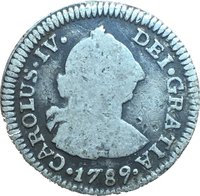
Obverse
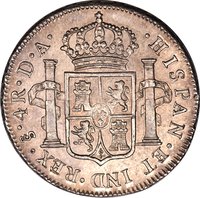
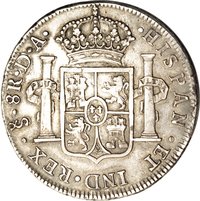
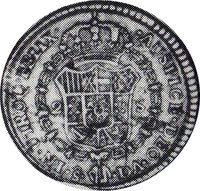
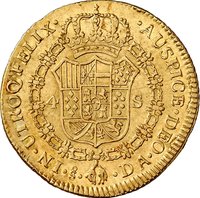
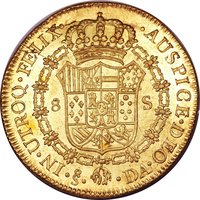
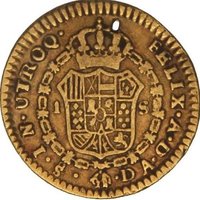
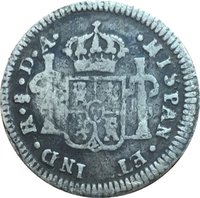
Reverse
Edge
Chained
Mintings
| Year | Mint Mark | Mintage | Quality | Collection |
|---|---|---|---|---|
| 1789 | So | 109,000 | ||
| 1790 | So | 39,000 | ||
| 1791 | So | 20,000 |
Historical background
In 1789, Chile, as a captaincy general within the Spanish Empire, operated under a monetary system entirely dictated by the Crown in Madrid. The official currency was the Spanish real, with coins minted in silver and gold primarily arriving from the viceregal capitals of Lima and Mexico City. However, Chile suffered from a chronic and severe shortage of hard currency. Its economy was largely based on agriculture and limited mining, producing little exportable bullion to attract coinage into the local economy. This scarcity made everyday commercial transactions difficult and stifled economic growth.
The shortage led to the widespread use of substitute currencies and credit instruments. Merchants and large landowners often conducted business through libranzas (promissory notes) and vales (credit vouchers), creating a fragile web of private debt. Most commonly, in the absence of small change, people resorted to barter or used fragmented and worn coins cut into pieces, known as "macuquinos." This informal system was inefficient, prone to fraud, and a constant source of complaint from merchants and colonial officials alike.
Furthermore, Chile was legally restricted from minting its own coins, a right reserved for the royal mints in Peru and Mexico. This meant the colony had no control over its money supply, leaving it vulnerable to the fluctuating shipments of specie from abroad. The situation in 1789 was one of monetary dependence and insufficiency, a friction point that would later contribute to the creole elite's desire for greater economic autonomy. This foundational currency crisis would persist beyond independence, shaping Chile's early financial policies as a new nation.
The shortage led to the widespread use of substitute currencies and credit instruments. Merchants and large landowners often conducted business through libranzas (promissory notes) and vales (credit vouchers), creating a fragile web of private debt. Most commonly, in the absence of small change, people resorted to barter or used fragmented and worn coins cut into pieces, known as "macuquinos." This informal system was inefficient, prone to fraud, and a constant source of complaint from merchants and colonial officials alike.
Furthermore, Chile was legally restricted from minting its own coins, a right reserved for the royal mints in Peru and Mexico. This meant the colony had no control over its money supply, leaving it vulnerable to the fluctuating shipments of specie from abroad. The situation in 1789 was one of monetary dependence and insufficiency, a friction point that would later contribute to the creole elite's desire for greater economic autonomy. This foundational currency crisis would persist beyond independence, shaping Chile's early financial policies as a new nation.
Series: 1789 Chile circulation coins
✨ Legendary