

4 skilling – Norway
Add to wishlist
Norway
Context
Year: 1677
Issuer: Norway
Ruler: Christian V
Currency:
(1523—1746)
Demonetized: Yes
Total mintage: 128,000
References
KM: #
Numista: #99117
Obverse
Reverse
Description:
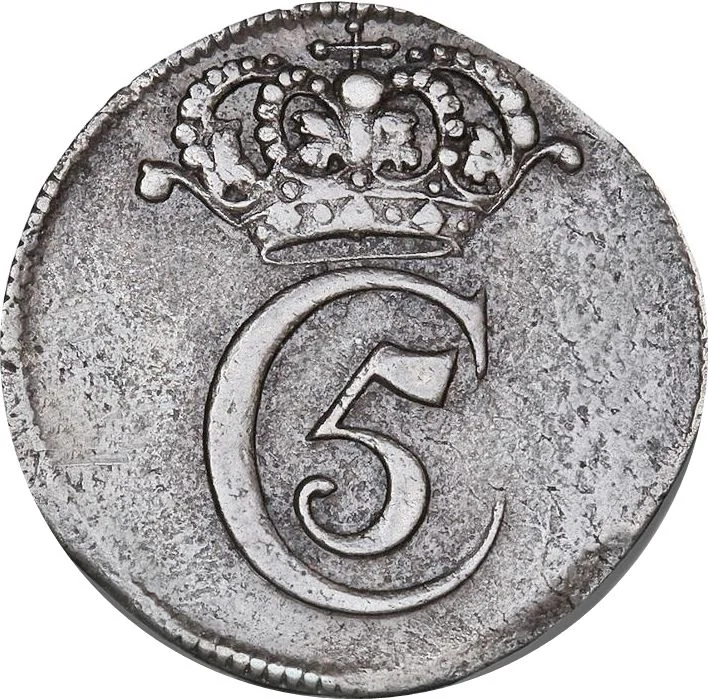
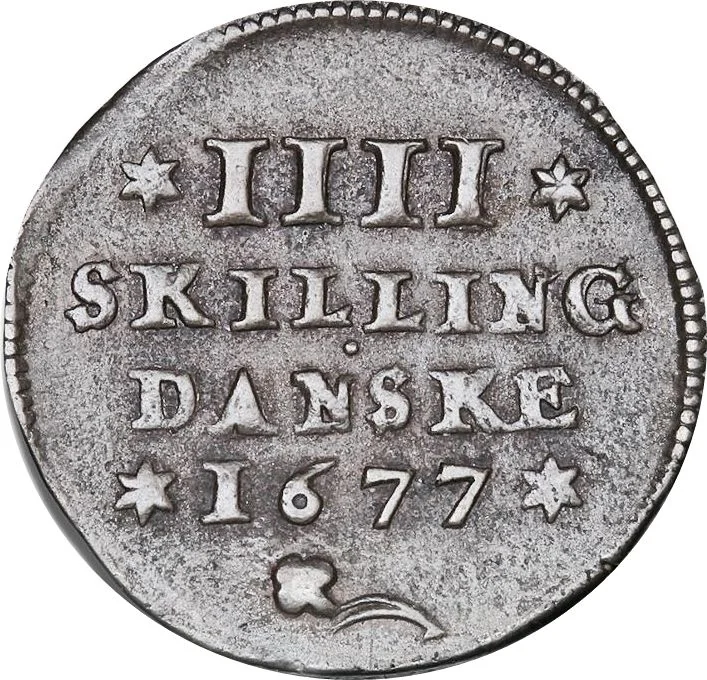
Value and date stacked.
Mintmark under date.
Beaded rim border.
Mintmark under date.
Beaded rim border.
Inscription:
🟌 IIII 🟌
SKILLING
DANSKE
🟌 1677 🟌
SKILLING
DANSKE
🟌 1677 🟌
Script: Latin
Edge
Mints
| Name | Mark |
|---|---|
| Christiania | — |
Mintings
| Year | Mint Mark | Mintage | Quality | Collection |
|---|---|---|---|---|
| 1677 | — | 128,000 |
Historical background
In 1677, Norway found itself in a precarious monetary situation, deeply entangled in the financial strains of the Great Northern War (1700-1721) and its preceding conflicts. As a unified kingdom with Denmark under the absolute monarchy of King Christian V, Norway’s currency was the Danish rigsdaler. However, the state's relentless need to finance its large standing army and navy, primarily to confront the threat of Sweden, led to severe fiscal measures. The government repeatedly debased the coinage by reducing its silver content, a practice that created a stark difference between the older, full-value coins and the new, inferior ones. This effectively created a two-tier currency system and eroded public trust.
The consequences were acutely felt in daily economic life. As Gresham's law took hold—"bad money drives out good"—people hoarded the older, higher-silver coins or used them for foreign trade, while the debased currency circulated domestically, fueling inflation. Prices for essential goods rose sharply, a problem exacerbated by the war's disruption of trade and poor harvests. For a country like Norway, which relied heavily on imports of grain and other commodities, the weak currency made these goods prohibitively expensive, leading to widespread hardship and social unrest among the common population.
Authorities attempted to control the chaos through royal decrees that set mandatory exchange rates between old and new coins, but these edicts were largely ineffective and frequently ignored. The monetary confusion crippled commerce, as merchants became wary of accepting payment in uncertain coinage. Thus, in 1677, Norway was caught in a vicious cycle of war finance, currency devaluation, and inflation, which undermined the economy and placed a heavy burden on its people, all while the kingdom remained on a prolonged war footing against its eastern rival.
The consequences were acutely felt in daily economic life. As Gresham's law took hold—"bad money drives out good"—people hoarded the older, higher-silver coins or used them for foreign trade, while the debased currency circulated domestically, fueling inflation. Prices for essential goods rose sharply, a problem exacerbated by the war's disruption of trade and poor harvests. For a country like Norway, which relied heavily on imports of grain and other commodities, the weak currency made these goods prohibitively expensive, leading to widespread hardship and social unrest among the common population.
Authorities attempted to control the chaos through royal decrees that set mandatory exchange rates between old and new coins, but these edicts were largely ineffective and frequently ignored. The monetary confusion crippled commerce, as merchants became wary of accepting payment in uncertain coinage. Thus, in 1677, Norway was caught in a vicious cycle of war finance, currency devaluation, and inflation, which undermined the economy and placed a heavy burden on its people, all while the kingdom remained on a prolonged war footing against its eastern rival.

✨ Legendary