

3 speciedaler – Norway
Add to wishlist
Norway
Context
Material
References
KM: #
Numista: #445307
Value
Bullion value: $189.09
Obverse
Description:
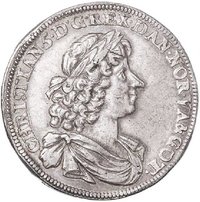
King Christian V's laureate, draped bust facing right, surrounded by a clockwise inscription. Beaded edge.
Inscription:
CHRISTIAN·5·D:G·REX·DAN·NOR·VA&GOT·
Script: Latin
Reverse
Description:
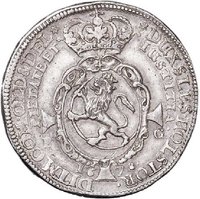
A crowned lion holding an axe faces left within a crowned oval shield, set upon a cross. The shield is framed by two text lines and a beaded edge. Mint master initials flank the shield below the cross's arms; the date is split by the lower arm.
Inscription:
🟌DUX·SLES·HOL·STOR· | DITM·COM·OLD&DEL🟌
·PIETATE·ET· | IUSTITIA·
P | G
16 | 78
·PIETATE·ET· | IUSTITIA·
P | G
16 | 78
Script: Latin
Edge
Mints
| Name | Mark |
|---|---|
| Christiania | — |
Mintings
| Year | Mint Mark | Mintage | Quality | Collection |
|---|---|---|---|---|
| 1678 | — | — | ||
| 1679 | — | — | ||
| 1680 | — | — |
Historical background
In 1678, Norway was part of the dual monarchy of Denmark-Norway, and its currency situation was deeply troubled. The kingdom was embroiled in the Scanian War (1675-1679) against Sweden, a conflict that placed immense strain on state finances. To fund the war effort, the government in Copenhagen resorted to severe currency debasement, drastically reducing the silver content in coins like the skilling and mark. This led to a proliferation of poor-quality coins in circulation, causing the real value of the currency to plummet and triggering rapid inflation, which hit the Norwegian populace hard.
The monetary system itself was complex and fragmented. While the official currency was based on the riksdaler (rix-dollar), divided into mark and skilling, the reality in Norway involved a chaotic mix of older, full-value coins, new debased coins, and a variety of foreign currencies circulating in port cities. This confusion was exacerbated by the government's attempt to legislate different values for the same coin depending on whether it was used for state payments or private transactions, a policy that bred distrust and market disorder.
Consequently, the year 1678 fell within a period of significant economic hardship and monetary instability for Norway. Prices for essential goods soared as the currency's purchasing power collapsed, creating widespread distress among common people and merchants alike. The situation highlighted the vulnerabilities of a pre-modern economy under the strain of protracted warfare and fiscal mismanagement, setting the stage for eventual monetary reforms after the war's conclusion.
The monetary system itself was complex and fragmented. While the official currency was based on the riksdaler (rix-dollar), divided into mark and skilling, the reality in Norway involved a chaotic mix of older, full-value coins, new debased coins, and a variety of foreign currencies circulating in port cities. This confusion was exacerbated by the government's attempt to legislate different values for the same coin depending on whether it was used for state payments or private transactions, a policy that bred distrust and market disorder.
Consequently, the year 1678 fell within a period of significant economic hardship and monetary instability for Norway. Prices for essential goods soared as the currency's purchasing power collapsed, creating widespread distress among common people and merchants alike. The situation highlighted the vulnerabilities of a pre-modern economy under the strain of protracted warfare and fiscal mismanagement, setting the stage for eventual monetary reforms after the war's conclusion.
✨ Legendary