

2 Skilling – Norway
Norway
Context
Years: 1649–1670
Issuer: Norway 
Ruler: Frederick III
Currency:
(1523—1746)
Demonetized: Yes
Total mintage: 5,370,200
References
KM: #Click to copy to clipboard30
Numista: #99012
Obverse
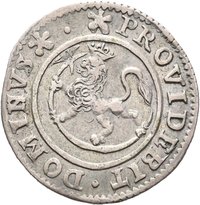
Description:
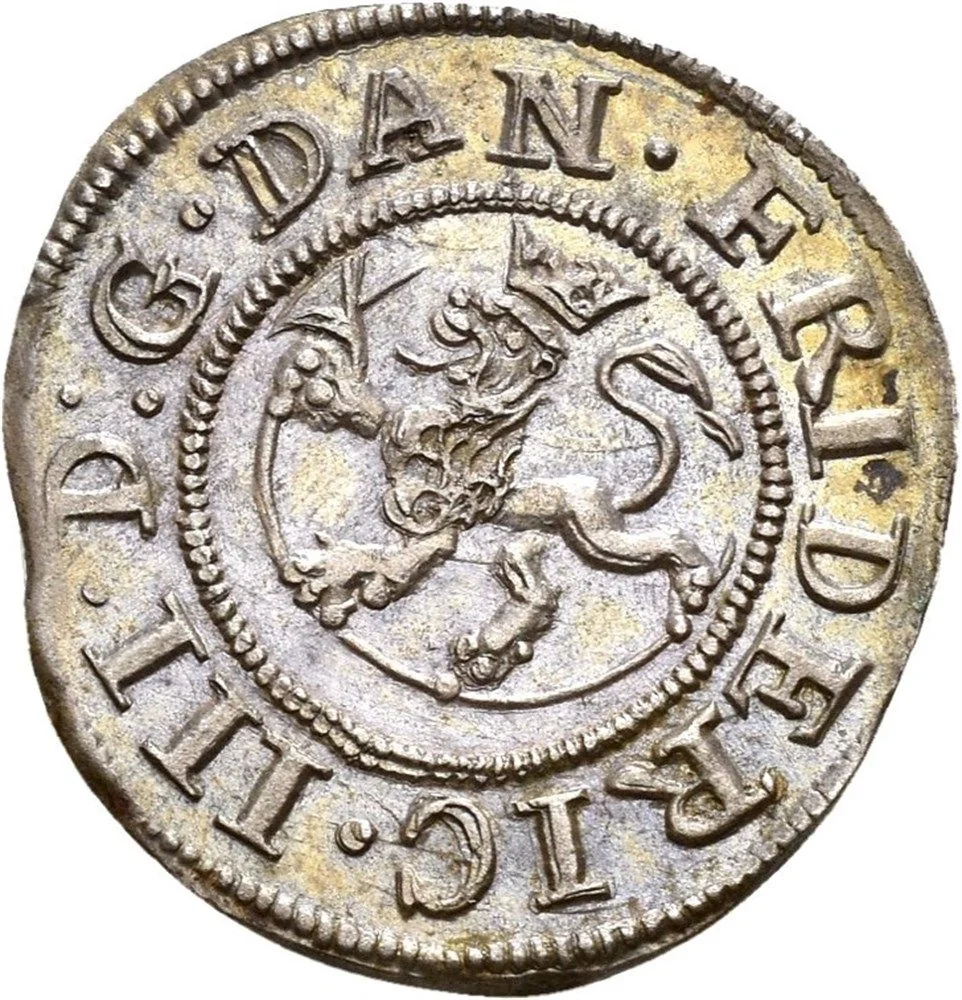
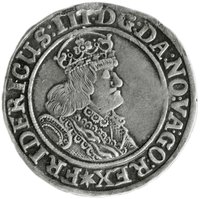
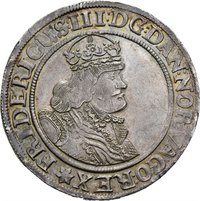
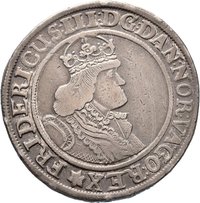
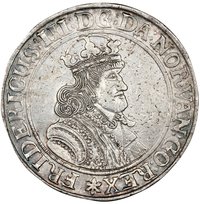
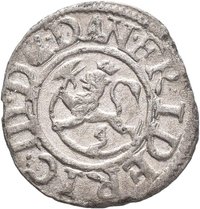
Crowned Norwegian lion with axe, left-facing, within a beaded ring and inscription. Beaded rim.
Inscription:
FRIDERIC·III·D:G·DAN·
Script: Latin
Reverse
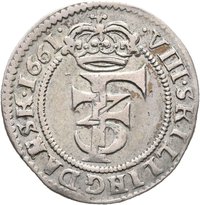
Description:
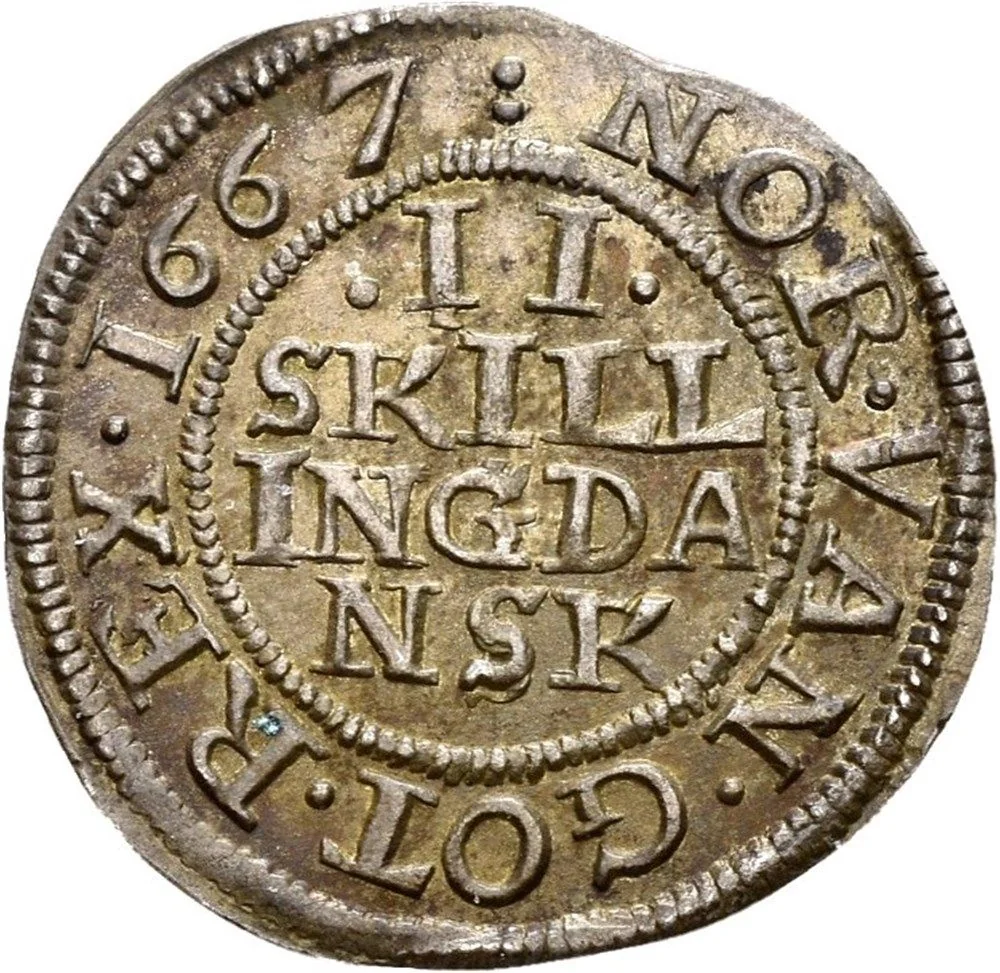
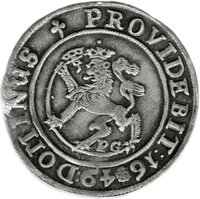
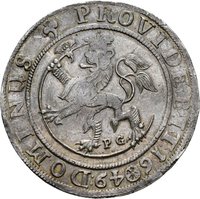
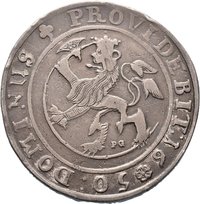
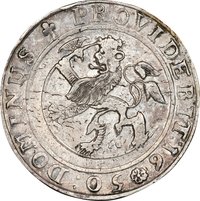
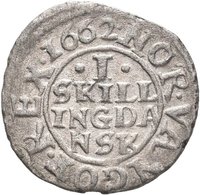
Four-line value in beaded ring, surrounded by inscription. Beaded ring on rim.
Inscription:
·II·
SKILL
ING DA
NSK
NOR·VAN·GOT·REX·1667:
SKILL
ING DA
NSK
NOR·VAN·GOT·REX·1667:
Script: Latin
Edge
Categories
| Animal |
| Symbol> Crown |
| Symbols> Coat of Arms |
| Object> Cold weapons |
Mints
| Name | Mark |
|---|---|
| Christiania | — |
Mintings
| Year | Mint Mark | Mintage | Quality | Collection |
|---|---|---|---|---|
| 1649 | — | 913,100 | ||
| 1650 | — | — | ||
| 1651 | — | — | ||
| 1652 | — | 243,500 | ||
| 1653 | — | 247,100 | ||
| 1654 | — | 420,600 | ||
| 1655 | — | — | ||
| 1656 | — | 285,800 | ||
| 1657 | — | — | ||
| 1658 | — | — | ||
| 1659 | — | — | ||
| 1660 | — | — | ||
| 1661 | — | 479,300 | ||
| 1662 | — | — | ||
| 1663 | — | — | ||
| 1664 | — | 496,800 | ||
| 1665 | — | 473,200 | ||
| 1666 | — | — | ||
| 1667 | — | 495,600 | ||
| 1668 | — | 491,100 | ||
| 1669 | — | 708,000 | ||
| 1670 | — | 116,100 |
Historical background
In 1649, Norway was part of the dual monarchy of Denmark-Norway, and its currency situation was complex and challenging. The official currency was the Danish rigsdaler, a large silver coin, but the monetary system was not uniform. A wide variety of foreign coins, particularly German, Dutch, and Swedish, circulated alongside domestic issues, their value often determined by their actual silver content rather than a fixed face value. This created a chaotic environment for trade, requiring constant assessment and exchange.
The period was marked by significant currency debasement. To finance Denmark-Norway's costly involvement in the Thirty Years' War, the state repeatedly reduced the silver content in minted coins while ordering them to circulate at their old, higher face values. This practice, essentially a form of inflation, eroded public trust and led to Gresham's Law in action: "good" full-weight coins were hoarded or exported, while "bad" debased coins flooded daily circulation. Prices rose sharply as merchants adjusted for the poorer coinage, causing hardship for the common population and soldiers paid in devalued currency.
Furthermore, Norway's economy was heavily reliant on the export of raw materials like timber and fish, primarily to Western Europe. This trade imbalance meant that much of the nation's silver wealth flowed out to pay for imported manufactured goods, exacerbating the domestic shortage of sound money. The monetary instability of 1649 was therefore a symptom of broader fiscal pressures on the state and Norway's peripheral economic role, setting the stage for further reforms and attempts at standardization later in the century.
The period was marked by significant currency debasement. To finance Denmark-Norway's costly involvement in the Thirty Years' War, the state repeatedly reduced the silver content in minted coins while ordering them to circulate at their old, higher face values. This practice, essentially a form of inflation, eroded public trust and led to Gresham's Law in action: "good" full-weight coins were hoarded or exported, while "bad" debased coins flooded daily circulation. Prices rose sharply as merchants adjusted for the poorer coinage, causing hardship for the common population and soldiers paid in devalued currency.
Furthermore, Norway's economy was heavily reliant on the export of raw materials like timber and fish, primarily to Western Europe. This trade imbalance meant that much of the nation's silver wealth flowed out to pay for imported manufactured goods, exacerbating the domestic shortage of sound money. The monetary instability of 1649 was therefore a symptom of broader fiscal pressures on the state and Norway's peripheral economic role, setting the stage for further reforms and attempts at standardization later in the century.
Series: 1649 Norway circulation coins
💎 Very Rare