

1 skilling – Norway
Add to wishlist
Norway
Context
Years: 1643–1648
Issuer: Norway
Ruler: Christian IV
Currency:
(1523—1746)
Demonetized: Yes
Total mintage: 837,100
References
KM: #
Numista: #99000
Obverse
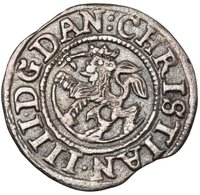
Description:
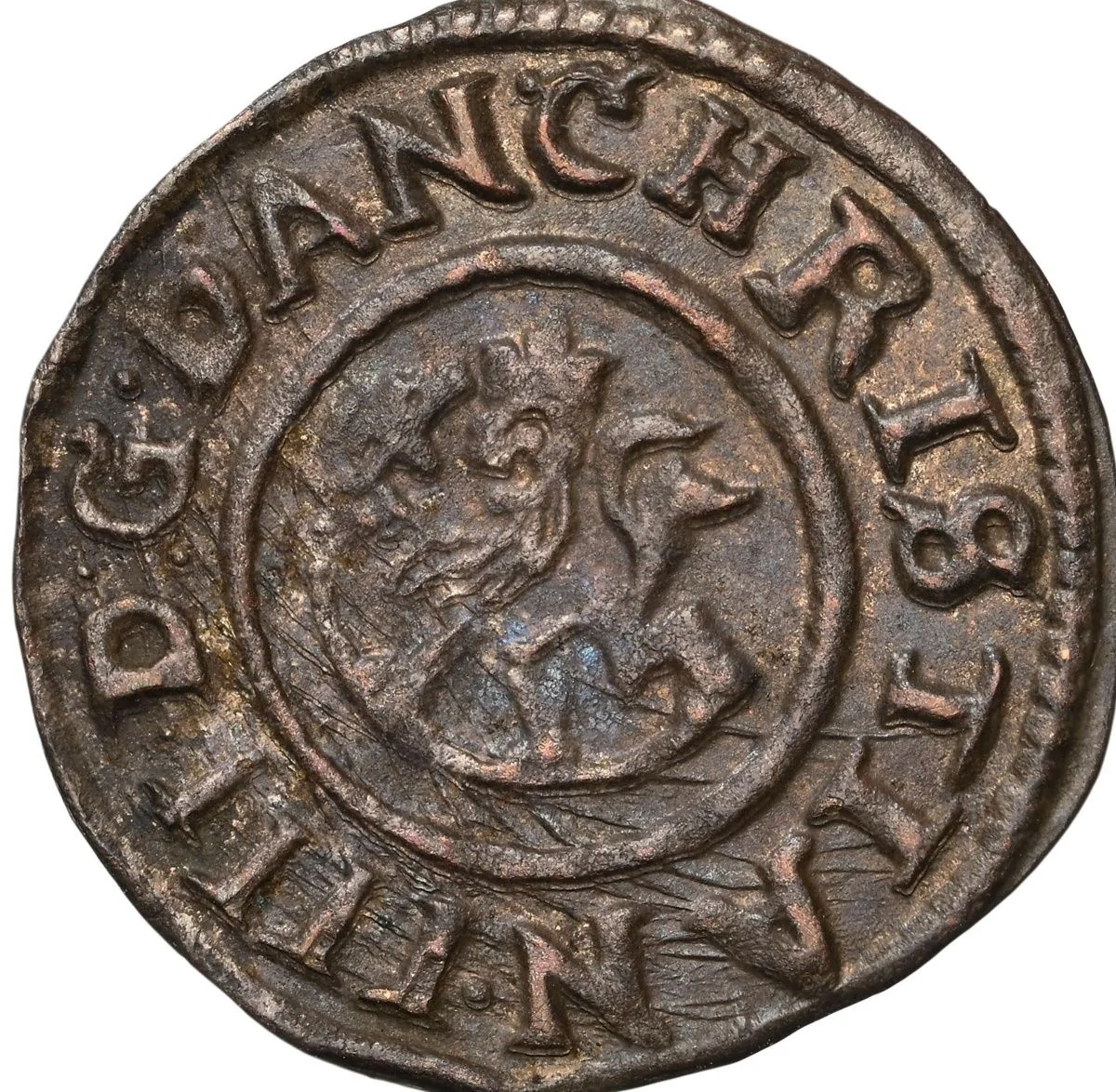
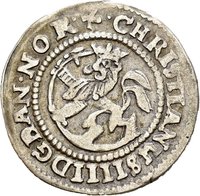
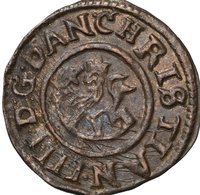
Norwegian lion with axe, left-facing, in a solid ring with beaded rim and surrounding inscription.
Inscription:
CHRISTIAN·IIII·D:G·DAN
Script: Latin
Reverse
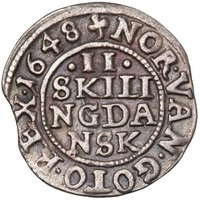
Description:
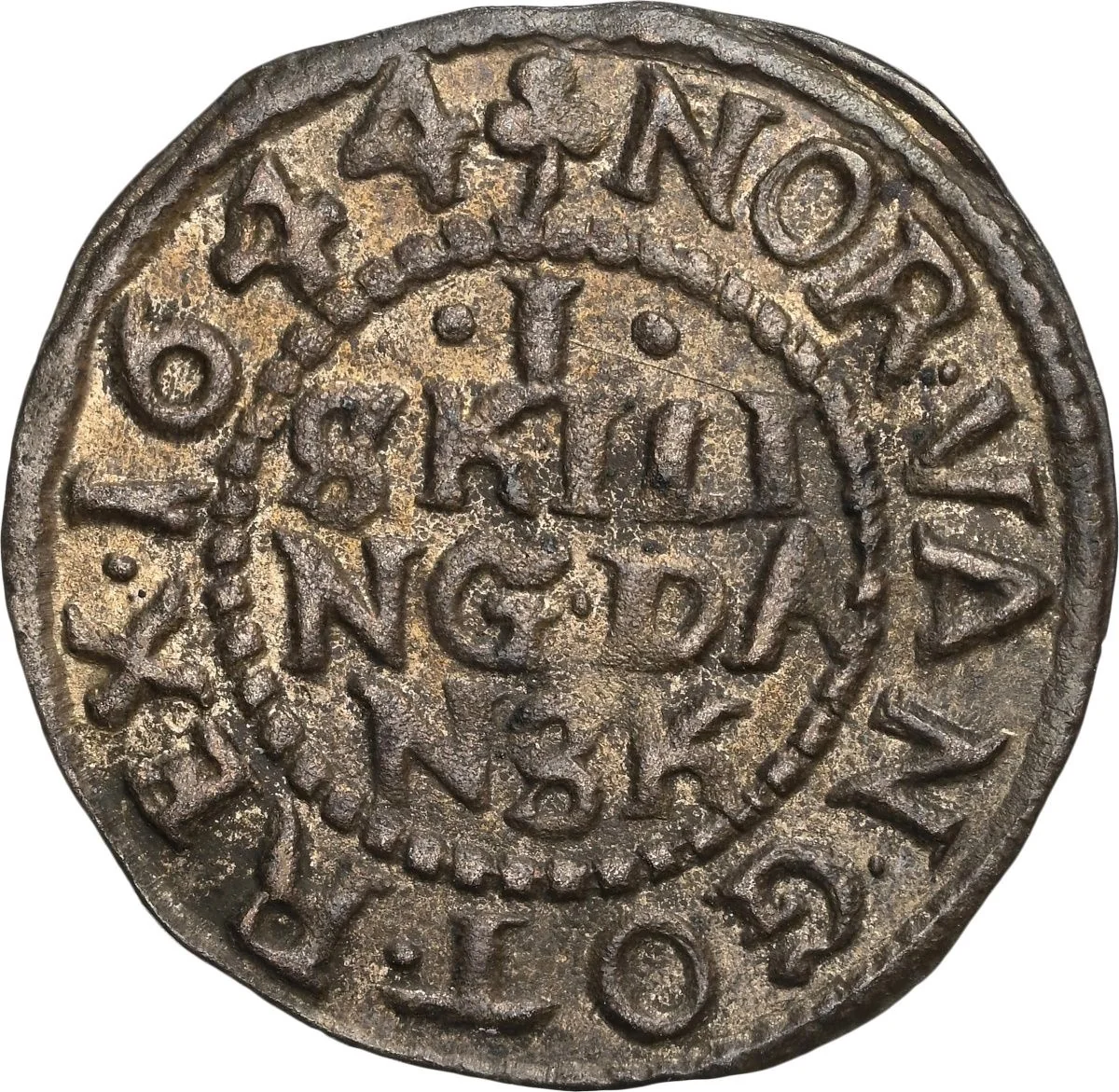
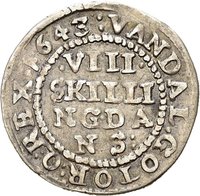
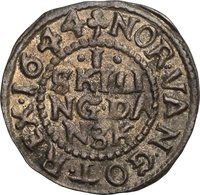
Four-line value in beaded ring, surrounded by inscription. Beaded ring on rim.
Inscription:
·I·
SKILI
NG·DA
NSK
NOR·VAN·GOT·REX·1644 (mm)
SKILI
NG·DA
NSK
NOR·VAN·GOT·REX·1644 (mm)
Script: Latin
Edge
Categories
| Animal |
| Symbols> Coat of Arms |
| Object> Cold weapons |
Mints
| Name | Mark |
|---|---|
| Christiania | — |
Mintings
| Year | Mint Mark | Mintage | Quality | Collection |
|---|---|---|---|---|
| 1643 | — | 207,300 | ||
| 1644 | — | 205,400 | ||
| 1645 | — | — | ||
| 1646 | — | 46,500 | ||
| 1647 | — | 122,900 | ||
| 1648 | — | 255,000 |
Historical background
In 1643, Norway was part of the dual monarchy of Denmark-Norway, and its currency situation was complex and challenging. The official currency was the Danish rigsdaler, a large silver coin, but the monetary system was not uniform. A severe shortage of small change for everyday transactions plagued the economy, leading to widespread use of fragmented coins, foreign currencies (especially German and Dutch), and even commodity money like butter and dried fish in remote areas. This created a chaotic and inefficient market where values were uncertain and exchange was difficult.
The root of the problem lay in the Thirty Years' War (1618-1648), which had drastically increased the Danish-Norwegian crown's military expenditures. To raise funds, the state repeatedly debased the coinage by reducing the silver content, particularly in the smaller skilling denominations. This practice, known as "coinage deterioration," led to Gresham's Law in action: good, full-weight silver coins were hoarded or exported, while the inferior, lightweight coins flooded circulation, causing inflation and eroding public trust in the currency.
Furthermore, the Norwegian economy was heavily dependent on the export of raw materials like timber and fish, primarily through the Kontor of the Hanseatic League in Bergen. This trade was often conducted using foreign silver, highlighting Norway's lack of monetary sovereignty. In response to the crisis, efforts were made to establish a mint in Norway (Kongsberg Silver Works began operations in 1628), but its output was still limited. Thus, in 1643, Norway's currency system was characterized by a debilitating mix of royal debasement, acute small-change scarcity, and reliance on unstable foreign coins, all straining the economic stability of the realm.
The root of the problem lay in the Thirty Years' War (1618-1648), which had drastically increased the Danish-Norwegian crown's military expenditures. To raise funds, the state repeatedly debased the coinage by reducing the silver content, particularly in the smaller skilling denominations. This practice, known as "coinage deterioration," led to Gresham's Law in action: good, full-weight silver coins were hoarded or exported, while the inferior, lightweight coins flooded circulation, causing inflation and eroding public trust in the currency.
Furthermore, the Norwegian economy was heavily dependent on the export of raw materials like timber and fish, primarily through the Kontor of the Hanseatic League in Bergen. This trade was often conducted using foreign silver, highlighting Norway's lack of monetary sovereignty. In response to the crisis, efforts were made to establish a mint in Norway (Kongsberg Silver Works began operations in 1628), but its output was still limited. Thus, in 1643, Norway's currency system was characterized by a debilitating mix of royal debasement, acute small-change scarcity, and reliance on unstable foreign coins, all straining the economic stability of the realm.
Series: 1643 Norway circulation coins

✨ Legendary