

48 Kreuzers – Austrian Empire
Austria
Context
Years: 1621–1623
Country: Austria 
Issuer: Austrian Empire
Ruler: Ferdinand II
Currency:
(1620—1623)
Demonetized: Yes
References
KM: #Click to copy to clipboard317
Numista: #97056
Obverse
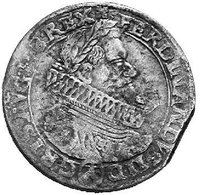
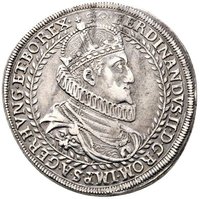
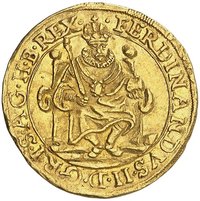
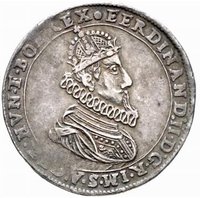
Description:
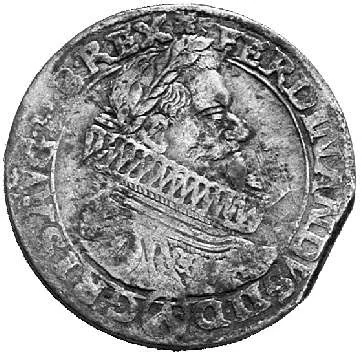
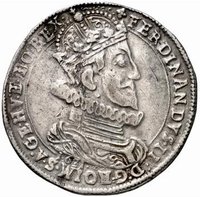
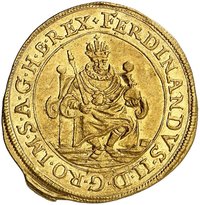
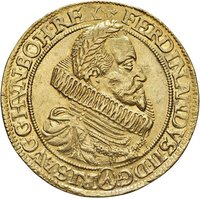
Portrait facing right, ruffled collar. Mint mark in legend below.
Inscription:
FERDINANDVS II D // G I S AV G H B REX
Script: Latin
Reverse
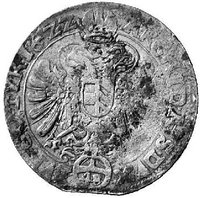
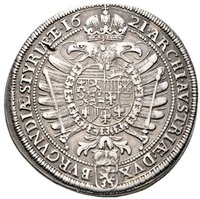
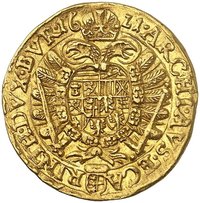
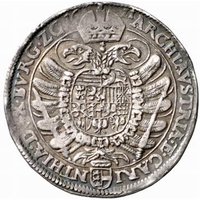
Description:
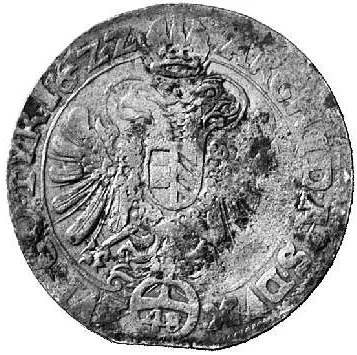
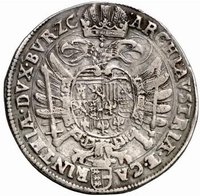
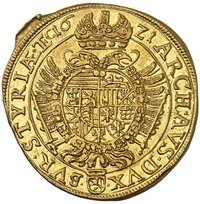
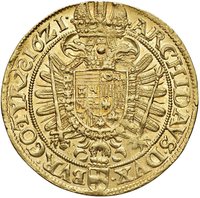
Double-headed imperial eagle bearing Austrian and Burgundian arms, value in orb, date in legend.
Inscription:
ARCHID AV DVX (48) BVR CO TYR 1622
Script: Latin
Edge
Mints
| Name | Mark |
|---|---|
| Münze Österreich | — |
Mintings
| Year | Mint Mark | Mintage | Quality | Collection |
|---|---|---|---|---|
| 1621 | Chevron | — | ||
| 1622 | Chevron | — | ||
| 1622 | Coq | — | ||
| 1623 | Chevron | — |
Historical background
In 1621, the Austrian Habsburg monarchy found itself in a severe monetary crisis, a direct consequence of the costly and ongoing Thirty Years' War (1618-1648). Emperor Ferdinand II's immense expenditures for his armies and his support for the Catholic cause had drained the imperial treasury. To meet these obligations, the government resorted to a disastrous practice: the deliberate and massive debasement of the coinage. The state mint, the Münzstätte, began producing coins with drastically reduced silver content, flooding the economy with inferior money while profiting from the difference between the face value and the cheap production cost.
This policy, orchestrated by officials like the Bohemian mintmaster Hans de Witte, led to a classic episode of "Kipper und Wipper" inflation—a frenzied period of currency speculation and clipping. As bad coins drove out the good (Gresham's Law), people hoarded older, high-silver coins, while the new debased coins circulated rapidly, losing real value by the day. Prices for essential goods like grain and salt skyrocketed, causing widespread hardship among soldiers, peasants, and city-dwellers alike. The economic chaos was compounded by the activities of private money-changers and speculators who exploited the differing minting standards across the Empire's fragmented territories.
The crisis peaked in late 1621 and early 1622, forcing a drastic intervention. In January 1622, Ferdinand II established a centralized minting consortium, granting a small group of financiers, including de Witte and General Albrecht von Wallenstein's financier Jacob Bassevi, a monopoly to recall and restrike all coinage. While this eventually stabilized the currency by 1623 with the introduction of a new, standardized Reichsthaler, the immediate aftermath was severe. The revaluation wiped out savings, ruined many merchants, and transferred enormous wealth to the imperial war chest and the consortium members, deepening social resentment during an already brutal period of warfare.
This policy, orchestrated by officials like the Bohemian mintmaster Hans de Witte, led to a classic episode of "Kipper und Wipper" inflation—a frenzied period of currency speculation and clipping. As bad coins drove out the good (Gresham's Law), people hoarded older, high-silver coins, while the new debased coins circulated rapidly, losing real value by the day. Prices for essential goods like grain and salt skyrocketed, causing widespread hardship among soldiers, peasants, and city-dwellers alike. The economic chaos was compounded by the activities of private money-changers and speculators who exploited the differing minting standards across the Empire's fragmented territories.
The crisis peaked in late 1621 and early 1622, forcing a drastic intervention. In January 1622, Ferdinand II established a centralized minting consortium, granting a small group of financiers, including de Witte and General Albrecht von Wallenstein's financier Jacob Bassevi, a monopoly to recall and restrike all coinage. While this eventually stabilized the currency by 1623 with the introduction of a new, standardized Reichsthaler, the immediate aftermath was severe. The revaluation wiped out savings, ruined many merchants, and transferred enormous wealth to the imperial war chest and the consortium members, deepening social resentment during an already brutal period of warfare.
✨ Legendary