

2 escudos – Colombia
Add to wishlist
Colombia
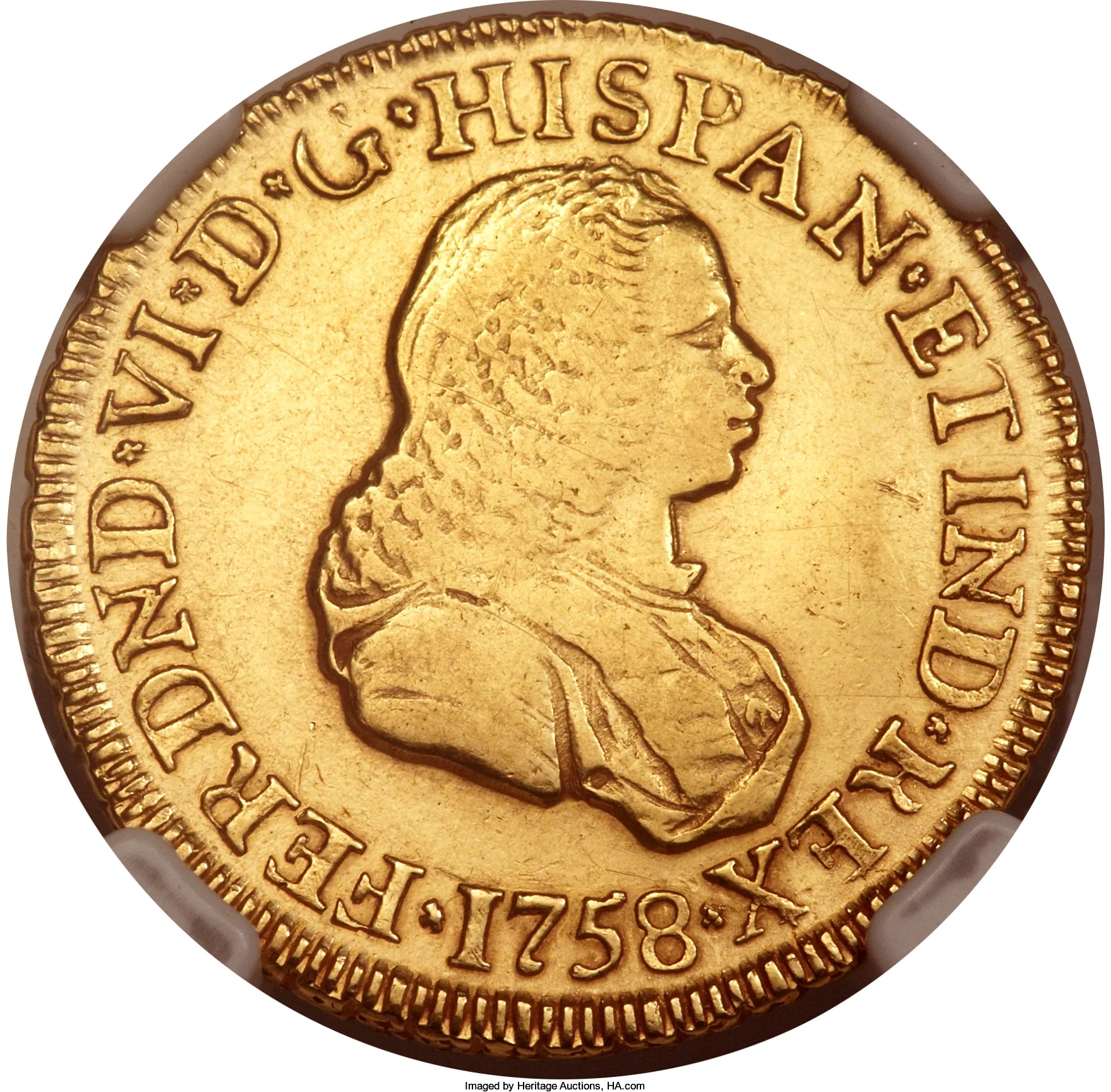
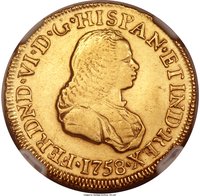
Obverse
Description:
Bust of Fernando VI with legend. Date beneath.
Inscription:
FERDND VI D G HISPAN ET IND REX
1758
1758
Script: Latin
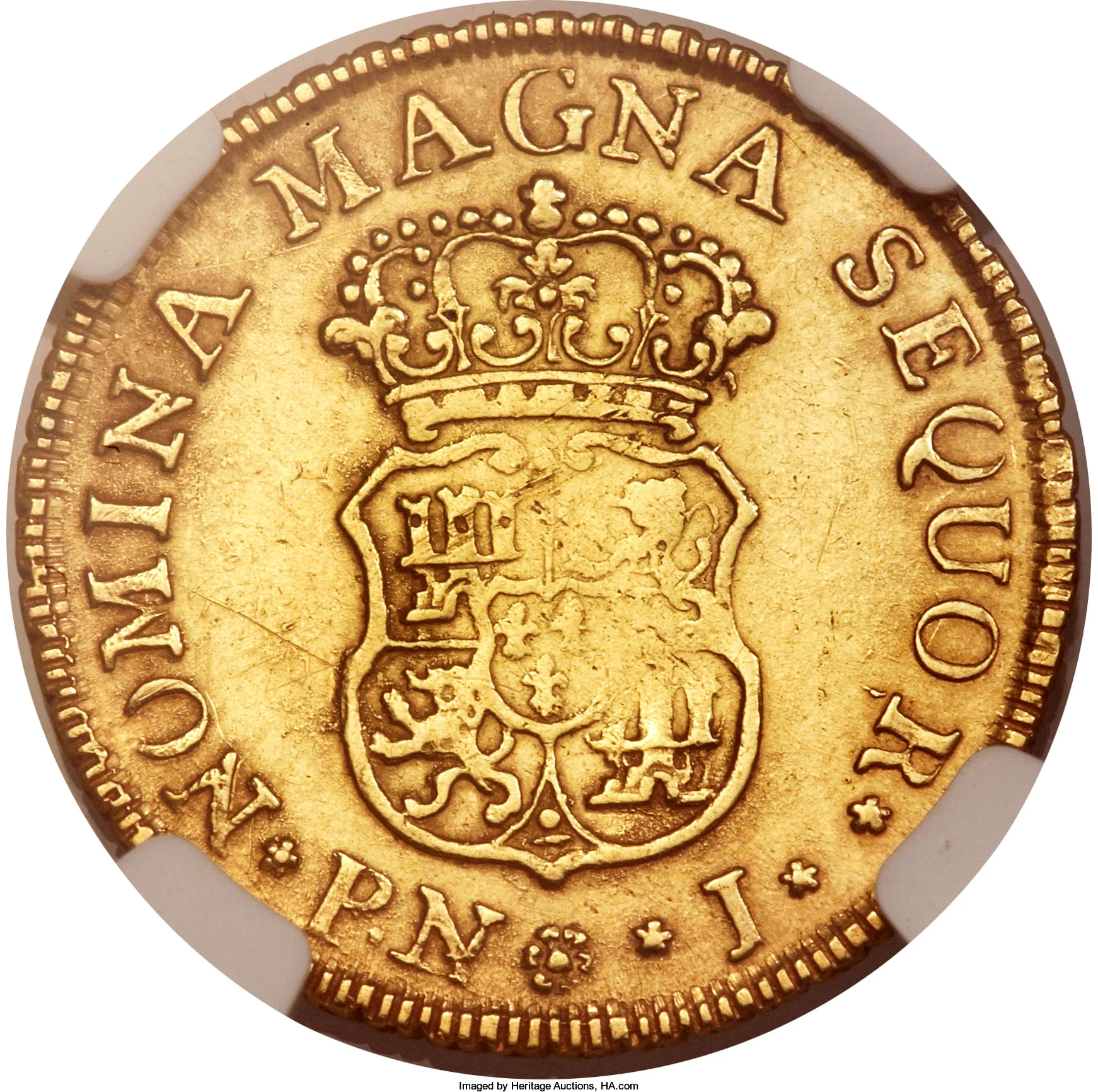
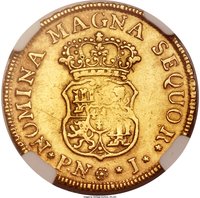
Reverse
Edge
Categories
| Symbols> Coat of Arms |
| Person> Monarch |
Mints
| Name | Mark |
|---|---|
| Bogota Mint | NR |
| Casa de Moneda de Colombia | PN |
Mintings
Historical background
In 1756, the currency situation in the Kingdom of New Granada (modern Colombia) was characterized by chronic scarcity, rampant counterfeiting, and a complex mix of circulating mediums. The official currency was the Spanish colonial real, with 8 reales equaling one silver peso. However, the supply of officially minted coins from the Bogotá mint (Casa de la Moneda) was insufficient for the needs of the local economy. This scarcity was exacerbated by Spain's mercantilist policies, which demanded that much of the colony's mined silver and gold be shipped to the metropolis, leaving the local economy starved of legal tender.
This vacuum was filled by a chaotic array of substitutes. Most common was the widespread use of macuquina—crudely cut and hammered coins, often clipped or debased, which circulated at a discounted value against the more uniform "milled" coins. Furthermore, a significant portion of daily transactions, especially in rural areas, relied on barter or commodity money, such as cacao beans or tobacco. The most damaging issue, however, was counterfeiting. Both crude local forgeries and sophisticated counterfeit coins, known as moneda de molde smuggled from abroad, flooded the market, undermining trust in all currency and distorting prices.
The Spanish Crown's attempts to rectify the situation, including periodic calls to withdraw macuquina for recoinage, had largely failed by 1756. The economic instability this monetary chaos created was a significant grievance among colonists, hindering internal trade and complicating tax collection for the Royal Treasury. Thus, the monetary landscape was one of profound disorder, serving as both a symptom and a cause of the administrative challenges facing the Spanish Empire in the region on the eve of broader Bourbon Reforms that would later seek to impose greater control.
This vacuum was filled by a chaotic array of substitutes. Most common was the widespread use of macuquina—crudely cut and hammered coins, often clipped or debased, which circulated at a discounted value against the more uniform "milled" coins. Furthermore, a significant portion of daily transactions, especially in rural areas, relied on barter or commodity money, such as cacao beans or tobacco. The most damaging issue, however, was counterfeiting. Both crude local forgeries and sophisticated counterfeit coins, known as moneda de molde smuggled from abroad, flooded the market, undermining trust in all currency and distorting prices.
The Spanish Crown's attempts to rectify the situation, including periodic calls to withdraw macuquina for recoinage, had largely failed by 1756. The economic instability this monetary chaos created was a significant grievance among colonists, hindering internal trade and complicating tax collection for the Royal Treasury. Thus, the monetary landscape was one of profound disorder, serving as both a symptom and a cause of the administrative challenges facing the Spanish Empire in the region on the eve of broader Bourbon Reforms that would later seek to impose greater control.
✨ Legendary