

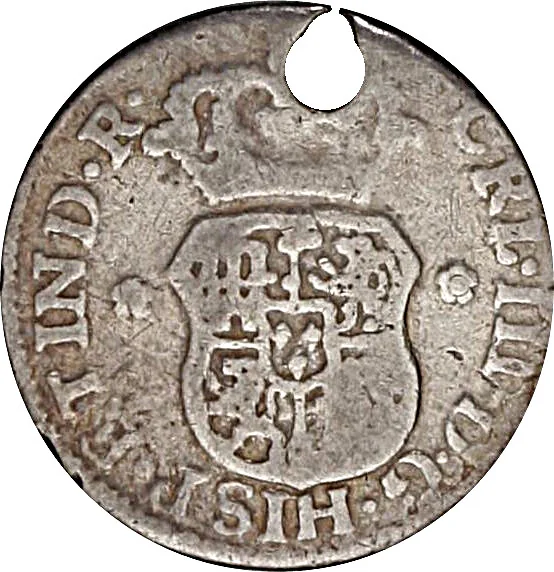
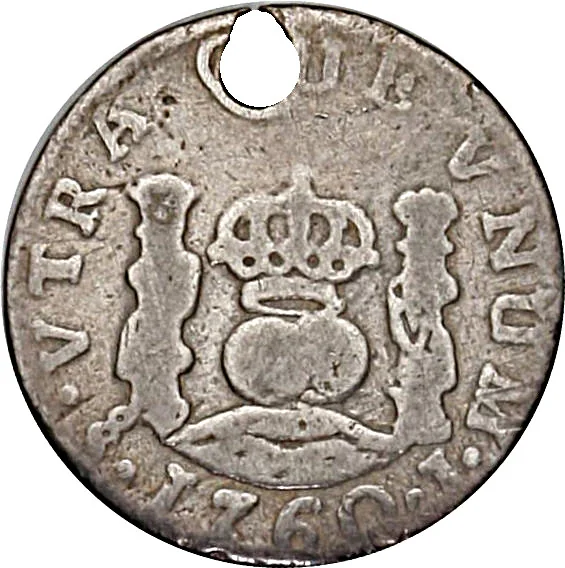
½ Real – Chile
Chile
Context
Year: 1760
Issuer: Chile 
Ruler: Charles III
Currency:
(1541—1852)
Demonetized: Yes
Total mintage: 4,035
Material
References
KM: #Click to copy to clipboard15
Numista: #120566
Value
Bullion value: $4.22
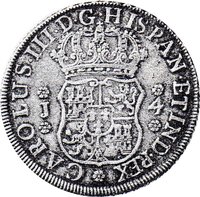
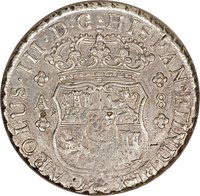
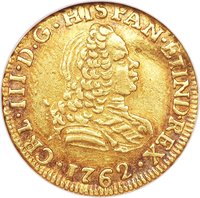
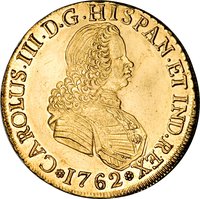
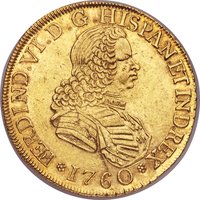
Obverse
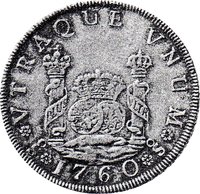
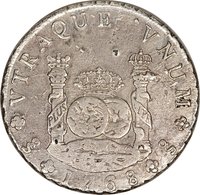
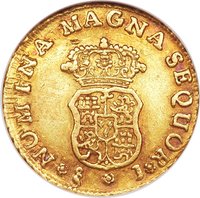
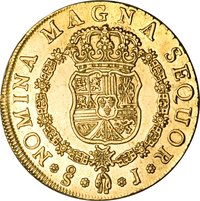
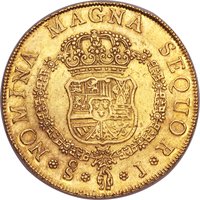
Reverse
Edge
Mintings
| Year | Mint Mark | Mintage | Quality | Collection |
|---|---|---|---|---|
| 1760 | So | 4,035 |
Historical background
In 1760, Chile, as a colonial captaincy-general of the Spanish Empire, operated within a monetary system characterized by severe scarcity and improvisation. The official currency was Spanish coinage, primarily silver reales and gold escudos minted in Peru or Spain itself. However, the physical supply of these coins was chronically insufficient for local commerce due to Chile's remote position at the empire's periphery, the costs and dangers of maritime transport, and the Crown's policy of extracting precious metals. This chronic shortage stifled economic activity and complicated even basic transactions.
To alleviate this constant scarcity, a wide variety of substitute currencies circulated alongside official coin. The most common were macuquinas (crudely cut and hammered coins) from the Potosí mint in Upper Peru, which were often debased and of irregular weight. Furthermore, due to the lack of small change, merchants and large institutions issued their own tokens, promissory notes, and even used commodities like grains or dried beans as de facto currency for minor transactions. The Jesuit order, a major economic power, issued credit notes that were widely accepted, functioning as a private paper currency within the region.
This fragmented and unstable monetary environment reflected Chile's colonial economic reality: it was a frontier society whose primary role was to supply agricultural goods and raw materials to the Peruvian viceroyalty. The currency scarcity hindered internal development and market integration, fostering a reliance on barter and credit. The situation would remain largely unchanged until the late 18th century, when Bourbon reforms and increased trade began to slowly improve the circulation of coin, though instability and improvisation would persist well into the early republican period.
To alleviate this constant scarcity, a wide variety of substitute currencies circulated alongside official coin. The most common were macuquinas (crudely cut and hammered coins) from the Potosí mint in Upper Peru, which were often debased and of irregular weight. Furthermore, due to the lack of small change, merchants and large institutions issued their own tokens, promissory notes, and even used commodities like grains or dried beans as de facto currency for minor transactions. The Jesuit order, a major economic power, issued credit notes that were widely accepted, functioning as a private paper currency within the region.
This fragmented and unstable monetary environment reflected Chile's colonial economic reality: it was a frontier society whose primary role was to supply agricultural goods and raw materials to the Peruvian viceroyalty. The currency scarcity hindered internal development and market integration, fostering a reliance on barter and credit. The situation would remain largely unchanged until the late 18th century, when Bourbon reforms and increased trade began to slowly improve the circulation of coin, though instability and improvisation would persist well into the early republican period.
Series: 1760 Chile circulation coins
✨ Legendary