

2 rubles – Russian Empire
Add to wishlist
Russia
Context
Material
References
KM: #
Numista: #96915
Value
Bullion value: $492.92
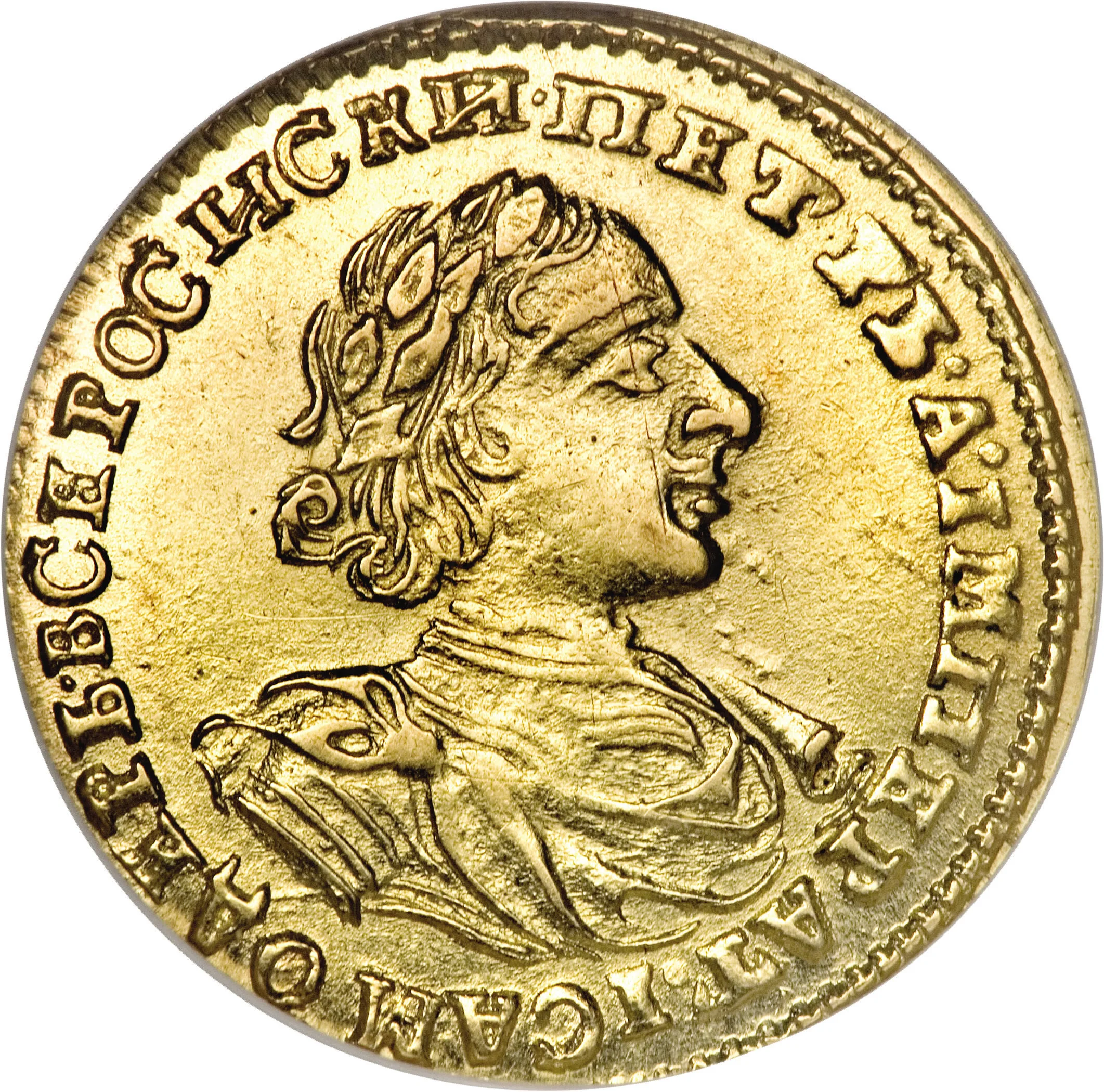
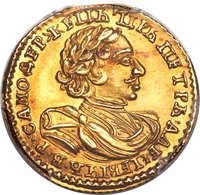
Obverse
Description:
Portrait of Peter the Great.
Inscription:
ПЕТРЬ·А·IМПЕРАТ·I САМОДЕРЬ·ВСЕРОСИСКИ·
Script: Cyrillic
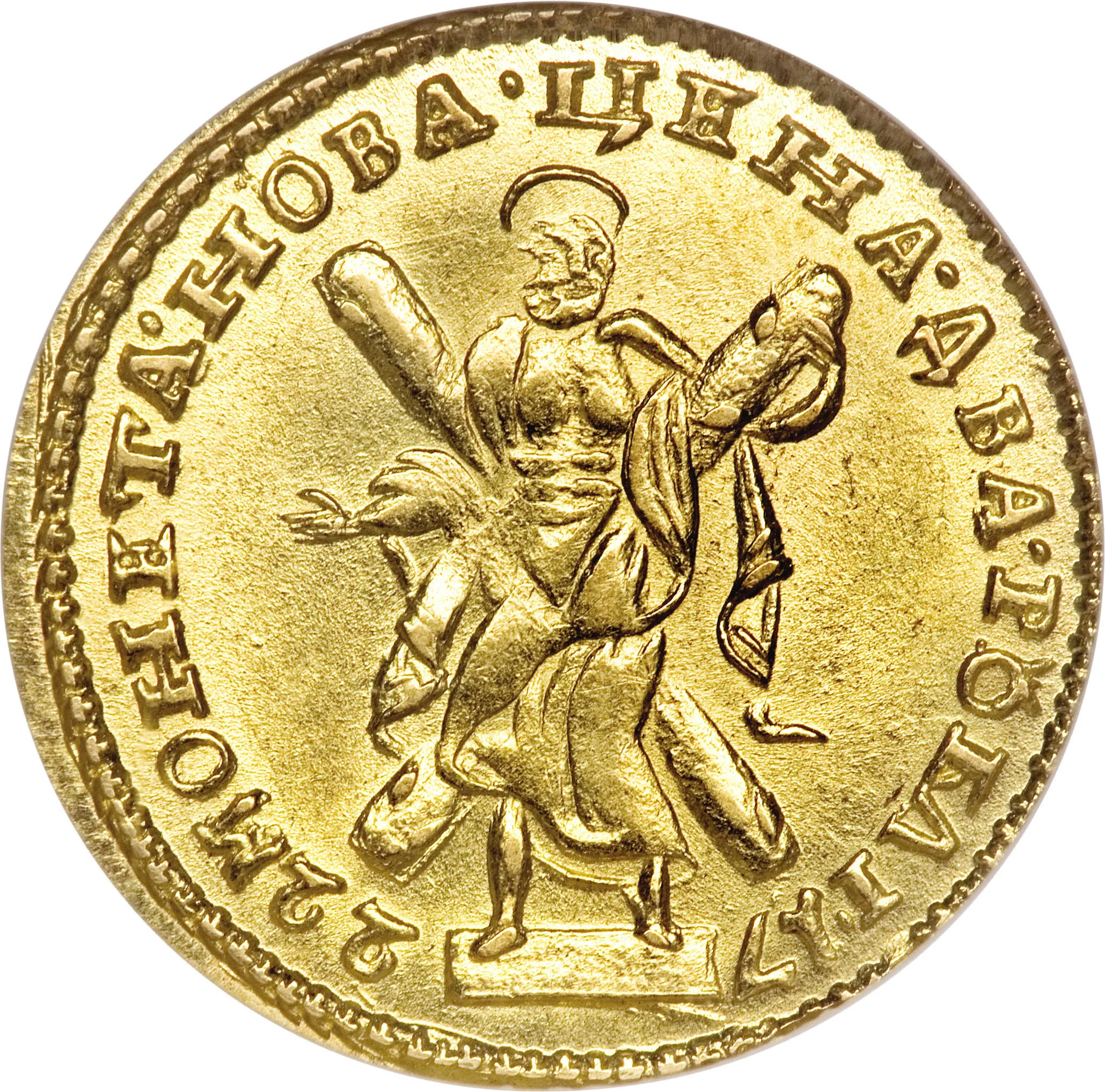
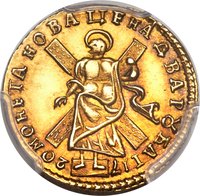
Reverse
Description:
Saint Andrew, right hand raised.
Inscription:
МОНЕТА·НОВА·ЦЕНА·ДВА·РƔБЛI·17 22
Script: Cyrillic
Edge
Ornamental
Mintings
| Year | Mint Mark | Mintage | Quality | Collection |
|---|---|---|---|---|
| 1721 | — | — | ||
| 1722 | — | — | ||
| 1723 | — | — | ||
| 1724 | — | — | ||
| 1725 | — | — |
Historical background
In 1721, the currency system of the Russian Empire, recently proclaimed following the Great Northern War, was defined by a state of profound instability and transition. The primary circulating coin was the silver kopeck and its multiples, but a severe shortage of precious metals, especially silver, crippled the economy. To finance the long and costly war, the state under Peter the Great had resorted to drastic debasement, significantly reducing the silver content of coins. This led to rampant inflation, a collapse in public trust in the currency, and a thriving black market for higher-quality foreign coins like Dutch daalders and German reichsthalers, which were often preferred for large transactions.
The root of the crisis was a structural deficit in domestic silver production, forcing Russia to rely on imported bullion. The government's main policy response was to continuously lower the weight and fineness of the silver kopeck, a process that accelerated during the war years. By 1721, the silver content of the coinage had been reduced by approximately half compared to pre-war standards. This debasement, while providing short-term revenue, eroded the currency's intrinsic value and disrupted both domestic trade and international commerce, as foreign merchants demanded payment in weighed bullion or foreign specie rather than the degraded domestic coins.
Recognizing the unsustainable situation, Peter I and his officials were actively seeking a comprehensive monetary reform at this very time. The year 1721 marked a pivotal point of planning, laying the groundwork for the major currency reform that would be implemented in the following years. This reform, finalized in the late 1720s, introduced a new, regulated decimal system based on the copper ruble and a restored, full-weight silver coinage, aiming to stabilize the economy and consolidate the fiscal power of the new empire. Thus, the currency situation in 1721 was one of crisis, but also on the cusp of state-driven modernization.
The root of the crisis was a structural deficit in domestic silver production, forcing Russia to rely on imported bullion. The government's main policy response was to continuously lower the weight and fineness of the silver kopeck, a process that accelerated during the war years. By 1721, the silver content of the coinage had been reduced by approximately half compared to pre-war standards. This debasement, while providing short-term revenue, eroded the currency's intrinsic value and disrupted both domestic trade and international commerce, as foreign merchants demanded payment in weighed bullion or foreign specie rather than the degraded domestic coins.
Recognizing the unsustainable situation, Peter I and his officials were actively seeking a comprehensive monetary reform at this very time. The year 1721 marked a pivotal point of planning, laying the groundwork for the major currency reform that would be implemented in the following years. This reform, finalized in the late 1720s, introduced a new, regulated decimal system based on the copper ruble and a restored, full-weight silver coinage, aiming to stabilize the economy and consolidate the fiscal power of the new empire. Thus, the currency situation in 1721 was one of crisis, but also on the cusp of state-driven modernization.
✨ Legendary