

1 schilling – Polish–Lithuanian Commonwealth
Add to wishlist
Poland
Context
Years: 1652–1661
Country: Poland
Issuer: Polish–Lithuanian Commonwealth
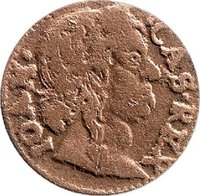
Ruler: John II Casimir Vasa
Currency:
(1573—1795)
Demonetized: Yes
References
KM: #
Numista: #96754
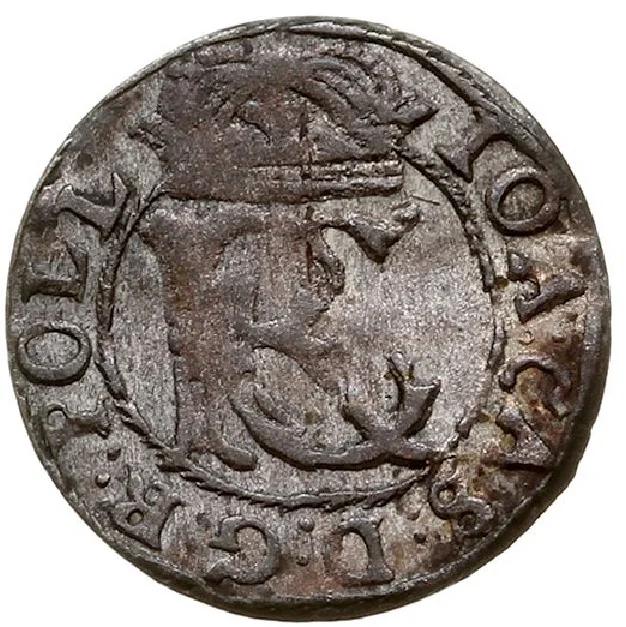
Obverse
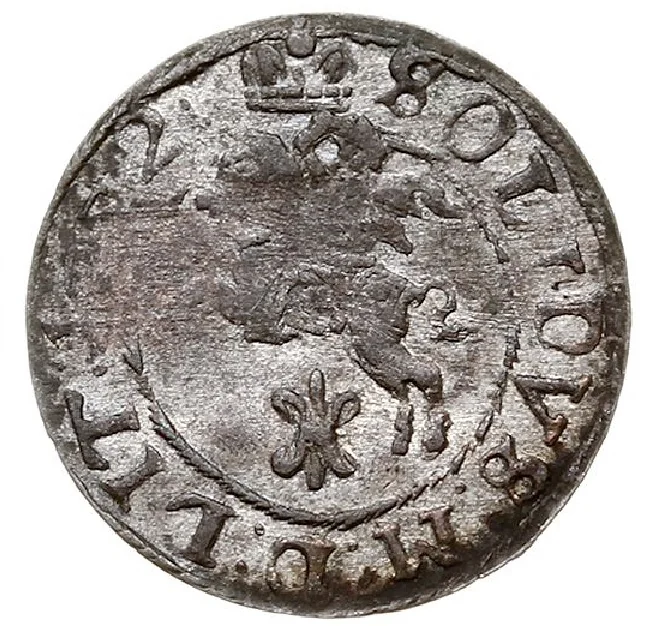
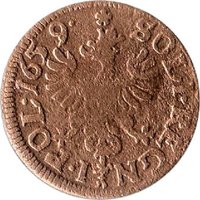
Reverse
Description:
Lithuanian Vytis above, treasurer Tryzna's Gozdawa arms below.
Inscription:
SOLIDVS M D LIT 1652
Script: Latin
Edge
Mints
| Name | Mark |
|---|---|
| Vilnius | — |
Mintings
| Year | Mint Mark | Mintage | Quality | Collection |
|---|---|---|---|---|
| 1652 | — | — | ||
| 1653 | — | — | ||
| 1661 | — | — |
Historical background
By 1652, the currency system of the Polish–Lithuanian Commonwealth was in a state of severe crisis, a direct result of decades of fiscal mismanagement and the political paralysis of the liberum veto. The Commonwealth had long relied on foreign coinage, particularly German thalers and small Prussian shillings, while its own mints in places like Olkusz and Bydgoszcz operated sporadically. To generate quick revenue for its endless wars and lavish court expenditures, the state repeatedly debased its own coinage, notably the small silver szeląg (shilling) and the copper boratynka introduced in 1650. This practice, known as "monetary famine," flooded the market with coins of diminishing intrinsic value, driving good foreign money out of circulation according to Gresham's Law.
The economic consequences were devastating. Rampant inflation eroded public trust and caused widespread social hardship, as prices for basic goods soared while wages stagnated. The debasement disproportionately harmed the lower nobility (szlachta) and townspeople, who relied on fixed incomes and small transactions, while benefiting large magnates who could hoard full-value foreign currency or trade in kind. This monetary chaos exacerbated existing social tensions and undermined the economic foundations of the state, making it increasingly difficult to finance the army precisely when it was most needed.
This financial vulnerability proved catastrophic as the Commonwealth stood on the brink of the "Deluge" (Potop). In 1652, the year the liberum veto was first used to paralyze the Sejm, the state was fiscally unprepared for the massive, multi-front wars that would soon engulf it. The collapsing currency system severely limited the government's ability to raise and pay troops, contributing directly to the military disasters that followed the Cossack Khmelnytsky Uprising (begun in 1648) and the subsequent invasions by Sweden and Russia. Thus, the monetary crisis of 1652 was not merely an economic issue but a critical factor in the impending collapse of Commonwealth power.
The economic consequences were devastating. Rampant inflation eroded public trust and caused widespread social hardship, as prices for basic goods soared while wages stagnated. The debasement disproportionately harmed the lower nobility (szlachta) and townspeople, who relied on fixed incomes and small transactions, while benefiting large magnates who could hoard full-value foreign currency or trade in kind. This monetary chaos exacerbated existing social tensions and undermined the economic foundations of the state, making it increasingly difficult to finance the army precisely when it was most needed.
This financial vulnerability proved catastrophic as the Commonwealth stood on the brink of the "Deluge" (Potop). In 1652, the year the liberum veto was first used to paralyze the Sejm, the state was fiscally unprepared for the massive, multi-front wars that would soon engulf it. The collapsing currency system severely limited the government's ability to raise and pay troops, contributing directly to the military disasters that followed the Cossack Khmelnytsky Uprising (begun in 1648) and the subsequent invasions by Sweden and Russia. Thus, the monetary crisis of 1652 was not merely an economic issue but a critical factor in the impending collapse of Commonwealth power.
💎 Very Rare