

1 thaler – Austrian Empire
Add to wishlist
Austria
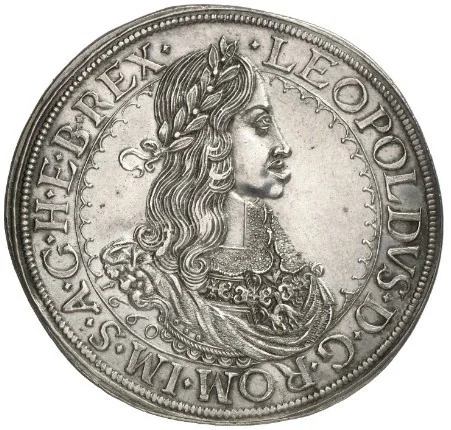
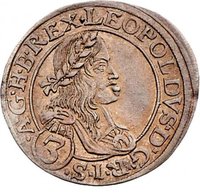
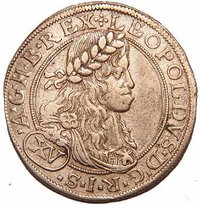
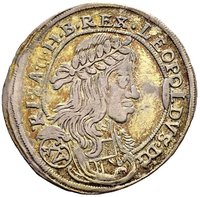
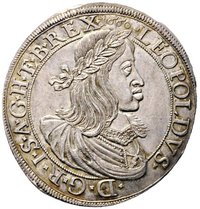
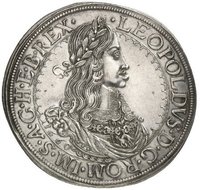
Obverse
Description:
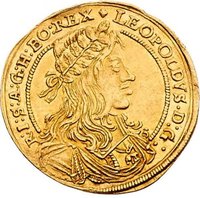
Young laureate facing right, hair smooth. Ornamented inner circle, date below.
Inscription:
LEOPOLDVS D G ROM IM S A G H E B REX
Script: Latin
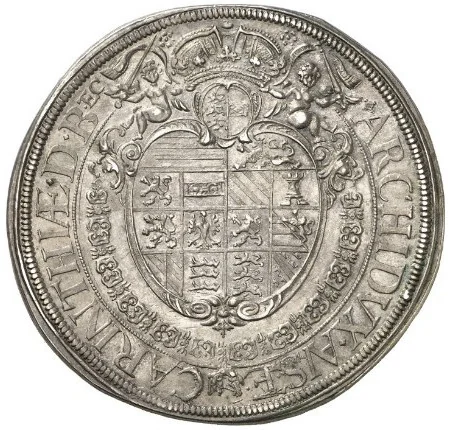
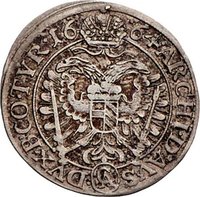
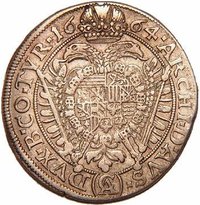
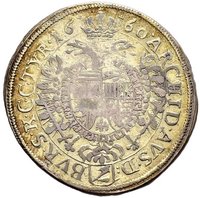
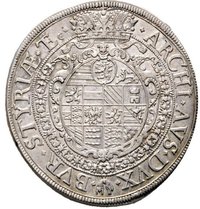
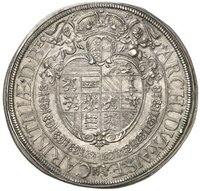
Reverse
Description:
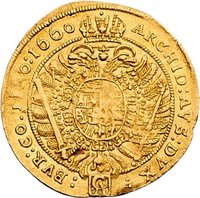
Crowned baroque arms with a small Carinthian shield above.
Inscription:
ARCHIDVX AVS ET CARINTHIÆ D B ec
Script: Latin
Edge
Mints
| Name | Mark |
|---|---|
| Sankt Veit | — |
Mintings
| Year | Mint Mark | Mintage | Quality | Collection |
|---|---|---|---|---|
| 1660 | — | — | ||
| 1670 | GS | — |
Historical background
In 1660, the Austrian Habsburg monarchy was grappling with a severe and protracted currency crisis, often termed the Kipper- und Wipperzeit (the clipping and culling period). This was a pan-German phenomenon exacerbated by the immense financial strain of the Thirty Years' War (1618-1648), which had only concluded twelve years prior. To fund continuous military campaigns, the state and numerous private mints systematically debased the coinage, notably the small-denomination Kreuzer coins used in daily life. They reduced the precious metal content while maintaining the coins' face value, creating short-term profit but triggering rampant inflation and a collapse in public trust.
The monetary landscape was extraordinarily fragmented. While the Empire used a system based on the Gulden (florin) and Kreuzer, there was no uniform imperial currency. Regional authorities, cities, and even opportunistic individuals operated mints, producing coins of wildly varying quality. This led to Gresham's Law in action: "bad money drives out good." People hoarded older, full-value coins and passed the new, debased ones, worsening the velocity and impact of the poor currency. The economy suffered as prices became unpredictable, long-distance trade was hampered, and the populace, particularly those on fixed incomes, faced severe hardship.
By 1660, the Habsburg state under Leopold I recognized the destabilizing effects and was attempting reform, though with limited immediate success. The goal was to standardize and restore the silver content of the coinage, a process that would be more firmly realized with the issuance of the Reichsthaler as a standard silver coin later in the century. However, in 1660, the situation remained one of confusion and slow recovery, with the legacy of debasement continuing to undermine economic stability and state finances, reflecting the broader challenge of centralizing authority within the decentralized Holy Roman Empire.
The monetary landscape was extraordinarily fragmented. While the Empire used a system based on the Gulden (florin) and Kreuzer, there was no uniform imperial currency. Regional authorities, cities, and even opportunistic individuals operated mints, producing coins of wildly varying quality. This led to Gresham's Law in action: "bad money drives out good." People hoarded older, full-value coins and passed the new, debased ones, worsening the velocity and impact of the poor currency. The economy suffered as prices became unpredictable, long-distance trade was hampered, and the populace, particularly those on fixed incomes, faced severe hardship.
By 1660, the Habsburg state under Leopold I recognized the destabilizing effects and was attempting reform, though with limited immediate success. The goal was to standardize and restore the silver content of the coinage, a process that would be more firmly realized with the issuance of the Reichsthaler as a standard silver coin later in the century. However, in 1660, the situation remained one of confusion and slow recovery, with the legacy of debasement continuing to undermine economic stability and state finances, reflecting the broader challenge of centralizing authority within the decentralized Holy Roman Empire.
✨ Legendary