

2½ Baiocchi – Viterbo
Italy
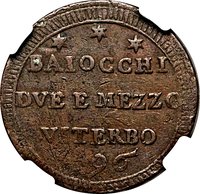
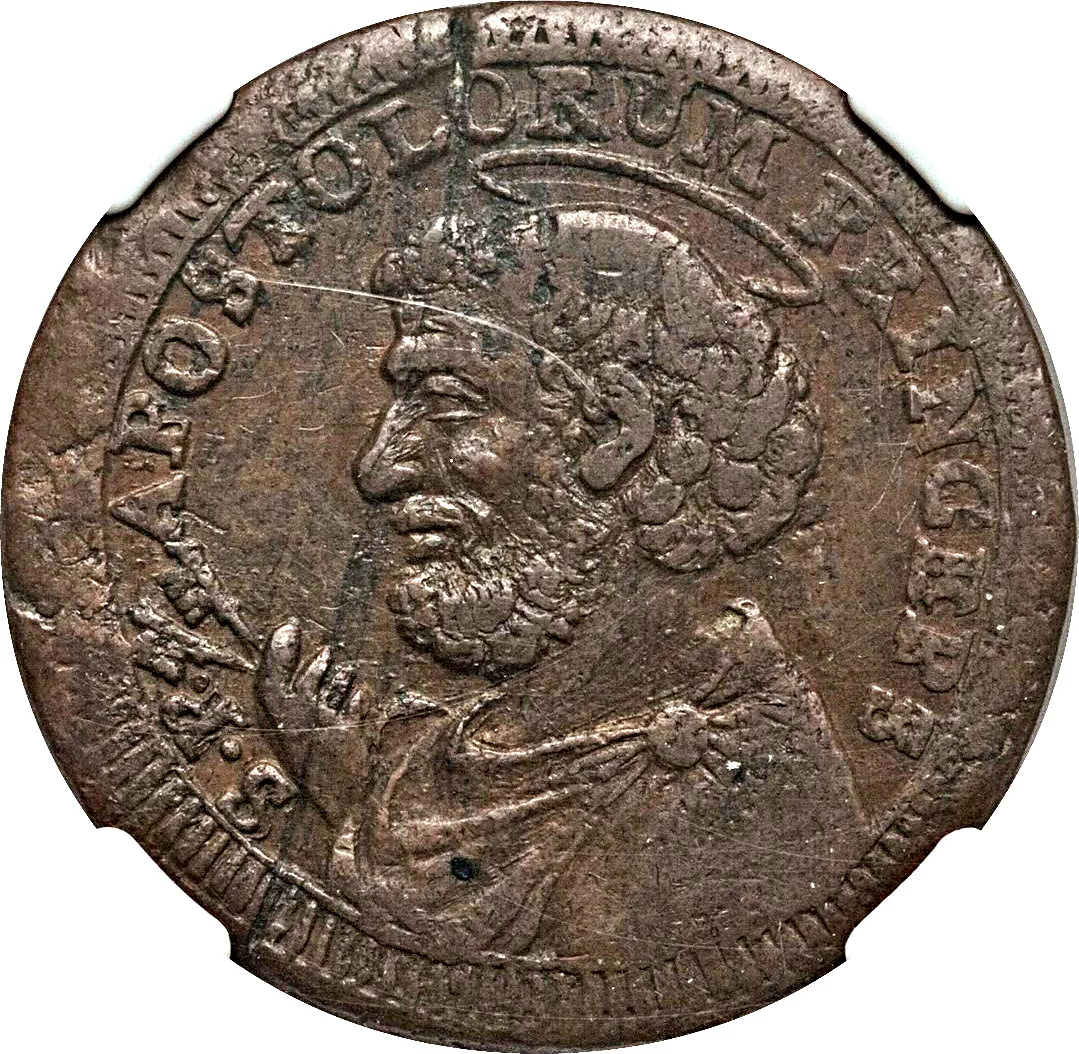
Obverse
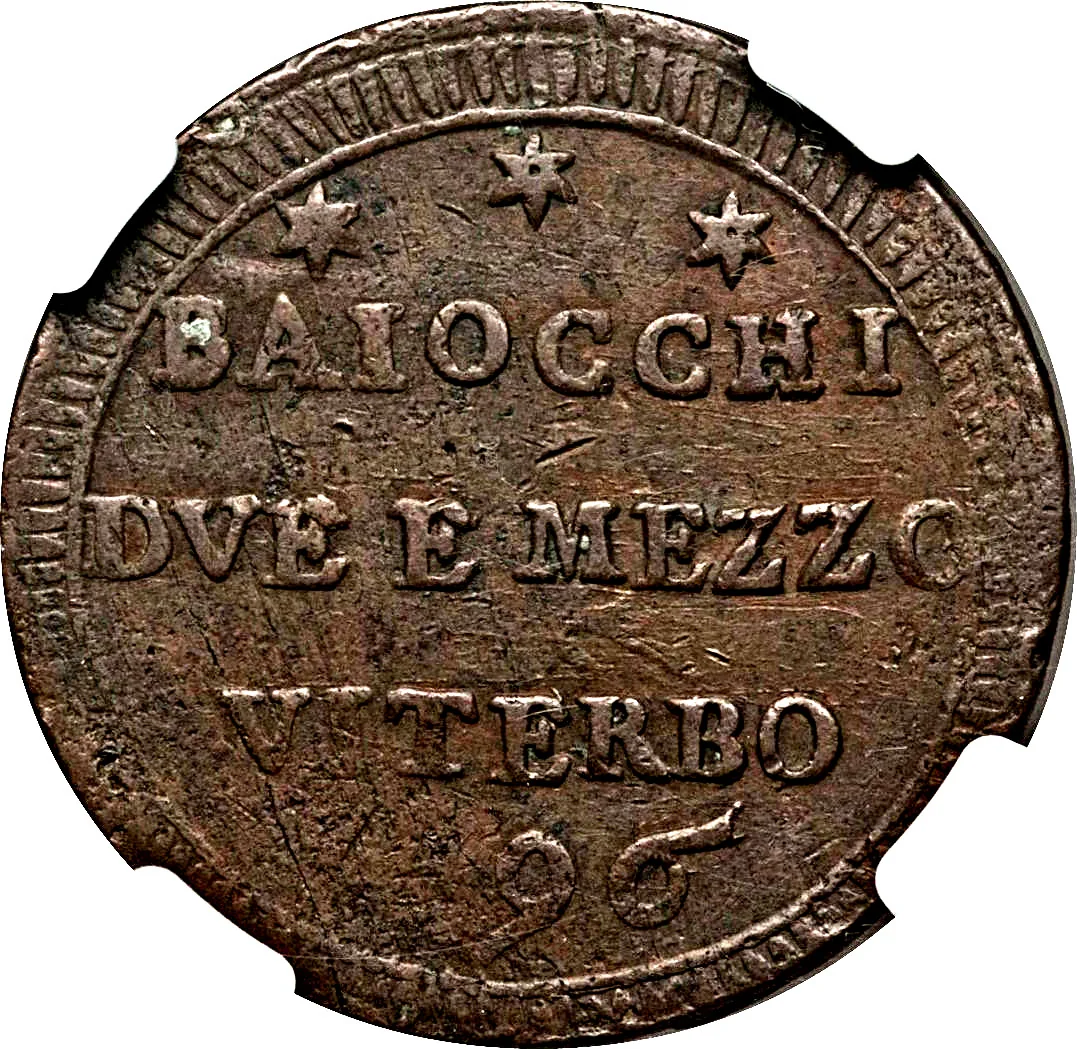
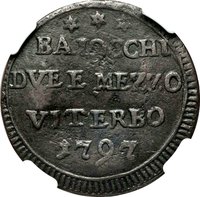
Reverse
Description:
City, date, and value encircled with stars.
Inscription:
BAIOCCHI
DVE E MEZZO
VITERBO
1796
DVE E MEZZO
VITERBO
1796
Script: Latin
Edge
Mints
| Name | Mark |
|---|---|
| Viterbo | — |
Mintings
| Year | Mint Mark | Mintage | Quality | Collection |
|---|---|---|---|---|
| 1796 | — | — |
Historical background
In 1796, the city-state of Viterbo, part of the Papal States, was caught in a severe monetary crisis typical of the period. The primary circulating currency was the Papal scudo, divided into 100 baiochi, each of which was further divided into 5 quattrini. However, the system was plagued by chronic instability. Decades of budgetary shortfalls had led successive papal governments to repeatedly debase the coinage, reducing the precious metal content in silver coins like the giulio and grosso. This resulted in a wide gap between the official face value of coins and their intrinsic metallic worth, leading to widespread hoarding of older, purer coins (Gresham's Law in action) and a general loss of public confidence in the currency.
The situation was dramatically exacerbated by the military and political upheavals of the French Revolutionary Wars. In early 1796, Napoleon Bonaparte's successful invasion of northern Italy sent shockwaves through the Italian peninsula. While the French army had not yet reached Viterbo, the threat loomed large, causing economic paralysis. Trade routes were disrupted, inflationary pressures spiked due to supply shortages, and the papal government in Rome was diverting resources to fund a desperate defense. This created a climate of uncertainty where both official and foreign currencies—including French assignats and coins from neighboring states—circulated at volatile, unofficial exchange rates, further complicating daily commerce.
Consequently, by the latter half of 1796, Viterbo's economy was characterized by a chaotic multi-currency environment, severe inflation for basic goods, and a effective breakdown of the standard monetary system. The populace faced daily hardship in conducting transactions, as merchants and citizens alike struggled to assess the true value of the mixed and degraded coins in their possession. This monetary instability was a direct precursor to the more profound political change that would arrive in 1798, when French forces would finally occupy Viterbo and temporarily replace the papal currency with the French franc, integrating the region into the revolutionary economic order.
The situation was dramatically exacerbated by the military and political upheavals of the French Revolutionary Wars. In early 1796, Napoleon Bonaparte's successful invasion of northern Italy sent shockwaves through the Italian peninsula. While the French army had not yet reached Viterbo, the threat loomed large, causing economic paralysis. Trade routes were disrupted, inflationary pressures spiked due to supply shortages, and the papal government in Rome was diverting resources to fund a desperate defense. This created a climate of uncertainty where both official and foreign currencies—including French assignats and coins from neighboring states—circulated at volatile, unofficial exchange rates, further complicating daily commerce.
Consequently, by the latter half of 1796, Viterbo's economy was characterized by a chaotic multi-currency environment, severe inflation for basic goods, and a effective breakdown of the standard monetary system. The populace faced daily hardship in conducting transactions, as merchants and citizens alike struggled to assess the true value of the mixed and degraded coins in their possession. This monetary instability was a direct precursor to the more profound political change that would arrive in 1798, when French forces would finally occupy Viterbo and temporarily replace the papal currency with the French franc, integrating the region into the revolutionary economic order.

💎 Extremely Rare