

1 ruble – Russian Empire
Add to wishlist
Russia
Context
Year: 1727
Country: Russia
Issuer: Russian Empire
Ruler: Peter II
Currency:
(1700—1917)
Demonetized: Yes
Material
References
KM: #
Numista: #95314
Value
Bullion value: $51.97
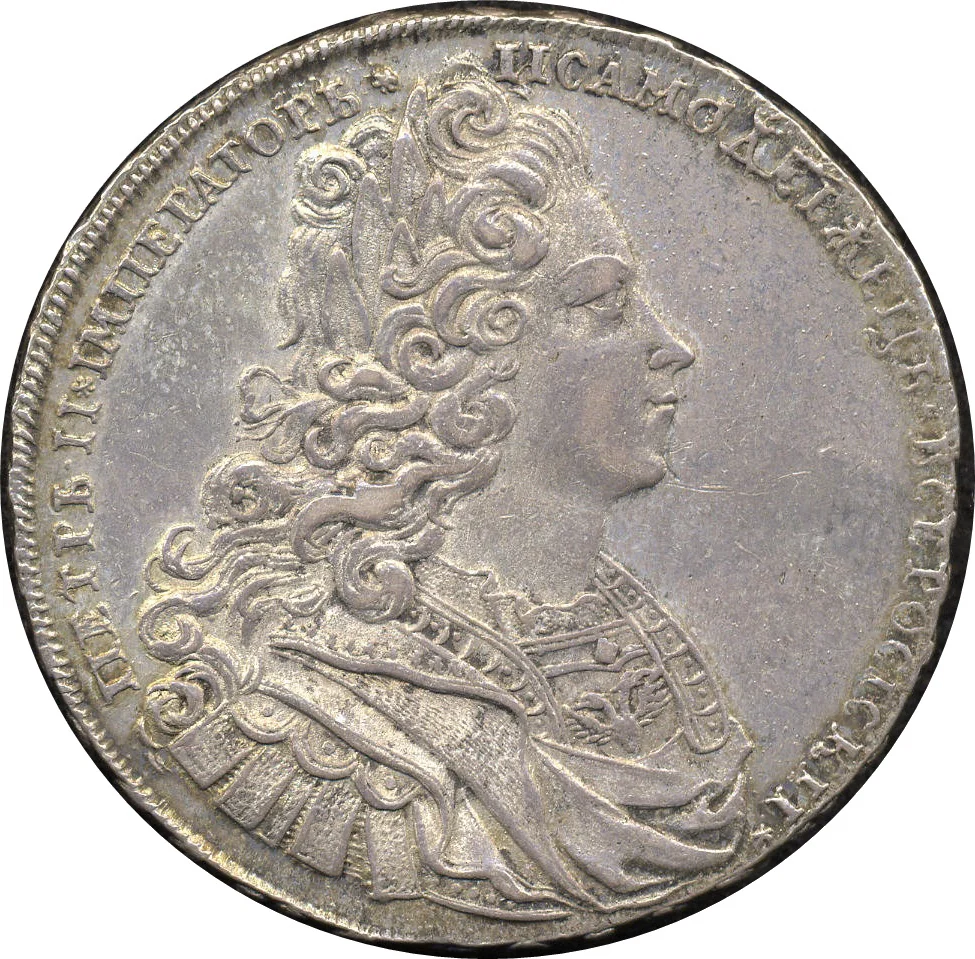
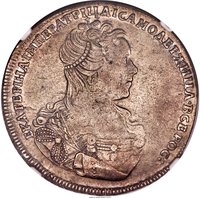
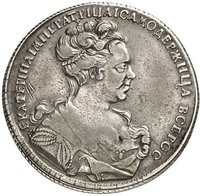
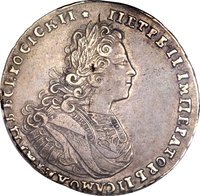
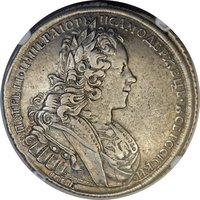
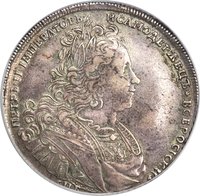
Obverse
Description:
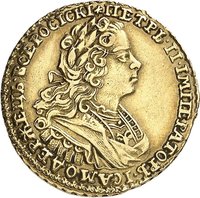
Emperor Peter II.
Inscription:
ПЕТРЬ∙II*ИМПЕРАТОРЬ* ИСАМОДЕРЖЕЦЬ∙ВСЕРОСIИСКИ*
Script: Cyrillic
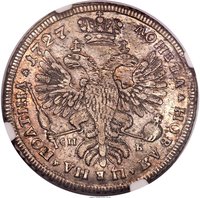
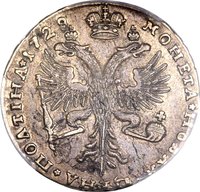
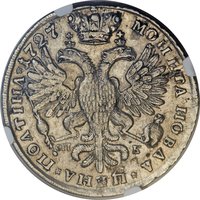
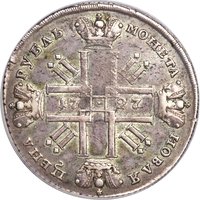
Reverse
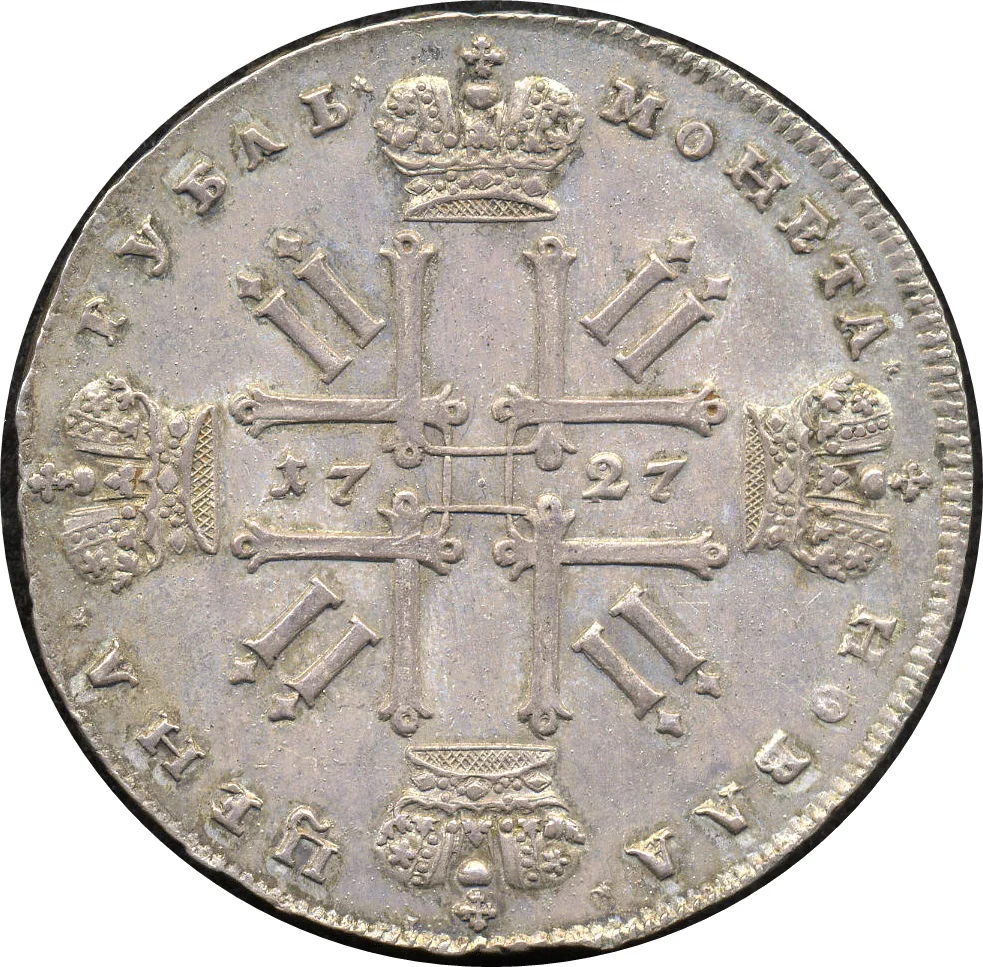
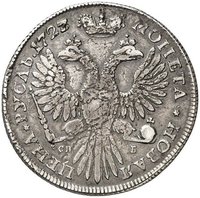
Description:
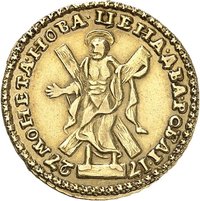
Cross of four "П" letters, crowns on sides, with denomination and date.
Inscription:
МОНЕТА * НОВАѦ * ЦЕНА * РУБЛЬ *
17 27
17 27
Script: Cyrillic
Edge
Smooth wih lettering
Legend:
РОССИСКОI * РУБЛЬ ** МОСКОВСКОГО ** ДВОРА *
Mintings
| Year | Mint Mark | Mintage | Quality | Collection |
|---|---|---|---|---|
| 1727 | — | — |
Historical background
In 1727, the currency situation in the Russian Empire was one of profound crisis and transition, stemming directly from the monetary reforms of Peter the Great, who had died just two years prior. Peter had sought to modernize Russia’s primitive monetary system by introducing a decimal-based coinage of copper kopeks and silver rubles, and by massively debasing the silver coinage to fund the Great Northern War. This resulted in a severe imbalance: the face value of the new copper coins was vastly higher than their intrinsic metal worth, while the underweight silver coins drove full-weight pre-Petrine silver out of circulation (Gresham’s Law in action). By 1727, the empire was left with a chaotic, two-tiered currency system of trusted old "wire money" and distrusted new coins, causing inflation and hampering trade.
The immediate responsibility for resolving this fell to the Supreme Privy Council, which governed during the short reign of Peter II (1727-1730). Led by Prince Alexander Menshikov, the council recognized that the currency's loss of public trust was paralyzing the economy. Consequently, in 1727, they took the drastic step of halting production at the mints and began preparing for a comprehensive recoinage. The plan, which would be implemented in the following years, was to introduce a new copper polushka (a quarter-kopek) at a realistic weight, effectively devaluing the overvalued copper currency and restoring a credible link between face value and metal content.
Thus, the year 1727 represents a critical pause and turning point—the moment when the state acknowledged the failure of Peter’s wartime monetary policy and initiated a necessary correction. The reforms set in motion that year, culminating under Empress Anna Ioannovna, aimed to stabilize the ruble and restore confidence. However, the immediate situation remained one of financial strain, with a disordered circulation of coins undermining the empire’s commercial growth and fiscal stability until the new system could take hold.
The immediate responsibility for resolving this fell to the Supreme Privy Council, which governed during the short reign of Peter II (1727-1730). Led by Prince Alexander Menshikov, the council recognized that the currency's loss of public trust was paralyzing the economy. Consequently, in 1727, they took the drastic step of halting production at the mints and began preparing for a comprehensive recoinage. The plan, which would be implemented in the following years, was to introduce a new copper polushka (a quarter-kopek) at a realistic weight, effectively devaluing the overvalued copper currency and restoring a credible link between face value and metal content.
Thus, the year 1727 represents a critical pause and turning point—the moment when the state acknowledged the failure of Peter’s wartime monetary policy and initiated a necessary correction. The reforms set in motion that year, culminating under Empress Anna Ioannovna, aimed to stabilize the ruble and restore confidence. However, the immediate situation remained one of financial strain, with a disordered circulation of coins undermining the empire’s commercial growth and fiscal stability until the new system could take hold.
💎 Extremely Rare