Logo Title
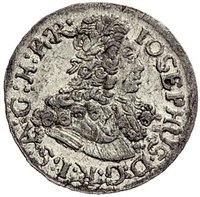
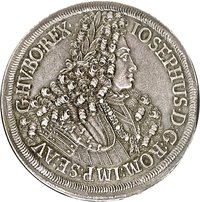
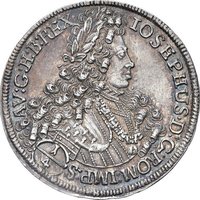
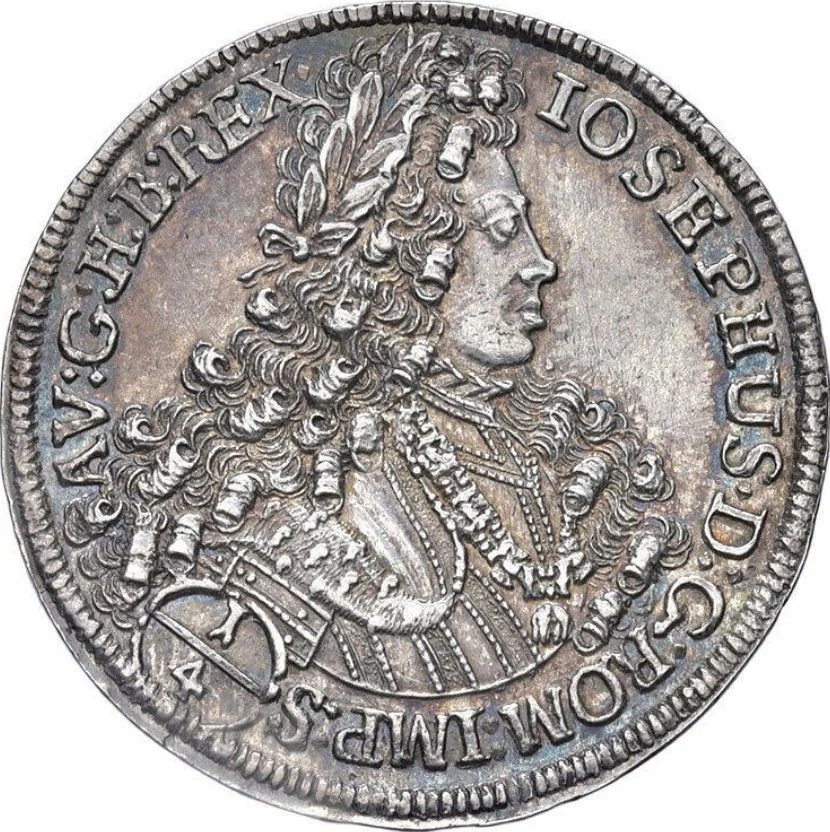
obverse
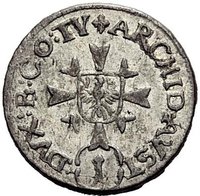
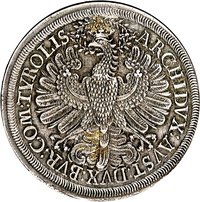
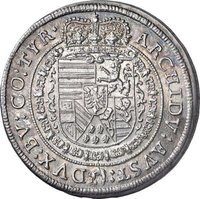
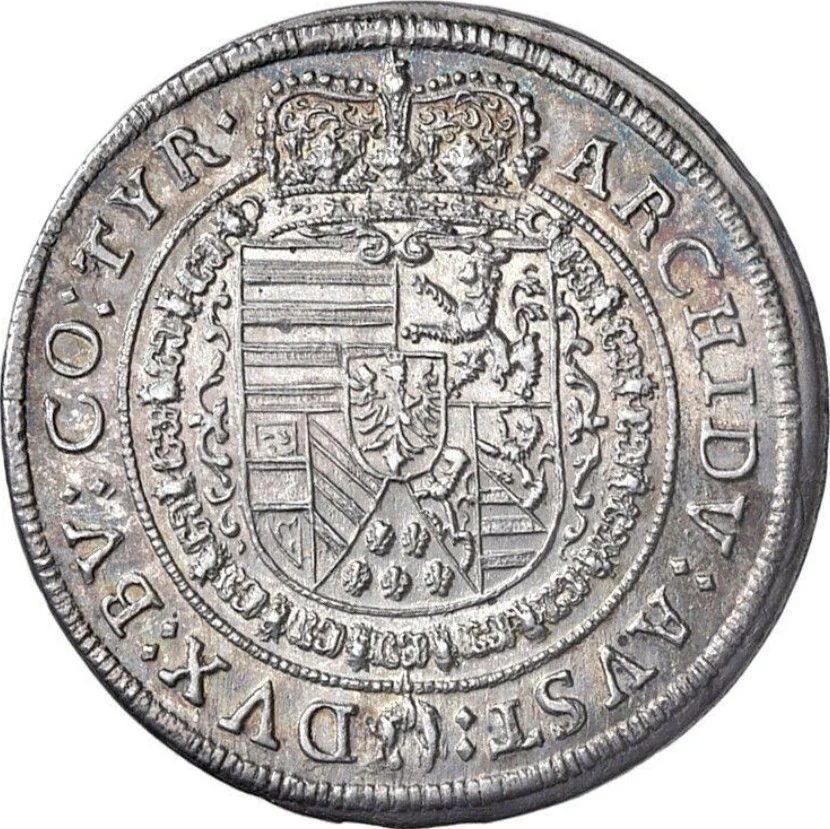
reverse
V.L. Nummus
Context
Years: 1705–1711
Country: Austria Country flag
Currency:
Demonetized: Yes
Material
Diameter: 31 mm
Weight: 6.9 g
Silver weight: 6.04 g
Shape: Round
Composition: 87.5% Silver
Magnetic: No
References
KM: #Click to copy to clipboard1492
Numista: #95295
Value
Bullion value: $16.92

Obverse

Description:
Armored bust right, legend divided left of bust, fraction in frame at 7:00.
Inscription:
IOSEPHUS D G ROM IMP S AV G H B REX

(1/4)
Script: Latin

Reverse

Description:
Crowned shield bearing a composite coat of arms: a central Tyrol shield encircled by the Order of the Golden Fleece chain, all within a beaded ring.
Inscription:
ARCHIDV AVST DVX BV CO TYR
Script: Latin

Edge

Mints

NameMark
Hall

Mintings

YearMint MarkMintageQualityCollection

Historical background

In 1705, the County of Tyrol, a strategic Alpine territory of the Habsburg Monarchy, was grappling with severe monetary instability stemming from the financial demands of the War of the Spanish Succession. To fund the conflict, the imperial government in Vienna had significantly debased the coinage, flooding the economy with low-value Kipper und Wipper coins containing minimal silver. This deliberate devaluation created a classic bad money drives out good money scenario, as older, full-weight thalers were hoarded or melted down, leaving circulation to the unreliable new coins. The resulting inflation devastated local economies, particularly harming peasants and tradesmen who found the coins they were paid in rejected by merchants and creditors.

The situation was exacerbated by Tyrol's unique economic structure. Its wealth was historically tied to silver mining from Schwaz, which had traditionally backed a stable currency. However, by the early 18th century, yields were declining, and the Habsburgs' central fiscal policies overrode local monetary control. Furthermore, Tyrol's important transit trade across the Brenner Pass suffered as merchants lost confidence in the local currency. This led to a dual crisis: a shortage of acceptable coin for daily transactions and a collapse in the value of money, causing price surges and widespread debt.

This monetary chaos became a direct catalyst for the Tyrolean Rebellion of 1705 (also known as the Bayerischer Rummel). While anti-Bavarian occupation sentiment was the primary spark, the desperate currency situation was a fundamental grievance that unified the populace against both Bavarian and Habsburg authorities. The rebel government in Innsbruck even attempted to issue its own emergency coinage to restore trust, highlighting how the currency crisis was central to the breakdown of authority and the fight for local self-determination during that turbulent year.

Series: 1705 County of Tyrol circulation coins

1 Kreuzer obverse
1 Kreuzer reverse
1 Kreuzer
1705-1711
2 Thalers obverse
2 Thalers reverse
2 Thalers
1705
¼ Thaler obverse
¼ Thaler reverse
¼ Thaler
1705-1711
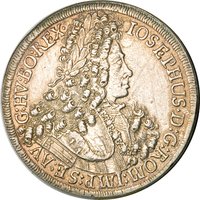
1 Thaler obverse
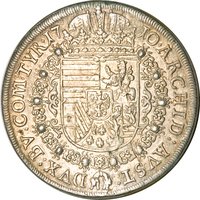
1 Thaler reverse
1 Thaler
1705-1711
Legendary