

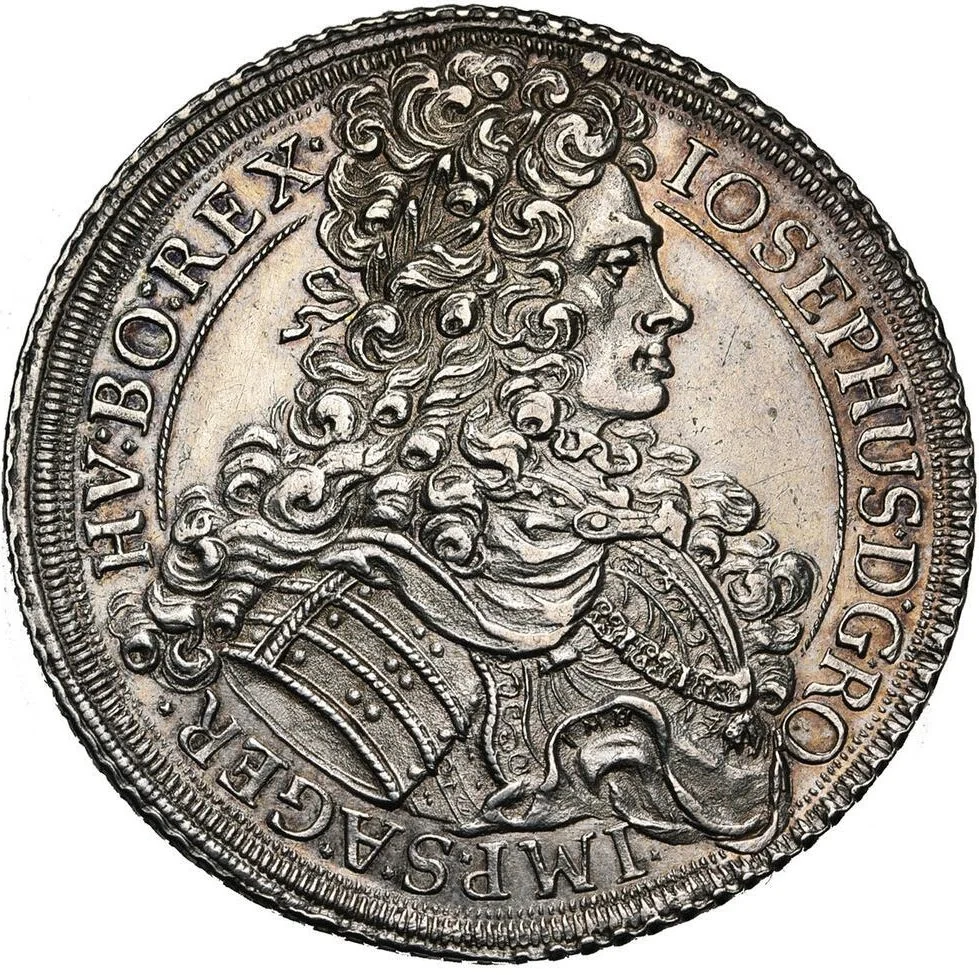
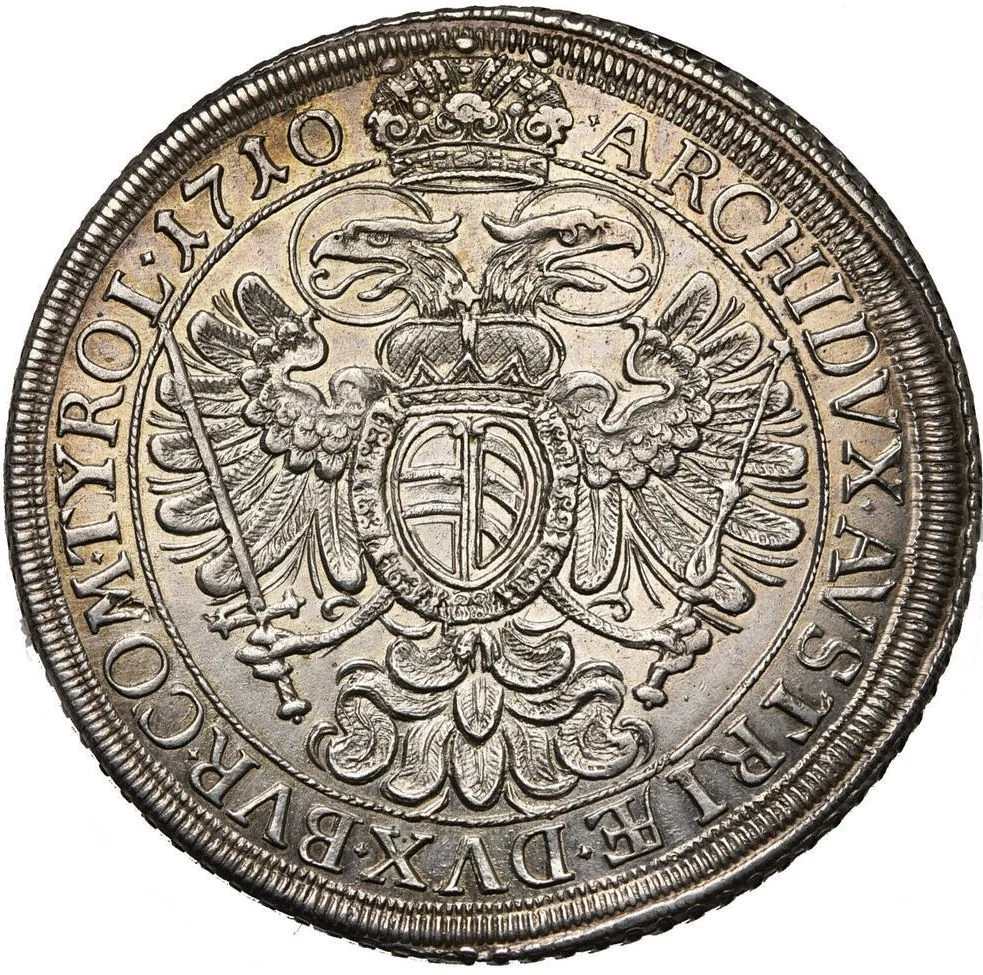
1 Thaler – Austrian Empire
Austria
Context
Years: 1705–1710
Country: Austria 
Issuer: Austrian Empire
Ruler: Joseph I
Currency:
(1520—1754)
Demonetized: Yes
Material
References
KM: #Click to copy to clipboard1444
Numista: #95293
Value
Bullion value: $81.57
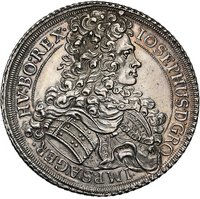
Obverse
Description:
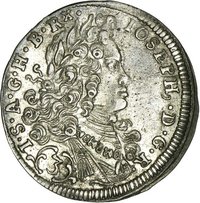
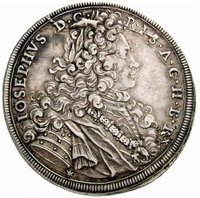
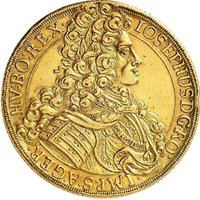
Armored bust right, four circles on arm, inner circle.
Inscription:
IOSEPHVS D G RO // IMP S A GER // HV BO REX
Script: Latin
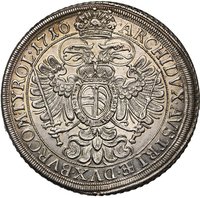
Reverse
Description:
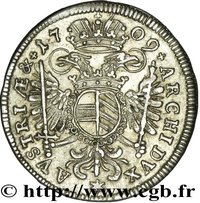
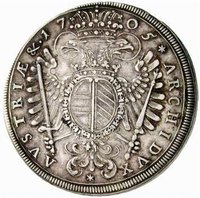
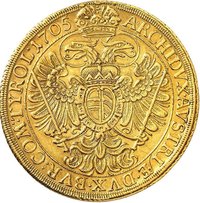
Imperial double eagle bearing the crowned shields of Austria and Burgundy.
Inscription:
ARCHIDVX AVSTRIÆ DVX BVR COM TYROL 1710
Script: Latin
Edge
Mints
| Name | Mark |
|---|---|
| Münze Österreich | IMH |
Historical background
In 1705, the Austrian Empire, more accurately referred to as the Habsburg Monarchy, was in a state of severe financial and monetary crisis, deeply entangled in the War of the Spanish Succession (1701-1714). The immense cost of fighting a continental war against France and its allies had drained the imperial treasury. To meet these expenses, the government under Emperor Joseph I resorted to the most readily available tool: the debasement of the coinage. The state mint in Vienna drastically reduced the silver content of the small-denomination coins that circulated widely among the populace, such as kreuzers and batzen, while keeping the large silver thaler relatively stable for international trade.
This practice created a destructive "two-tier" currency system. The poor-quality, lightweight small coins flooded the market, causing rapid inflation and a loss of public trust. Meanwhile, merchants and foreign suppliers, aware of the debasement, demanded payment in the full-weight silver thalers or in gold ducats, which held their value. This led to Gresham's Law in action, where "bad money drives out good"—people hoarded the good, full-weight coins, removing them from daily circulation and exacerbating the scarcity of reliable currency for ordinary transactions.
The consequences were socially and economically destabilizing. Prices for basic goods soared, causing hardship for soldiers, civil servants paid in debased coin, and the urban poor. The situation varied across the diverse lands of the Monarchy, with Hungary and the Austrian hereditary lands experiencing particular strain. While emergency measures were attempted, a true resolution to the monetary chaos would only begin with the major coinage reforms initiated by Emperor Charles VI after the war, notably the Konventionsmünzfuß of 1753, which standardized the monetary system across the empire.
This practice created a destructive "two-tier" currency system. The poor-quality, lightweight small coins flooded the market, causing rapid inflation and a loss of public trust. Meanwhile, merchants and foreign suppliers, aware of the debasement, demanded payment in the full-weight silver thalers or in gold ducats, which held their value. This led to Gresham's Law in action, where "bad money drives out good"—people hoarded the good, full-weight coins, removing them from daily circulation and exacerbating the scarcity of reliable currency for ordinary transactions.
The consequences were socially and economically destabilizing. Prices for basic goods soared, causing hardship for soldiers, civil servants paid in debased coin, and the urban poor. The situation varied across the diverse lands of the Monarchy, with Hungary and the Austrian hereditary lands experiencing particular strain. While emergency measures were attempted, a true resolution to the monetary chaos would only begin with the major coinage reforms initiated by Emperor Charles VI after the war, notably the Konventionsmünzfuß of 1753, which standardized the monetary system across the empire.
✨ Legendary