

1 gold louis – France
Add to wishlist
France
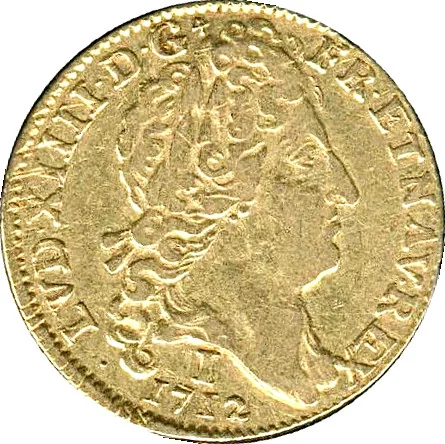
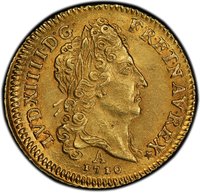
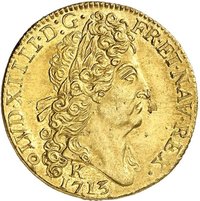
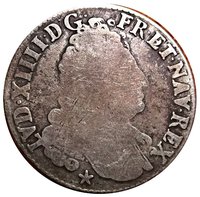
Obverse
Description:
King's head right, laureate. Workshop and date below. Legend begins at 7 o'clock.
Inscription:
LVD• XIIII• D• G FR• ET NAV• REX
I
1712
I
1712
Script: Latin
Engraver: Norbert Roettiers
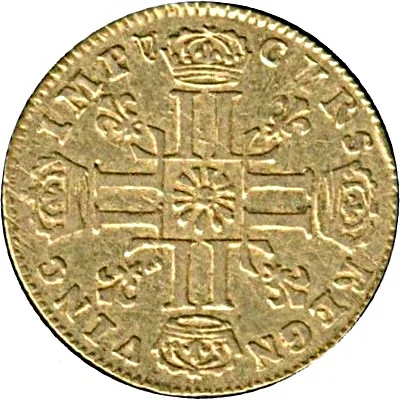
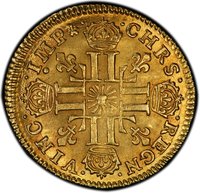
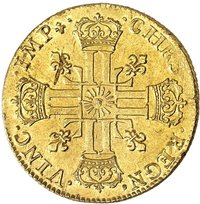
Reverse
Description:
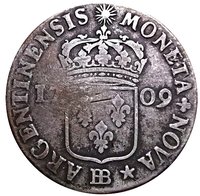
Cross of eight L's, each arm sun-crowned and heart-centered, canted by four outward-diverging lilies.
Inscription:
CHRS REGN VINC IMP
Script: Latin
Engraver: Norbert Roettiers
Edge
Corded.
Mints
Mintings
| Year | Mint Mark | Mintage | Quality | Collection |
|---|---|---|---|---|
| 1709 | & | — | ||
| 1709 | 9 | 29,369 | ||
| 1709 | A | 456,371 | ||
| 1709 | G | 9,140 | ||
| 1709 | H | 43,966 | ||
| 1709 | I | 5,189 | ||
| 1709 | K | 75,048 | ||
| 1709 | L | — | ||
| 1709 | M | 56,489 | ||
| 1709 | N | 126,018 | ||
| 1709 | O | — | ||
| 1709 | T | 32,517 | ||
| 1709 | V | 32,521 | ||
| 1709 | X | 47,663 | ||
| 1709 | ↄc | 53,895 | ||
| 1709 | 🐄 | 69,708 | ||
| 1709 | B | 83,436 | ||
| 1709 | C | 16,974 | ||
| 1709 | D | — | ||
| 1709 | E | 23,790 | ||
| 1709 | P | 48,362 | ||
| 1709 | S | — | ||
| 1709 | Y | 384 | ||
| 1709 | Z | 9,988 | ||
| 1710 | M | — | ||
| 1710 | X | — | ||
| 1710 | Y | — | ||
| 1710 | Z | — | ||
| 1710 | D | — | ||
| 1710 | E | — | ||
| 1710 | G | — | ||
| 1710 | H | — | ||
| 1710 | & | — | ||
| 1710 | 9 | — | ||
| 1710 | A | — | ||
| 1710 | B | — | ||
| 1710 | C | — | ||
| 1710 | I | 6,600 | ||
| 1710 | K | — | ||
| 1710 | L | — | ||
| 1710 | N | — | ||
| 1710 | O | — | ||
| 1710 | P | — | ||
| 1710 | S | — | ||
| 1710 | T | — | ||
| 1710 | V | — | ||
| 1710 | ↄc | — | ||
| 1710 | 🐄 | — | ||
| 1711 | A | — | ||
| 1711 | G | — | ||
| 1711 | H | — | ||
| 1711 | I | 2,400 | ||
| 1711 | K | — | ||
| 1711 | S | — | ||
| 1711 | Z | — | ||
| 1711 | ↄc | — | ||
| 1711 | 🐄 | — | ||
| 1711 | 9 | — | ||
| 1711 | B | — | ||
| 1711 | C | — | ||
| 1711 | D | — | ||
| 1711 | E | — | ||
| 1711 | M | — | ||
| 1711 | N | — | ||
| 1711 | O | — | ||
| 1711 | P | — | ||
| 1711 | Q | — | ||
| 1711 | T | — | ||
| 1711 | V | — | ||
| 1711 | W | — | ||
| 1711 | X | — | ||
| 1711 | Y | — | ||
| 1712 | C | — | ||
| 1712 | D | — | ||
| 1712 | N | — | ||
| 1712 | O | — | ||
| 1712 | P | — | ||
| 1712 | 9 | — | ||
| 1712 | A | — | ||
| 1712 | B | — | ||
| 1712 | E | — | ||
| 1712 | G | — | ||
| 1712 | H | — | ||
| 1712 | I | 4,400 | ||
| 1712 | M | — | ||
| 1712 | Q | — | ||
| 1712 | S | — | ||
| 1712 | T | — | ||
| 1712 | V | — | ||
| 1712 | X | — | ||
| 1712 | Y | — | ||
| 1712 | Z | — | ||
| 1712 | ↄc | — | ||
| 1712 | 🐄 | — | ||
| 1713 | D | — | ||
| 1713 | E | — | ||
| 1713 | G | — | ||
| 1713 | H | — | ||
| 1713 | I | 20,480 | ||
| 1713 | M | — | ||
| 1713 | N | — | ||
| 1713 | O | — | ||
| 1713 | P | — | ||
| 1713 | S | — | ||
| 1713 | V | — | ||
| 1713 | W | — | ||
| 1713 | X | — | ||
| 1713 | Y | — | ||
| 1713 | 9 | — | ||
| 1713 | A | — | ||
| 1713 | B | — | ||
| 1713 | C | — | ||
| 1713 | T | — | ||
| 1713 | Z | — | ||
| 1713 | ↄc | — | ||
| 1713 | 🐄 | — | ||
| 1714 | E | — | ||
| 1714 | G | — | ||
| 1714 | D | — | ||
| 1714 | W | — | ||
| 1714 | X | — | ||
| 1714 | Y | — | ||
| 1714 | Z | — | ||
| 1714 | ↄc | — | ||
| 1714 | B | — | ||
| 1714 | C | — | ||
| 1714 | 9 | — | ||
| 1714 | A | — | ||
| 1714 | H | — | ||
| 1714 | I | 2,800 | ||
| 1714 | M | — | ||
| 1714 | O | — | ||
| 1714 | T | — | ||
| 1714 | V | — | ||
| 1714 | 🐄 | — | ||
| 1715 | C | — | ||
| 1715 | E | — | ||
| 1715 | G | — | ||
| 1715 | I | — | ||
| 1715 | N | — | ||
| 1715 | O | — | ||
| 1715 | S | — | ||
| 1715 | T | — | ||
| 1715 | V | — | ||
| 1715 | W | — | ||
| 1715 | X | — | ||
| 1715 | Y | — | ||
| 1715 | Z | — | ||
| 1715 | ↄc | — | ||
| 1715 | 🐄 | — | ||
| 1715 | 9 | — | ||
| 1715 | A | — | ||
| 1715 | B | — | ||
| 1715 | M | — |
Historical background
In 1709, France faced a severe monetary crisis set against the backdrop of the War of the Spanish Succession (1701-1714). The conflict had placed immense strain on the royal treasury, forcing King Louis XIV to finance his armies through extraordinary and often desperate measures. The primary method was the repeated debasement of the coinage, where the government would recall gold and silver coins, melt them down, and reissue them with the same face value but a lower precious metal content. This practice, while generating short-term revenue, fundamentally eroded public trust in the currency and triggered rampant inflation.
The situation was catastrophically compounded by the "Grand Hiver" (Great Winter) of 1708-1709, one of the coldest winters in recorded European history. The frost destroyed the wheat harvest, leading to a catastrophic famine. Grain prices skyrocketed, and the combination of hyperinflation and scarcity caused widespread starvation and social unrest. In this context, the debased currency became almost meaningless for daily survival; a person's silver coin might buy only a fraction of the bread it had the previous year, as the value of metal collapsed against the astronomical price of food.
Consequently, the French economy descended into a state of barter and chaos. Peasants hoarded grain, merchants refused to accept the unstable currency, and the government's credit vanished. The monetary system, already weakened by years of manipulation, broke down under the dual pressures of state bankruptcy and ecological disaster. This period stands as a stark example of how fiscal policy, warfare, and environmental shock could converge to devastate an early modern economy, severely undermining the Sun King's authority and foreshadowing the financial turmoil that would culminate in the French Revolution decades later.
The situation was catastrophically compounded by the "Grand Hiver" (Great Winter) of 1708-1709, one of the coldest winters in recorded European history. The frost destroyed the wheat harvest, leading to a catastrophic famine. Grain prices skyrocketed, and the combination of hyperinflation and scarcity caused widespread starvation and social unrest. In this context, the debased currency became almost meaningless for daily survival; a person's silver coin might buy only a fraction of the bread it had the previous year, as the value of metal collapsed against the astronomical price of food.
Consequently, the French economy descended into a state of barter and chaos. Peasants hoarded grain, merchants refused to accept the unstable currency, and the government's credit vanished. The monetary system, already weakened by years of manipulation, broke down under the dual pressures of state bankruptcy and ecological disaster. This period stands as a stark example of how fiscal policy, warfare, and environmental shock could converge to devastate an early modern economy, severely undermining the Sun King's authority and foreshadowing the financial turmoil that would culminate in the French Revolution decades later.
Series: 1709 France circulation coins
✨ Legendary