

1 Ducat – Austrian Empire
Austria
Context
Years: 1680–1685
Country: Austria 
Issuer: Austrian Empire
Ruler: Leopold I
Currency:
(1520—1754)
Demonetized: Yes
Material
References
KM: #Click to copy to clipboard1325
Numista: #94297
Value
Bullion value: $574.52
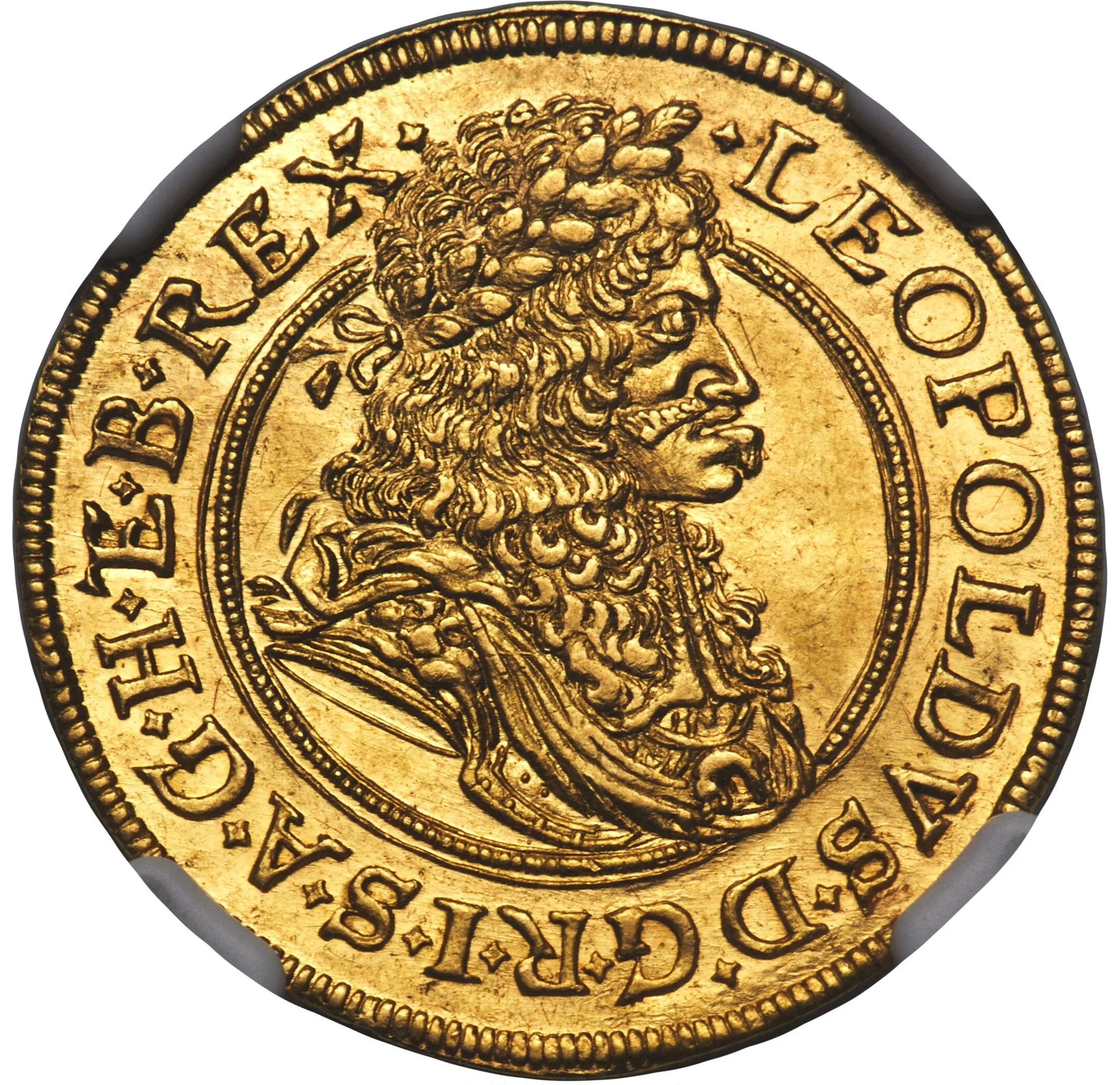
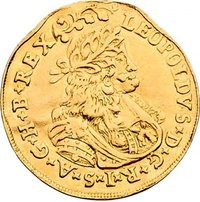
Obverse
Description:
Laureate portrait in double circle, unbroken before 1686.
Inscription:
LEOPOLDVS D G R I S A G H ET B REX
Script: Latin
Engraver: Matthias Mittermayer
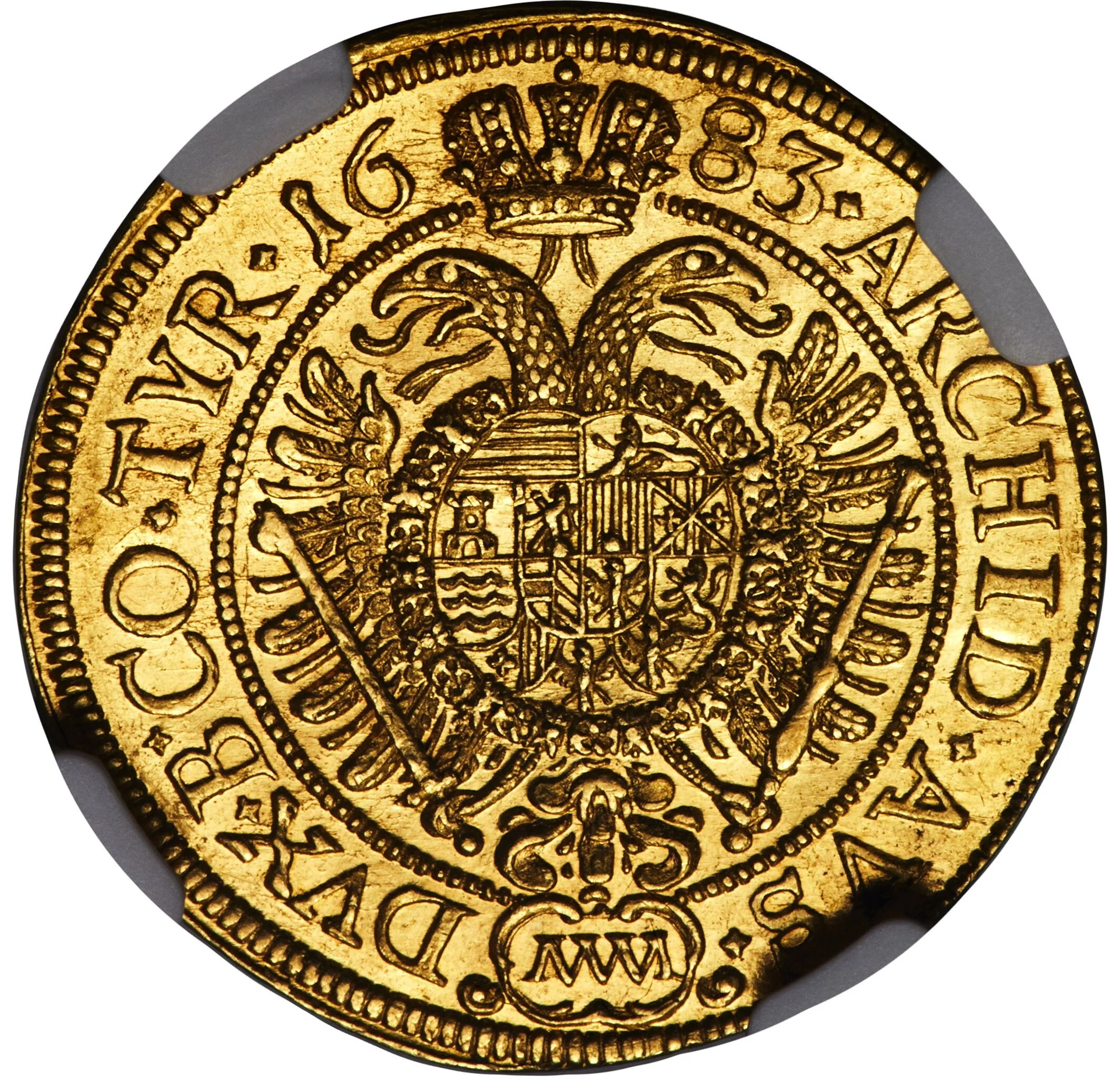
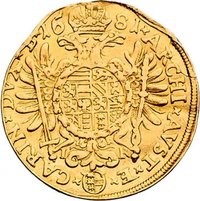
Reverse
Description:
Imperial eagle in beaded circle, mint mark below, date flanking crown.
Inscription:
ARCHID AVS (MM) DVX B CO TYR 1683
Script: Latin
Edge
Mints
| Name | Mark |
|---|---|
| Münze Österreich | — |
Mintings
| Year | Mint Mark | Mintage | Quality | Collection |
|---|---|---|---|---|
| 1680 | MM | — | ||
| 1683 | MM | — | ||
| 1684 | MM | — | ||
| 1685 | MM | — |
Historical background
In 1680, the currency system of the Habsburg Austrian Empire was a complex and fragile patchwork, reflecting the decentralized nature of the state itself. The Empire lacked a unified, centrally managed coinage. Instead, various territorial estates and minting authorities, including those in Bohemia, Hungary, and the Austrian hereditary lands, issued their own silver and copper coins. The primary large silver coin was the Reichsthaler, but its value and silver content could vary between regions. Alongside these, a flood of small-denomination copper Kreuzer coins circulated for daily use, which were prone to debasement.
This period was one of severe monetary instability, largely driven by the immense financial pressures of the ongoing wars against the Ottoman Empire. To fund military campaigns, such as the defense of Vienna in 1683, authorities frequently resorted to debasing the coinage—reducing the precious metal content in coins while keeping their face value the same. This practice, especially rampant with copper coinage, led to rapid inflation and a loss of public trust. People hoarded older, purer coins (Gresham's Law in action), further worsening the circulation of sound money and causing hardship for common people and soldiers paid in devalued currency.
Emperor Leopold I's government attempted to address the crisis through regulatory measures. The most significant was the Münzordnung (Coin Ordinance) of 1671, which aimed to standardize the Reichsthaler and establish fixed exchange rates between silver and copper coins across the Empire. However, enforcement was weak due to the Empire's fragmented political structure and the relentless need for war finance. Consequently, in 1680, the system remained in a precarious state, characterized by fluctuating values, widespread confusion in trade, and an ongoing tension between the crown's desperate need for revenue and the economic stability of its realms.
This period was one of severe monetary instability, largely driven by the immense financial pressures of the ongoing wars against the Ottoman Empire. To fund military campaigns, such as the defense of Vienna in 1683, authorities frequently resorted to debasing the coinage—reducing the precious metal content in coins while keeping their face value the same. This practice, especially rampant with copper coinage, led to rapid inflation and a loss of public trust. People hoarded older, purer coins (Gresham's Law in action), further worsening the circulation of sound money and causing hardship for common people and soldiers paid in devalued currency.
Emperor Leopold I's government attempted to address the crisis through regulatory measures. The most significant was the Münzordnung (Coin Ordinance) of 1671, which aimed to standardize the Reichsthaler and establish fixed exchange rates between silver and copper coins across the Empire. However, enforcement was weak due to the Empire's fragmented political structure and the relentless need for war finance. Consequently, in 1680, the system remained in a precarious state, characterized by fluctuating values, widespread confusion in trade, and an ongoing tension between the crown's desperate need for revenue and the economic stability of its realms.
✨ Legendary