

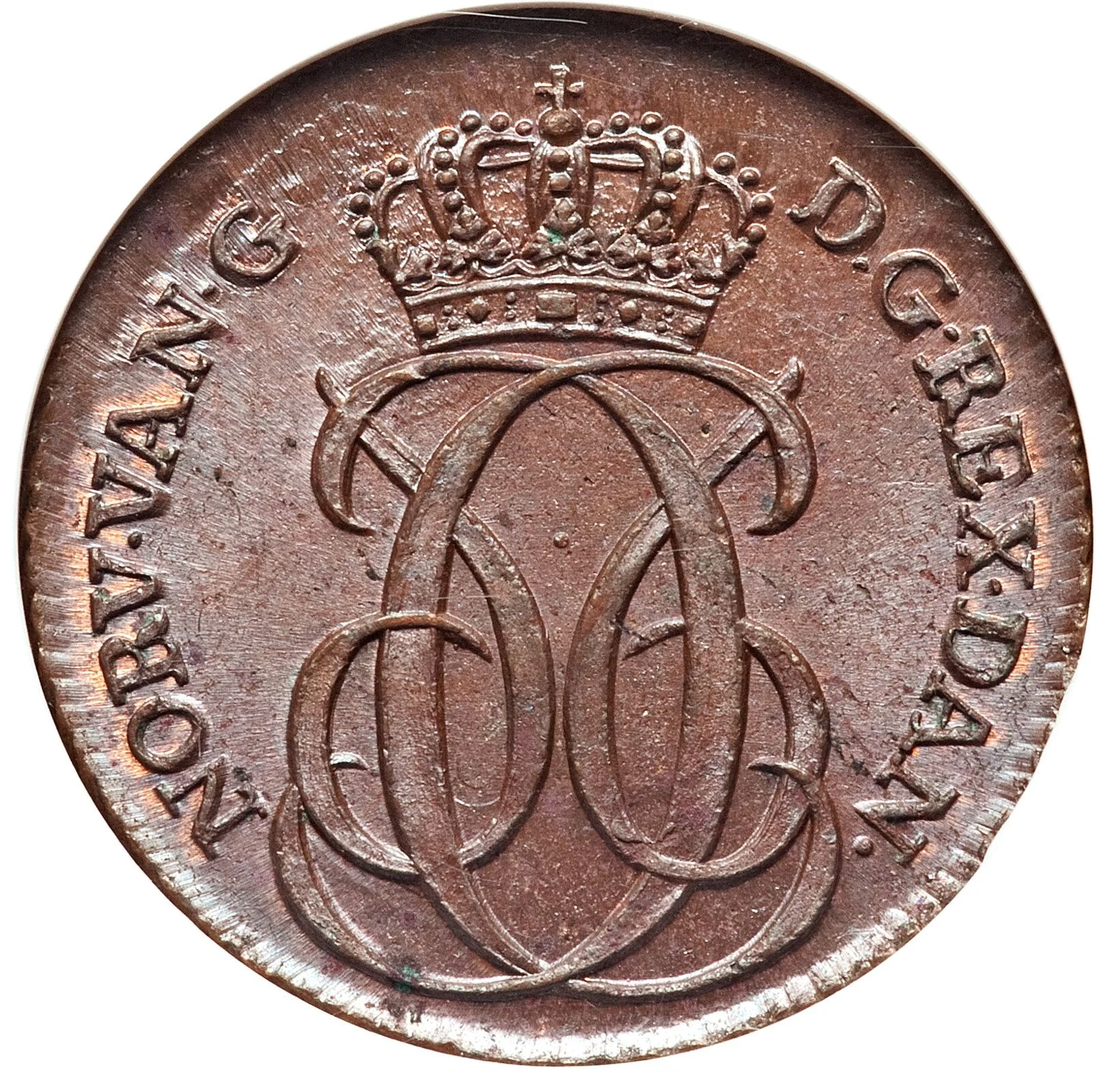
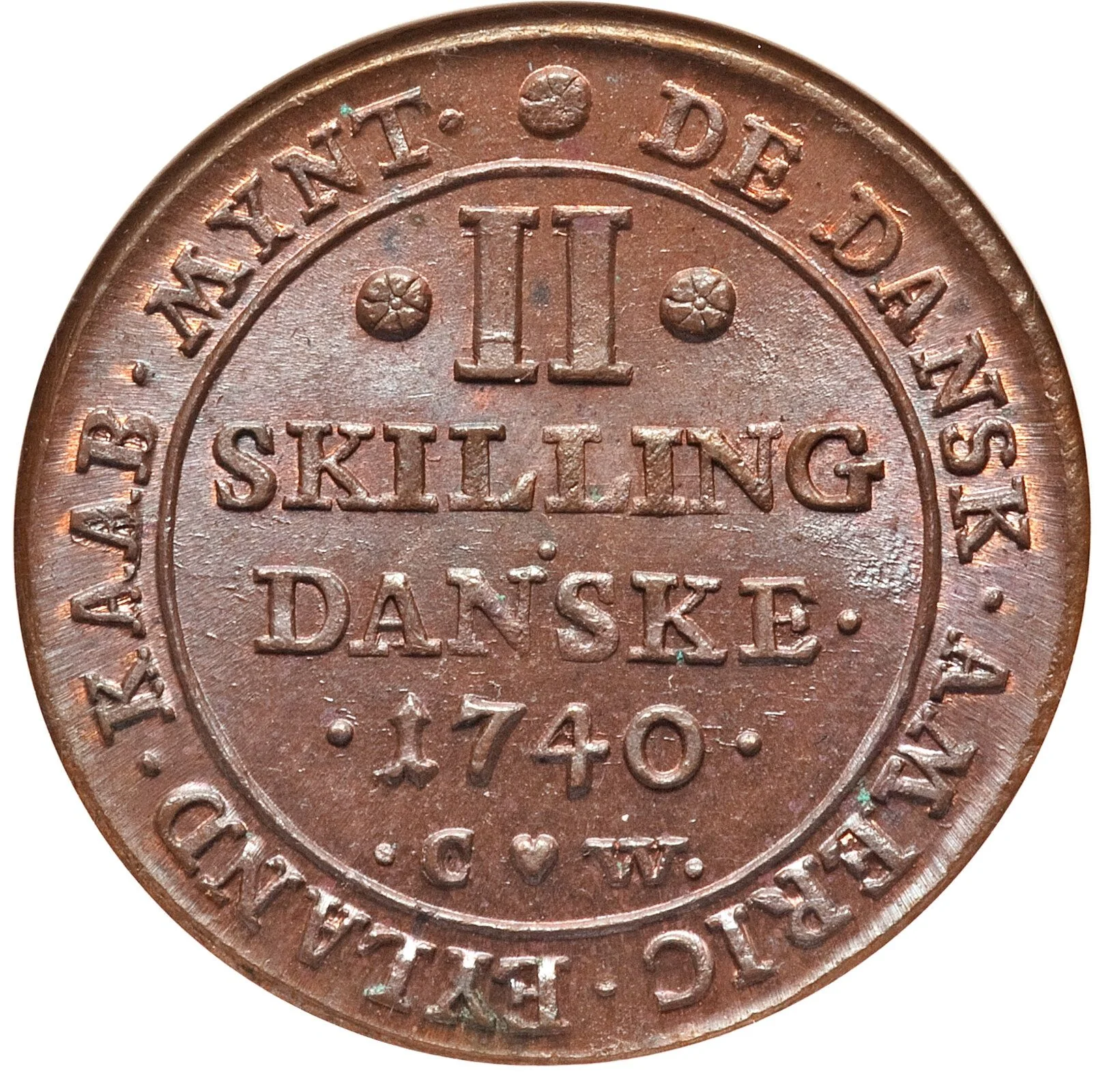
2 Skilling – Danish West Indies
Context
Year: 1740
Issuer: Danish West Indies
Ruler: Christian VI
Currency:
(1740—1849)
Demonetized: Yes
Total mintage: 12,000
Material
References
KM: #Click to copy to clipboard3
Numista: #94097
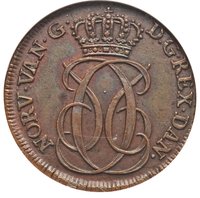
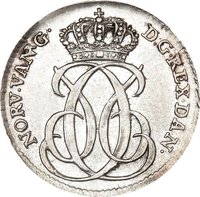
Obverse
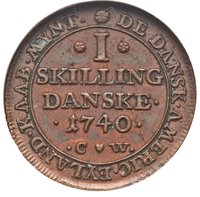
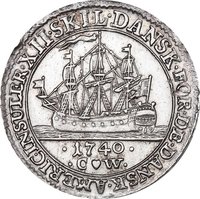
Reverse
Description:
Circle denomination
Inscription:
DE DANSK · AMERIC · EYLAND · KAAB · MYNT
· II ·
SKILLING
DANSKE ·
· 1740 ·
· C ♥W .
· II ·
SKILLING
DANSKE ·
· 1740 ·
· C ♥W .
Script: Latin
Edge
Plain
Mints
| Name | Mark |
|---|---|
| Royal Danish Mint | C♥W |
Mintings
| Year | Mint Mark | Mintage | Quality | Collection |
|---|---|---|---|---|
| 1740 | C♥W | 12,000 |
Historical background
In 1740, the currency situation in the Danish West Indies (present-day U.S. Virgin Islands) was characterized by chronic scarcity and chaotic multiplicity. The official currency was the Danish rigsdaler, but it rarely circulated in the islands' daily economy. Instead, the plantation-driven trade with neighboring foreign colonies flooded the local market with a confusing array of foreign coins, primarily Spanish pieces of eight (reales) and French livres, but also Dutch ducats and Portuguese joes. These coins circulated not at their official face value but according to their weight and precious metal content, leading to constant fluctuation and uncertainty in transactions.
The Danish government attempted to impose order by setting official exchange rates for these foreign coins through periodic proclamation, known as "proclamation money." However, these mandated rates often failed to reflect the true market value, especially as coins became worn or clipped. This created a dual system where goods had one price in proclamation currency and a different, often higher, price in actual "current money" (the physical foreign coins). The scarcity of any standardized coinage severely hampered local commerce and made the payment of taxes and debts a contentious issue.
This monetary chaos was a direct reflection of the islands' economic reality: they were a small player in a vast Atlantic system. Their survival depended on the export of sugar and rum, and their trade was overwhelmingly conducted with non-Danish merchants, especially from the Dutch and French islands. Consequently, the currency in use was determined by the needs of regional trade, not by Danish royal decree. The situation would persist for decades, only finding a degree of stability later in the century with the more systematic introduction of the rigsdaler courant and the increased use of reliable Spanish silver dollars as a de facto standard.
The Danish government attempted to impose order by setting official exchange rates for these foreign coins through periodic proclamation, known as "proclamation money." However, these mandated rates often failed to reflect the true market value, especially as coins became worn or clipped. This created a dual system where goods had one price in proclamation currency and a different, often higher, price in actual "current money" (the physical foreign coins). The scarcity of any standardized coinage severely hampered local commerce and made the payment of taxes and debts a contentious issue.
This monetary chaos was a direct reflection of the islands' economic reality: they were a small player in a vast Atlantic system. Their survival depended on the export of sugar and rum, and their trade was overwhelmingly conducted with non-Danish merchants, especially from the Dutch and French islands. Consequently, the currency in use was determined by the needs of regional trade, not by Danish royal decree. The situation would persist for decades, only finding a degree of stability later in the century with the more systematic introduction of the rigsdaler courant and the increased use of reliable Spanish silver dollars as a de facto standard.
✨ Legendary