

1 Mohar – Nepal
Nepal
Context
Year: 1754
Nepal - Saka era Year: 1676
Issuer: Nepal 
Ruler: Prithvi Narayan Shah
Currency:
(1546—1932)
Demonetized: Yes
Material
References
KM: #Click to copy to clipboard454.1
Numista: #93094
Value
Bullion value: $15.63
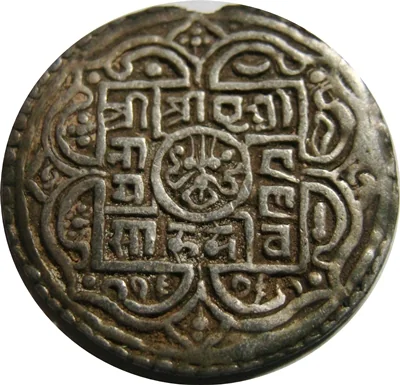
Obverse
Description:
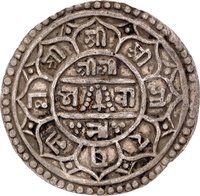
King's name, Saka date. Sun left, moon right above legend.
Inscription:
Sri Sri Prithvi Narayan Shah Deva
SE 1676
SE 1676
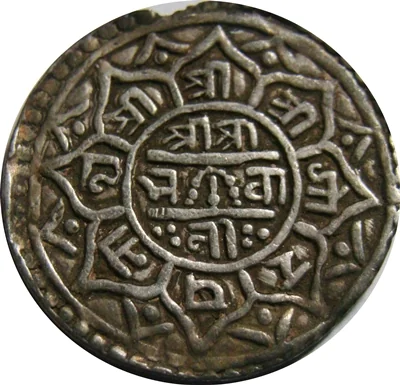
Reverse
Inscription:
Sri Sri Bhabani
Sri Sri Sri Gorakhanath
Sri Sri Sri Gorakhanath
Edge
Mintings
| Year | Mint Mark | Mintage | Quality | Collection |
|---|---|---|---|---|
| 1754 | — | — |
Historical background
In 1754, the currency situation in the Kathmandu Valley was defined by fragmentation and the legacy of the Malla kingdoms. The three rival city-states of Kathmandu, Patan, and Bhaktapur each minted their own distinct silver mohar coins, often bearing the symbols and script of their respective rulers. These coins circulated alongside a variety of older issues, foreign silver rupees (primarily from the Mughal Empire to the south), and cowrie shells used for smaller transactions. This lack of a unified monetary system reflected the political division of the valley and created complexity for trade, both within the region and with Tibet to the north and the Indian plains to the south.
The primary currency was silver, with the mohar as the standard unit. The purity and weight of these coins, however, could vary between the kingdoms, leading to exchange rate complexities. The economy was heavily based on agriculture and trans-Himalayan trade, with coins necessary for taxes, land revenue, and larger commercial transactions. The Newar merchants of the valley, key players in the trade between India and Tibet, had to navigate this multi-currency environment, often relying on sarrafs (money changers) to assess and exchange the various coins.
This disparate monetary landscape was on the cusp of dramatic change. In the western hills, the expanding Gorkha Kingdom under Prithvi Narayan Shah was actively challenging the Malla confederation. His military campaigns, funded by revenue and trade, would soon have direct consequences for Nepal's currency. Within a decade, Shah's conquest of the valley (1768-69) would dismantle the three Malla mints and initiate the creation of a single, centralized coinage for a unified Nepal, ending the era of competing currencies that characterized the mid-18th century.
The primary currency was silver, with the mohar as the standard unit. The purity and weight of these coins, however, could vary between the kingdoms, leading to exchange rate complexities. The economy was heavily based on agriculture and trans-Himalayan trade, with coins necessary for taxes, land revenue, and larger commercial transactions. The Newar merchants of the valley, key players in the trade between India and Tibet, had to navigate this multi-currency environment, often relying on sarrafs (money changers) to assess and exchange the various coins.
This disparate monetary landscape was on the cusp of dramatic change. In the western hills, the expanding Gorkha Kingdom under Prithvi Narayan Shah was actively challenging the Malla confederation. His military campaigns, funded by revenue and trade, would soon have direct consequences for Nepal's currency. Within a decade, Shah's conquest of the valley (1768-69) would dismantle the three Malla mints and initiate the creation of a single, centralized coinage for a unified Nepal, ending the era of competing currencies that characterized the mid-18th century.

✨ Legendary