

16 Marks – Aachen
Germany

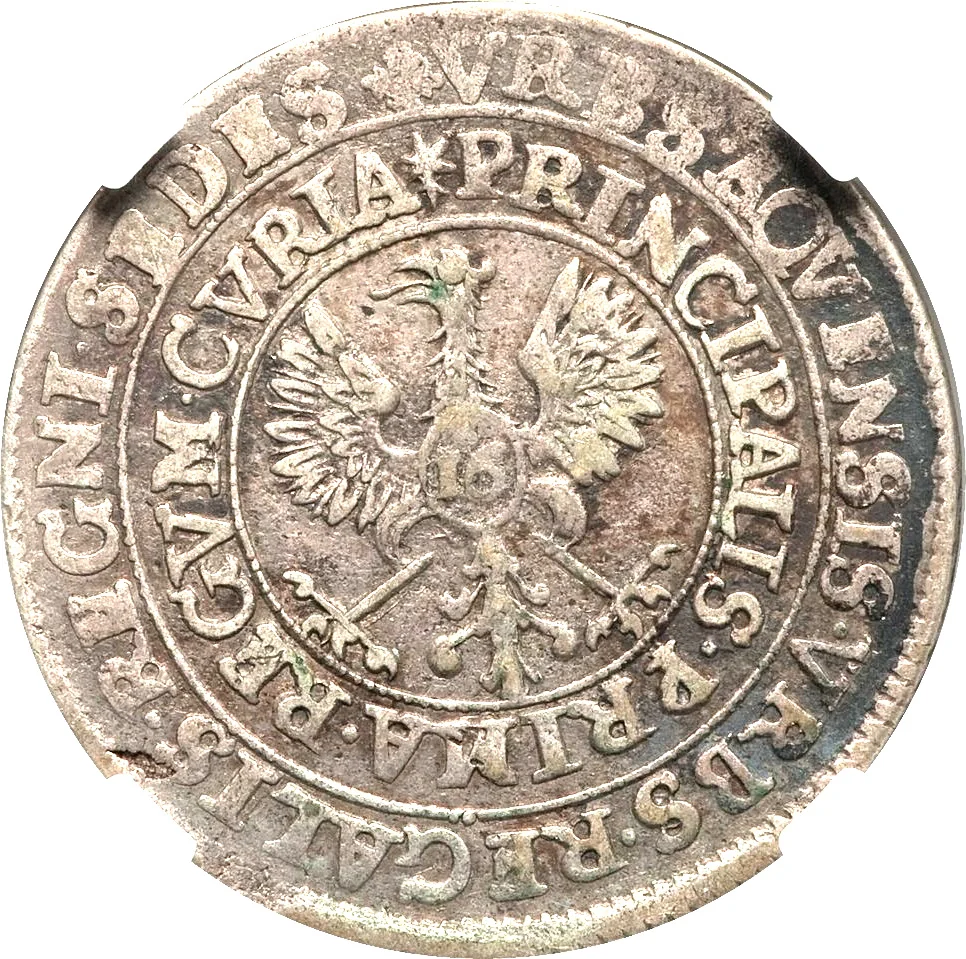
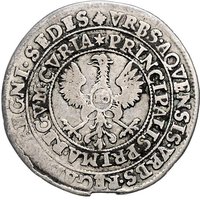
Obverse
Description:
Eagle with breast denomination, encircled by dual legends.
Inscription:
VRBS.AQVENSIS.VRBS.REGALIS.REGNI.SIDES
PRINCIPALIS.PRIMA.REGVM.CVRIA
PRINCIPALIS.PRIMA.REGVM.CVRIA
Script: Latin
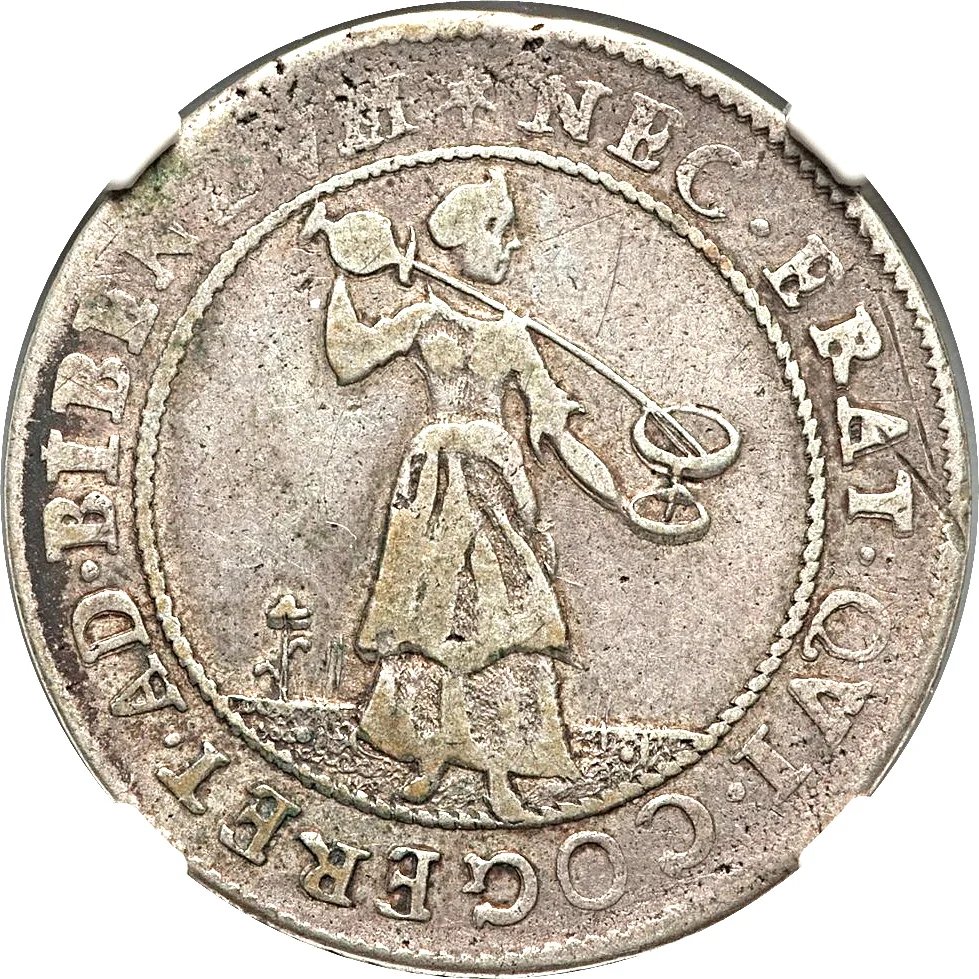
Reverse
Edge
Mintings
| Year | Mint Mark | Mintage | Quality | Collection |
|---|---|---|---|---|
| 1708 | — | — |
Historical background
In 1708, the Free Imperial City of Aachen, like much of the Holy Roman Empire, operated within a complex and fragmented monetary landscape. The city did not possess the sovereign right to mint its own coins; instead, it officially used the currency of the surrounding Duchy of Jülich, the Reichsthaler and its smaller subdivisions (Albuses and Heller). This arrangement was typical, as many Imperial Cities relied on the minting authority of their territorial neighbors or larger regional states, embedding them in a web of monetary dependency and treaty obligations.
However, the practical daily currency situation was one of significant challenge and confusion. The ongoing War of the Spanish Succession (1701-1714) flooded the Rhineland with a plethora of foreign and debased coins from the warring parties, particularly French and Dutch issues. Furthermore, the widespread practice of "clipping" precious metal from coin edges and the circulation of older, worn coins of uncertain value created chronic instability. For Aachen's merchants and craftsmen, this meant constant difficulties in trade, price fluctuations, and the need for expert money changers to assess the actual intrinsic value of countless coin types.
The city council attempted to manage this chaos through repeated "Münzedikte" (currency ordinances). These decrees aimed to fix exchange rates between the official Reichsthaler and the myriad of circulating foreign coins, while also setting values for the small change essential for everyday market life. The ordinance of 1708 itself was a reactive measure, an attempt to bring temporary order by legally defining which coins were acceptable and at what rate, thereby protecting local commerce from the worst of the inflationary and deceptive practices spurred by the war. Yet, the authority of such decrees was limited, making the currency situation a persistent source of economic anxiety for the city.
However, the practical daily currency situation was one of significant challenge and confusion. The ongoing War of the Spanish Succession (1701-1714) flooded the Rhineland with a plethora of foreign and debased coins from the warring parties, particularly French and Dutch issues. Furthermore, the widespread practice of "clipping" precious metal from coin edges and the circulation of older, worn coins of uncertain value created chronic instability. For Aachen's merchants and craftsmen, this meant constant difficulties in trade, price fluctuations, and the need for expert money changers to assess the actual intrinsic value of countless coin types.
The city council attempted to manage this chaos through repeated "Münzedikte" (currency ordinances). These decrees aimed to fix exchange rates between the official Reichsthaler and the myriad of circulating foreign coins, while also setting values for the small change essential for everyday market life. The ordinance of 1708 itself was a reactive measure, an attempt to bring temporary order by legally defining which coins were acceptable and at what rate, thereby protecting local commerce from the worst of the inflationary and deceptive practices spurred by the war. Yet, the authority of such decrees was limited, making the currency situation a persistent source of economic anxiety for the city.
✨ Legendary