

1 Poltina – Russian Empire
Russia
Context
Year: 1741
Country: Russia 
Issuer: Russian Empire
Ruler: Ivan VI
Currency:
(1700—1917)
Demonetized: Yes
Material
References
KM: #Click to copy to clipboard206.2
Numista: #92205
Value
Bullion value: $29.96
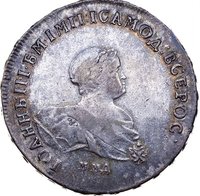
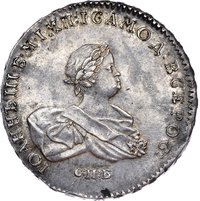
Obverse
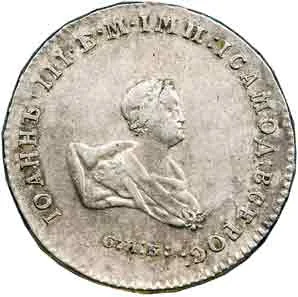
Description:
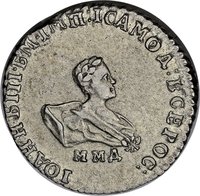
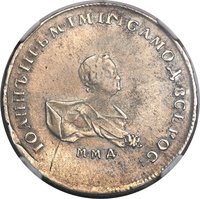
Portrait of Emperor Ioann Antonovich facing right in the centre.
Inscription:
IОАННЪ III ∙ Б∙М ∙ IМП: I САМОД : ВСЕРОС:
С:П:Б:
С:П:Б:
Script: Cyrillic
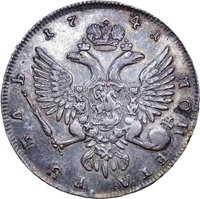
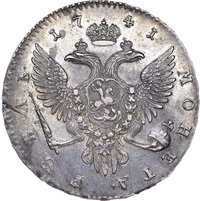
Reverse
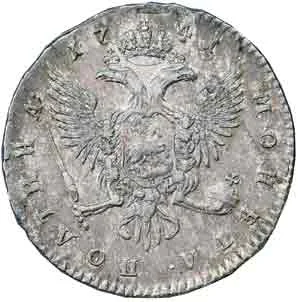
Description:
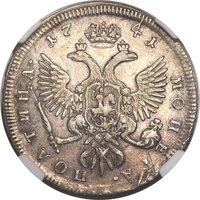
Crowned two-headed eagle; denomination and date.
Inscription:
17 41
МОНЕТА ∙ ПОЛТИНА
МОНЕТА ∙ ПОЛТИНА
Script: Cyrillic
Edge
Smooth with inscription or reticulated
Legend:
С.ПЕТЕРБƔРХСКАГО *** МАНЕТНОГО ∙ ДВОРА **
Mintings
| Year | Mint Mark | Mintage | Quality | Collection |
|---|---|---|---|---|
| 1741 | СПБ | — | BU |
Historical background
In 1741, the Russian Empire’s currency system was defined by a chronic shortage of silver and a reliance on cumbersome copper coinage. The state’s primary monetary unit was the silver ruble, but its production was limited due to a lack of domestic silver mines and the high cost of imports. This scarcity meant that large-scale transactions and state finances were heavily dependent on imported specie, while the everyday economy for most subjects functioned on a cumbersome system of heavy copper kopeks, which were inconvenient for trade and transport.
The situation was further strained by the policies of Empress Anna Ioannovna (ruled 1730-1740) and the ongoing reign of the infant Ivan VI, with his regents, in 1741. To finance state expenditures, particularly for the military during conflicts like the Russo-Swedish War (1741-1743), the government frequently resorted to debasement and fiscal expedients. This included minting lighter-weight copper coins with an artificially high face value, a practice that generated short-term revenue but fueled inflation and public distrust in the currency.
Consequently, Russia operated with a disjointed monetary circulation where the value of copper coins fluctuated against the scarce silver ruble, creating complexity and inefficiency in commerce. This unstable and fragmented system would persist until the reforms of Empress Elizabeth Petrovna (who seized the throne in late 1741), who later initiated steps toward standardization, and would only be fundamentally resolved by the comprehensive monetary reforms of Catherine the Great later in the century.
The situation was further strained by the policies of Empress Anna Ioannovna (ruled 1730-1740) and the ongoing reign of the infant Ivan VI, with his regents, in 1741. To finance state expenditures, particularly for the military during conflicts like the Russo-Swedish War (1741-1743), the government frequently resorted to debasement and fiscal expedients. This included minting lighter-weight copper coins with an artificially high face value, a practice that generated short-term revenue but fueled inflation and public distrust in the currency.
Consequently, Russia operated with a disjointed monetary circulation where the value of copper coins fluctuated against the scarce silver ruble, creating complexity and inefficiency in commerce. This unstable and fragmented system would persist until the reforms of Empress Elizabeth Petrovna (who seized the throne in late 1741), who later initiated steps toward standardization, and would only be fundamentally resolved by the comprehensive monetary reforms of Catherine the Great later in the century.
✨ Legendary