

1 Poltina – Russian Empire
Russia
Context
Years: 1738–1740
Country: Russia 
Issuer: Russian Empire
Ruler: Anna I
Currency:
(1700—1917)
Demonetized: Yes
Material
References
KM: #Click to copy to clipboard199.2
Numista: #92202
Value
Bullion value: $30.04
Obverse
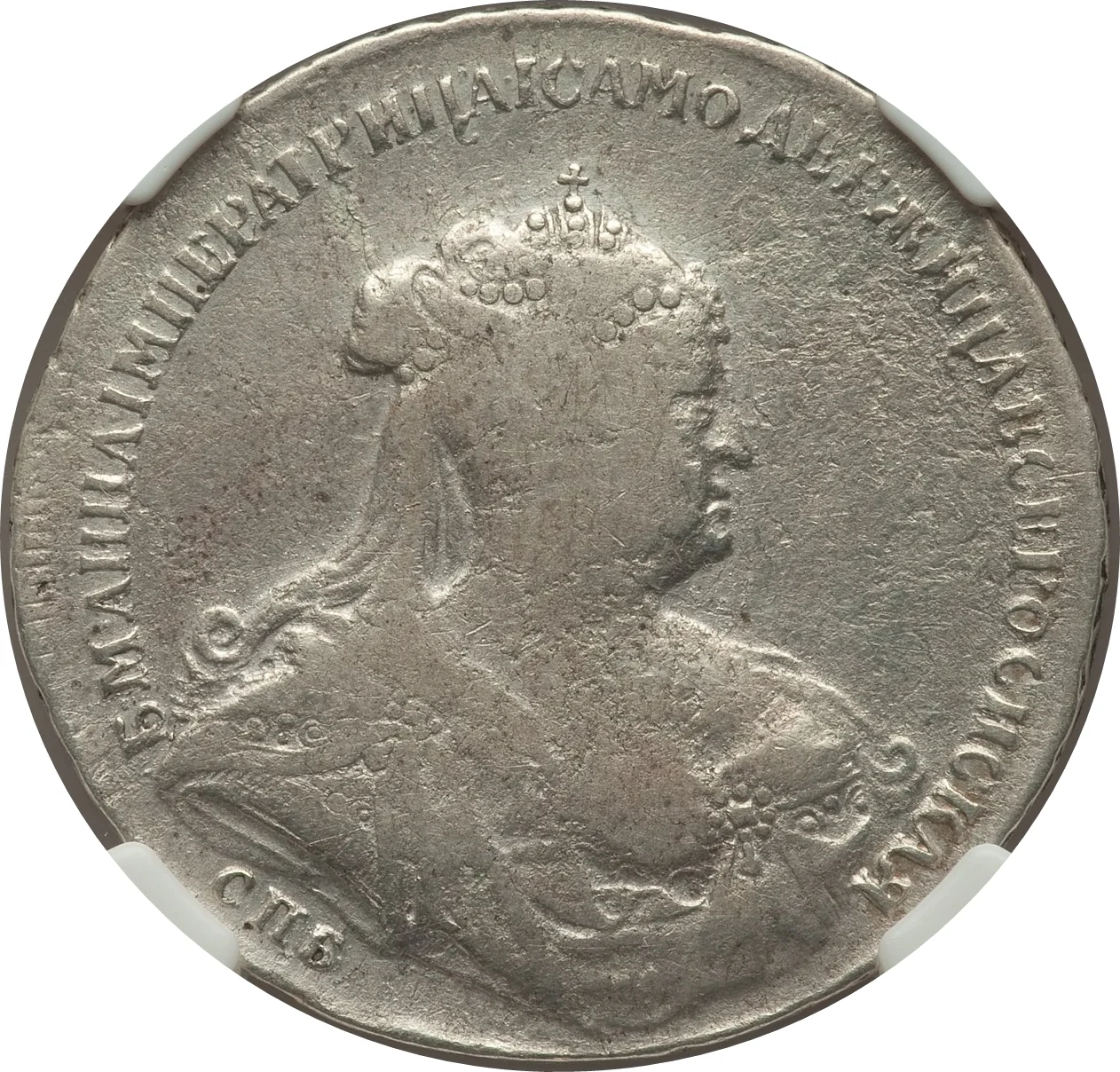
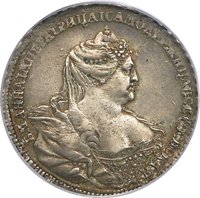
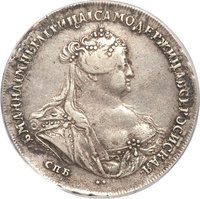
Description:
Bust of Anna Ioannovna, right-facing.
Inscription:
Б·М·АННАIМПЕРАТРИЦАIСАМОДЕРЖИЦАВСЕРОСИСКАЯ
СПБ
СПБ
Script: Cyrillic
Reverse
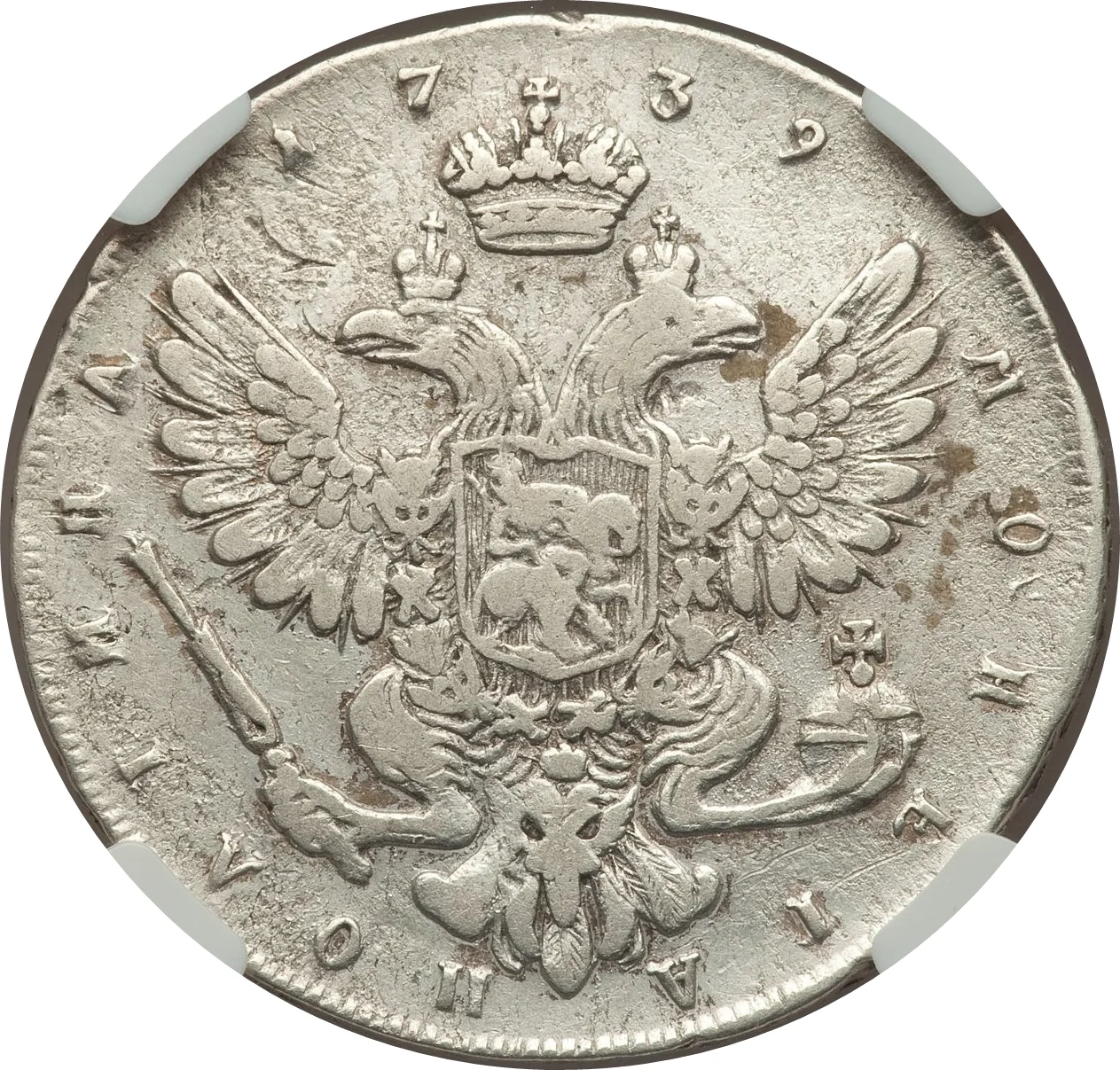
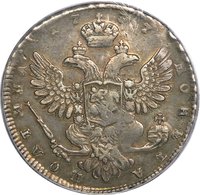
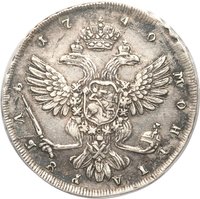
Description:
Crowned two-headed eagle; denomination and date.
Inscription:
1739
МОНЕТА ПОЛТИНА
МОНЕТА ПОЛТИНА
Script: Cyrillic
Edge
Reticulated
Mintings
| Year | Mint Mark | Mintage | Quality | Collection |
|---|---|---|---|---|
| 1738 | — | — | BU | |
| 1738 | СПБ | — | BU | |
| 1739 | СПБ | — | BU | |
| 1740 | СПБ | — | BU |
Historical background
In 1738, the Russian Empire’s currency system was defined by the copper-based monetary reforms initiated by Empress Anna Ioannovna, which aimed to stabilize state finances strained by military campaigns and court expenses. The primary circulating coin was the silver ruble, but its supply was limited, leading to a heavy reliance on a cumbersome copper coinage. The most notable feature was the circulation of the "plate money" (platy), large, square copper slabs minted from 1725 to 1726, each weighing over 1.6 kilograms and valued at one ruble. While these were no longer being produced, they remained in circulation alongside newer, smaller copper coins, creating an awkward and physically heavy monetary medium for everyday commerce.
The state’s financial health was precarious, with a chronic budget deficit exacerbated by the ongoing Russo-Turkish War (1735–1739). To generate revenue, the government frequently manipulated the coinage, increasing the face value of copper coins relative to their intrinsic metal content. This practice, while providing short-term fiscal relief, risked inflation and undermined public confidence in the currency. Furthermore, the monetary system was complicated by the simultaneous circulation of older silver kopeks from pre-Petrine times and newer, Western-style coinage introduced by Peter the Great, leading to regional inconsistencies in value and acceptance.
Overall, the currency situation in 1738 reflected an empire in transition, attempting to modernize its finances while grappling with the immediate pressures of war and administration. The reliance on a bulky and artificially valued copper coinage highlighted the underlying tension between the state’s fiscal needs and the practical requirements of the economy. This unstable foundation would later prompt further reforms under Empress Elizabeth Petrovna, who sought to streamline the system and restore greater stability to the imperial currency.
The state’s financial health was precarious, with a chronic budget deficit exacerbated by the ongoing Russo-Turkish War (1735–1739). To generate revenue, the government frequently manipulated the coinage, increasing the face value of copper coins relative to their intrinsic metal content. This practice, while providing short-term fiscal relief, risked inflation and undermined public confidence in the currency. Furthermore, the monetary system was complicated by the simultaneous circulation of older silver kopeks from pre-Petrine times and newer, Western-style coinage introduced by Peter the Great, leading to regional inconsistencies in value and acceptance.
Overall, the currency situation in 1738 reflected an empire in transition, attempting to modernize its finances while grappling with the immediate pressures of war and administration. The reliance on a bulky and artificially valued copper coinage highlighted the underlying tension between the state’s fiscal needs and the practical requirements of the economy. This unstable foundation would later prompt further reforms under Empress Elizabeth Petrovna, who sought to streamline the system and restore greater stability to the imperial currency.
✨ Legendary