

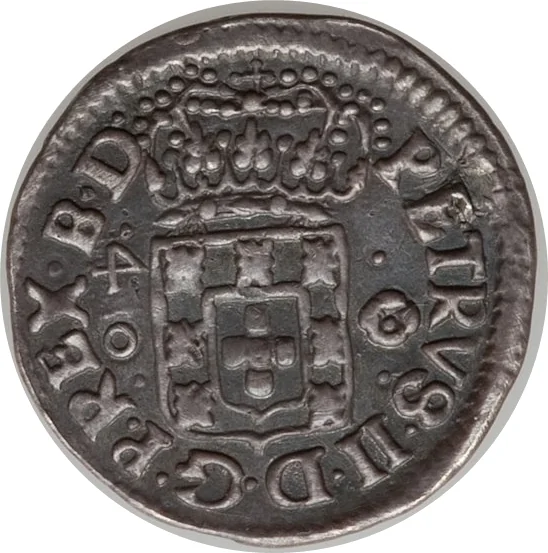
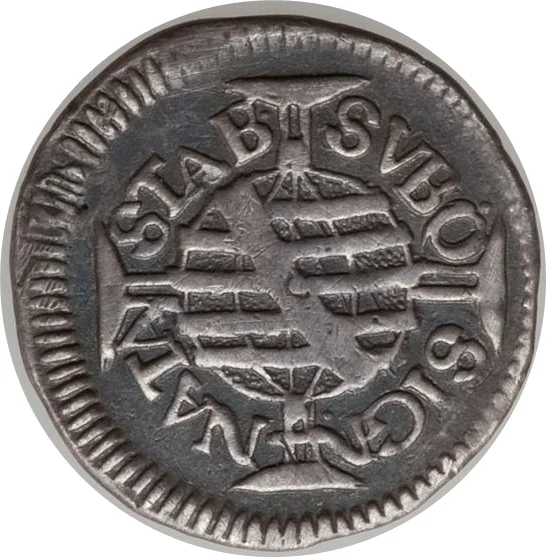
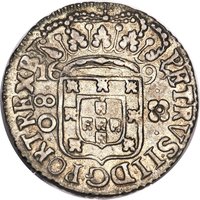
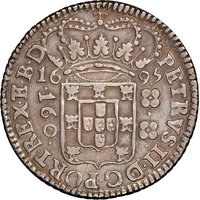
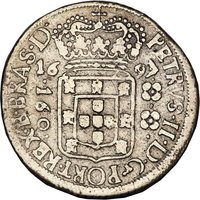
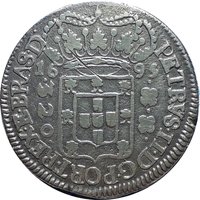
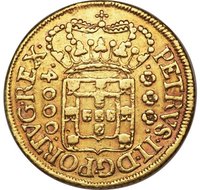
Obverse
Description:
Crowned Portuguese arms between value and dotted flower.
Inscription:
PETRVS·II·DG PORT·REX·ET.B·D·
40
40
Script: Latin
Designer and engraver: Domingos Ferreira Zambuja
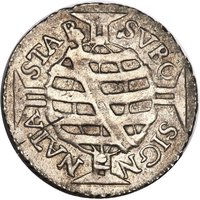
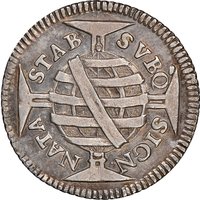
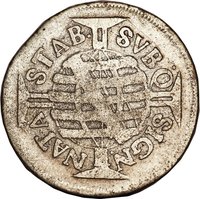
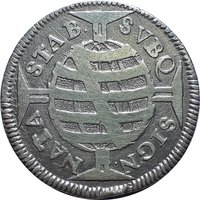
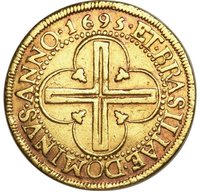
Reverse
Description:
An armillary sphere before the Cross of Christ.
Inscription:
STAB SVBQ SIGN NATA
Script: Latin
Designer and engraver: Domingos Ferreira Zambuja
Edge
Plain
Categories
| Symbol> Armillary sphere |
| Symbol> Crown |
| Plants> Flower |
| Symbols> Coat of Arms |
| Symbol> Cross |
Mints
| Name | Mark |
|---|---|
| Bahia | — |
Mintings
| Year | Mint Mark | Mintage | Quality | Collection |
|---|---|---|---|---|
| — | — | — |
Historical background
In 1695, Brazil was in the midst of a profound monetary crisis rooted in the scarcity of official coinage. The Portuguese Empire, which governed the colony, operated under a mercantilist system that drained wealth to the metropole. While gold had been discovered in the interior, the great boom of the Minas Gerais was still a few years away, meaning the colony's economy ran primarily on sugar and tobacco exports. The limited supply of Portuguese réis coins that did circulate was often hoarded or sent back to Lisbon to pay for imports, creating a chronic shortage of hard currency for daily transactions within Brazil.
This vacuum was filled by a chaotic and inefficient system of commodity money and improvised currency. The most common medium of exchange was sugar, officially designated as legal tender, but its bulk, perishability, and fluctuating quality made it impractical. Other commodities, such as tobacco rolls and even cattle, were used in barter, while locally minted copper coins, known as macutas, circulated unofficially. Furthermore, a wide variety of foreign coins—especially Spanish pieces of eight—flowed through coastal ports from contraband and trade, their values negotiated inconsistently. This patchwork system stifled internal commerce, complicated tax collection for the Crown, and highlighted the colonial administration's lack of financial control.
Recognizing the crisis, the Portuguese Crown took decisive action in 1695. King Pedro II ordered the establishment of the first official mint in Brazil, the Casa da Moeda da Bahia, in the city of Salvador. Its primary task was to strike silver coins from melted-down foreign specie, creating a standardized currency of réis for the colony. This move was not merely logistical; it was a strategic assertion of royal authority and an attempt to formalize the economy ahead of the anticipated mineral wealth. Thus, 1695 stands as a pivotal year, marking the end of Brazil's reliance on haphazard commodity money and the beginning of a state-managed monetary system, set on the brink of the transformative gold rush that would soon redefine the colony's importance to the empire.
This vacuum was filled by a chaotic and inefficient system of commodity money and improvised currency. The most common medium of exchange was sugar, officially designated as legal tender, but its bulk, perishability, and fluctuating quality made it impractical. Other commodities, such as tobacco rolls and even cattle, were used in barter, while locally minted copper coins, known as macutas, circulated unofficially. Furthermore, a wide variety of foreign coins—especially Spanish pieces of eight—flowed through coastal ports from contraband and trade, their values negotiated inconsistently. This patchwork system stifled internal commerce, complicated tax collection for the Crown, and highlighted the colonial administration's lack of financial control.
Recognizing the crisis, the Portuguese Crown took decisive action in 1695. King Pedro II ordered the establishment of the first official mint in Brazil, the Casa da Moeda da Bahia, in the city of Salvador. Its primary task was to strike silver coins from melted-down foreign specie, creating a standardized currency of réis for the colony. This move was not merely logistical; it was a strategic assertion of royal authority and an attempt to formalize the economy ahead of the anticipated mineral wealth. Thus, 1695 stands as a pivotal year, marking the end of Brazil's reliance on haphazard commodity money and the beginning of a state-managed monetary system, set on the brink of the transformative gold rush that would soon redefine the colony's importance to the empire.
Series: 1695 Brazil circulation coins

💎 Extremely Rare