

1 Rupee – Mughal Empire
India
Context
Years: 1688–1708
Country: India 
Issuer: Mughal Empire
Ruler: Aurangzeb
Currency:
(1540—1842)
Demonetized: Yes
Material
References
KM: #Click to copy to clipboard300.43
Numista: #92008
Value
Bullion value: $33.25
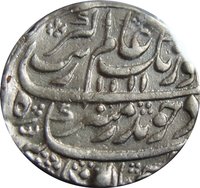
Obverse
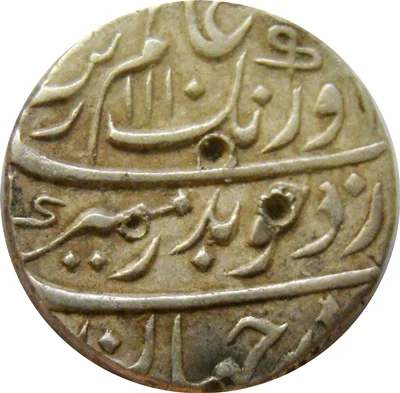
Description:
Inscription, dated AH.
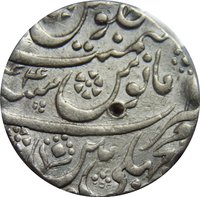
Reverse
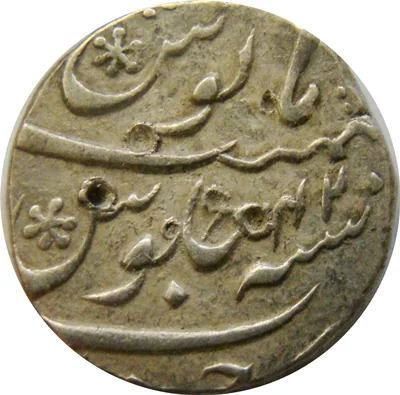
Description:
Inscription, regnal year, mint at base.
Edge
Mintings
| Year | Mint Mark | Mintage | Quality | Collection |
|---|---|---|---|---|
| 1688 | — | — | ||
| 1689 | — | — | ||
| 1690 | — | — | ||
| 1691 | — | — | ||
| 1692 | — | — | ||
| 1693 | — | — | ||
| 1694 | — | — | ||
| 1695 | — | — | ||
| 1697 | — | — | ||
| 1698 | — | — | ||
| 1699 | — | — | ||
| 1700 | — | — | ||
| 1702 | — | — | ||
| 1703 | — | — | ||
| 1704 | — | — | ||
| 1705 | — | — | ||
| 1706 | — | — | ||
| 1707 | — | — | ||
| 1708 | — | — |
Historical background
In 1688, the Mughal Empire under Emperor Aurangzeb Alamgir was at its territorial zenith, yet its monetary system was experiencing significant strain. The empire operated on a sophisticated bimetallic system centered on the silver rupee and the gold mohur, with a vast network of mints ensuring standardized coinage. The rupee, particularly the high-purity "Jalali" or "Alamgiri" rupee, was the backbone of the economy, facilitating both massive state revenue (land tax, or jizya) and long-distance trade. However, Aurangzeb's relentless military campaigns in the Deccan, notably against the Marathas, were creating a profound fiscal crisis. The immense cost of warfare was draining the imperial treasury, leading to increased taxation and the melting of hoarded bullion to fund the army, which disrupted the steady monetary supply.
This period also saw external pressures on the currency system. A global shortage of silver, partly due to reduced output from Spanish American mines, was affecting the inflow of bullion into India. While the Mughal economy traditionally attracted vast quantities of New World silver via trade, any constriction threatened the minting of new coins. Furthermore, European trading companies, like the English East India Company, were increasingly injecting foreign gold and silver coins (like Spanish Reales) into the economy, which were often melted at Mughal mints. This began a subtle shift toward the monetization of the economy and greater European influence over financial flows, even as the imperial administration remained in control of minting.
Consequently, the currency situation in 1688 was one of underlying vulnerability masked by imperial strength. The system was robust in theory but was being overstretched by the Deccan wars, leading to potential debasement, hoarding, and regional shortages. While the rupee remained a trusted and prestigious currency across Asia, the fiscal policies required to sustain Aurangzeb's campaigns were sowing seeds of long-term economic weakness, contributing to the financial decentralization that would accelerate after his death in 1707.
This period also saw external pressures on the currency system. A global shortage of silver, partly due to reduced output from Spanish American mines, was affecting the inflow of bullion into India. While the Mughal economy traditionally attracted vast quantities of New World silver via trade, any constriction threatened the minting of new coins. Furthermore, European trading companies, like the English East India Company, were increasingly injecting foreign gold and silver coins (like Spanish Reales) into the economy, which were often melted at Mughal mints. This began a subtle shift toward the monetization of the economy and greater European influence over financial flows, even as the imperial administration remained in control of minting.
Consequently, the currency situation in 1688 was one of underlying vulnerability masked by imperial strength. The system was robust in theory but was being overstretched by the Deccan wars, leading to potential debasement, hoarding, and regional shortages. While the rupee remained a trusted and prestigious currency across Asia, the fiscal policies required to sustain Aurangzeb's campaigns were sowing seeds of long-term economic weakness, contributing to the financial decentralization that would accelerate after his death in 1707.
💎 Extremely Rare