

½ Poltina – Russian Empire
Russia
Context

Material
References
KM: #Click to copy to clipboard112.1
Numista: #91758
Value
Bullion value: $16.86
Obverse
Description:
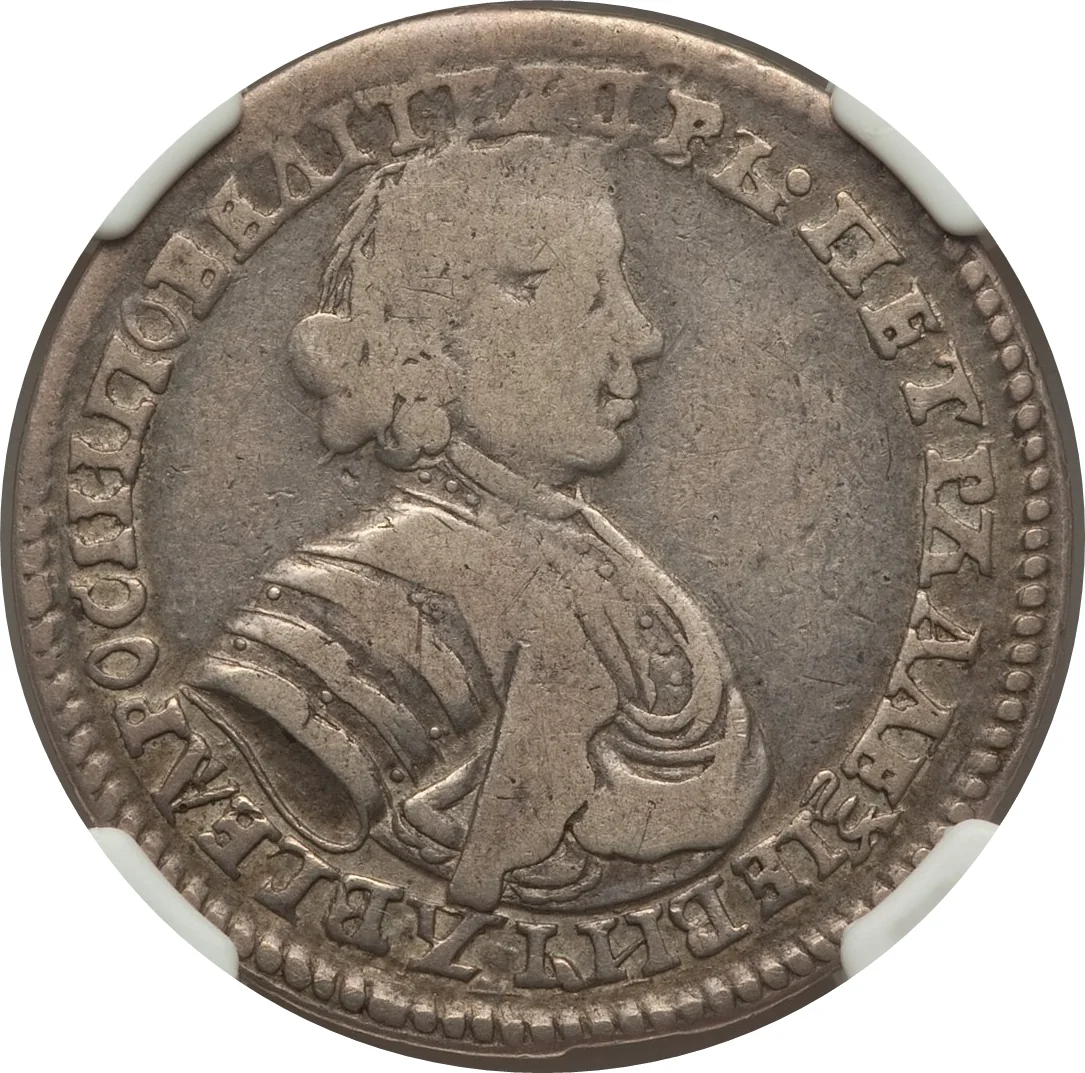
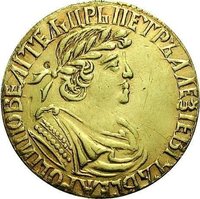
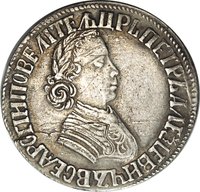
Peter I bust facing right.
Inscription:
ЦРЬ ПЕТРЪ АЛЕѮIЕВИЧЪ ВСЕѦ РОСIИ ПОВЕЛIТЕЉ
Script: Cyrillic
Reverse
Description:
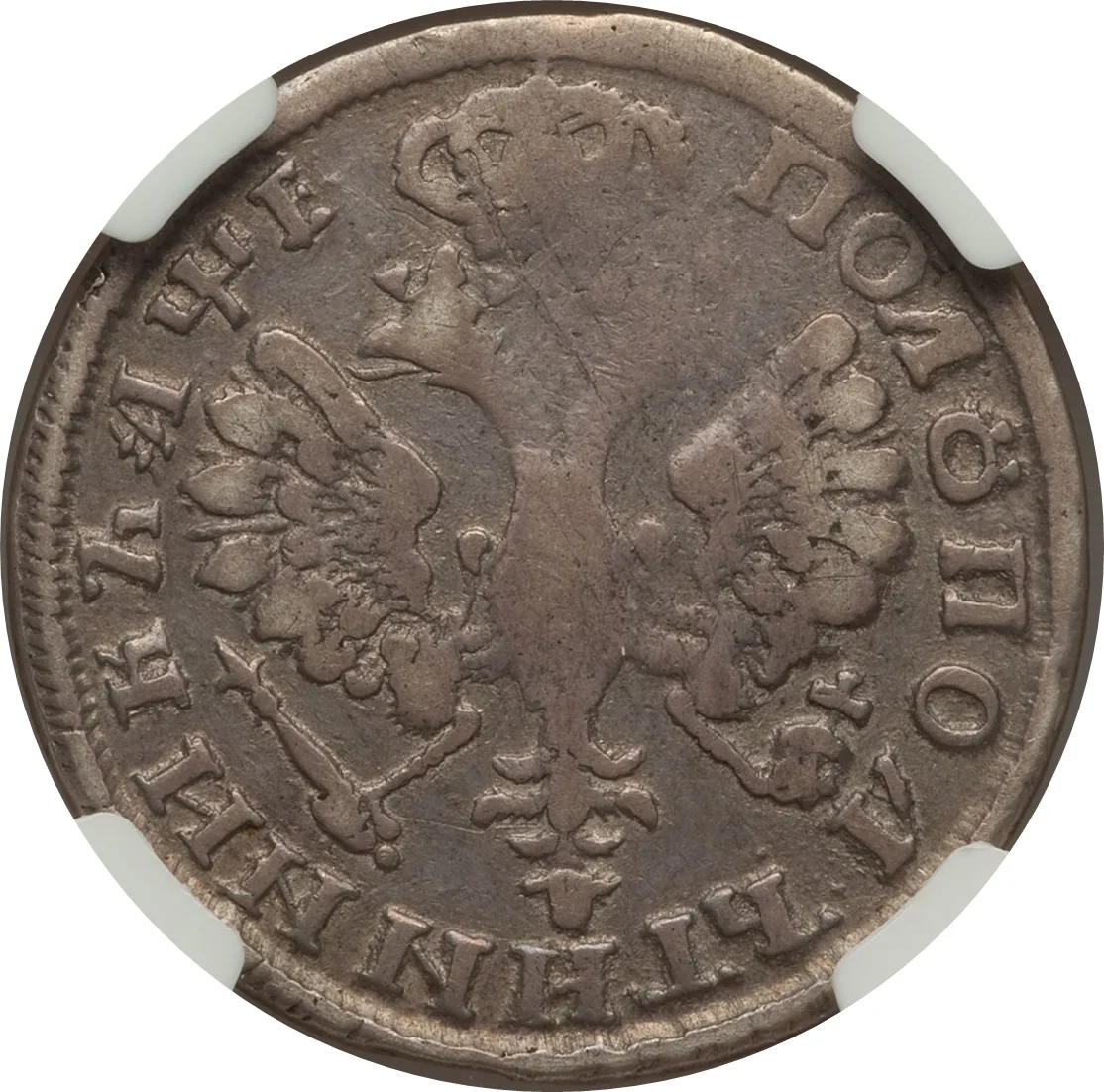
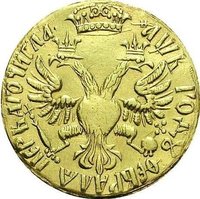
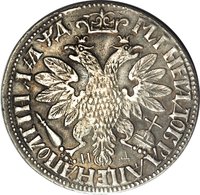
Crowned double-headed eagle with Cyrillic date.
Inscription:
ПОЛƔПОЛЪТИННИКЪ ҂АѰЕ
Script: Cyrillic
Edge
Plain
Categories
| Symbol> Double-headed eagle |
Mints
| Name | Mark |
|---|---|
| Kadashevsky Mint | — |
| Krasny Mint (Red Mint) | — |
Mintings
| Year | Mint Mark | Mintage | Quality | Collection |
|---|---|---|---|---|
| 1703 | — | — | ||
| 1704 | — | — | ||
| 1705 | — | — |
Historical background
In 1703, the currency system of the Russian Empire was in a state of profound strain and transition, largely due to the immense financial demands of the Great Northern War (1700–1721). Tsar Peter I (Peter the Great), engaged in a costly struggle with Sweden for access to the Baltic Sea, required vast sums to fund his modernized army and nascent navy. The traditional sources of revenue, including taxes and state monopolies, were insufficient, leading the government to resort to drastic monetary measures to finance the war effort.
The primary response was a severe debasement of the silver coinage. The state mint in Moscow drastically reduced the silver content in kopecks, the workhorse coin of the economy, by cutting them smaller and thinner. This created a stark disparity between the face value of the coins and their intrinsic metal worth, effectively a form of inflation. Alongside these "wire kopecks," the Treasury also heavily relied on issuing large quantities of copper coins, whose nominal value was artificially set much higher than the value of the copper itself. This flood of debased and copper currency, while filling the state's war chest in the short term, destabilized prices and eroded public trust in the money.
Consequently, the year 1703 fell within a period of monetary chaos characterized by a dual system of old, full-weight silver coins and new, lightweight ones circulating simultaneously, causing confusion and market friction. Peasants and soldiers, often paid in the new debased coins, found their purchasing power diminished, while merchants and foreign traders became wary. This inflationary crisis would eventually compel Peter to enact a major monetary reform in the 1710s, introducing standardized, machine-minted coinage. However, in 1703, the empire's currency was primarily a fiscal instrument for war, with its stability sacrificed for immediate military necessity.
The primary response was a severe debasement of the silver coinage. The state mint in Moscow drastically reduced the silver content in kopecks, the workhorse coin of the economy, by cutting them smaller and thinner. This created a stark disparity between the face value of the coins and their intrinsic metal worth, effectively a form of inflation. Alongside these "wire kopecks," the Treasury also heavily relied on issuing large quantities of copper coins, whose nominal value was artificially set much higher than the value of the copper itself. This flood of debased and copper currency, while filling the state's war chest in the short term, destabilized prices and eroded public trust in the money.
Consequently, the year 1703 fell within a period of monetary chaos characterized by a dual system of old, full-weight silver coins and new, lightweight ones circulating simultaneously, causing confusion and market friction. Peasants and soldiers, often paid in the new debased coins, found their purchasing power diminished, while merchants and foreign traders became wary. This inflationary crisis would eventually compel Peter to enact a major monetary reform in the 1710s, introducing standardized, machine-minted coinage. However, in 1703, the empire's currency was primarily a fiscal instrument for war, with its stability sacrificed for immediate military necessity.
✨ Legendary