

1 grivna – Russian Empire
Add to wishlist
Russia
Context
Material
References
KM: #
Numista: #91752
Value
Bullion value: $5.28
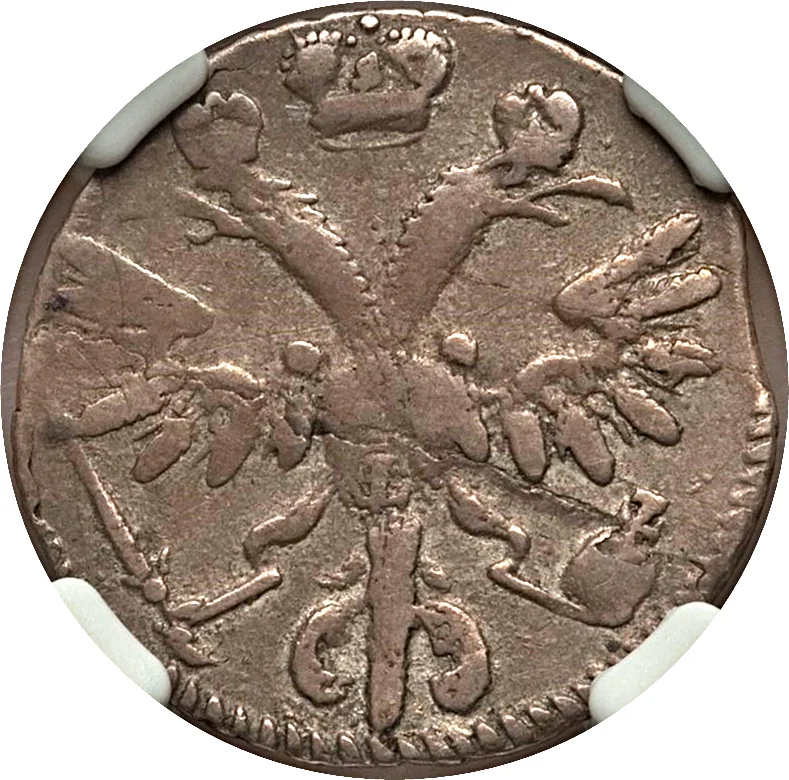
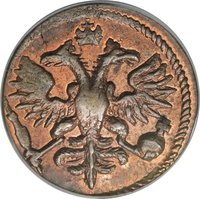
Obverse
Description:
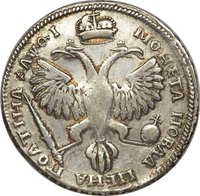
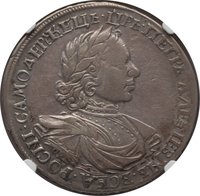
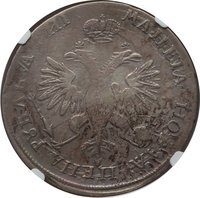
Crowned double-headed eagle.
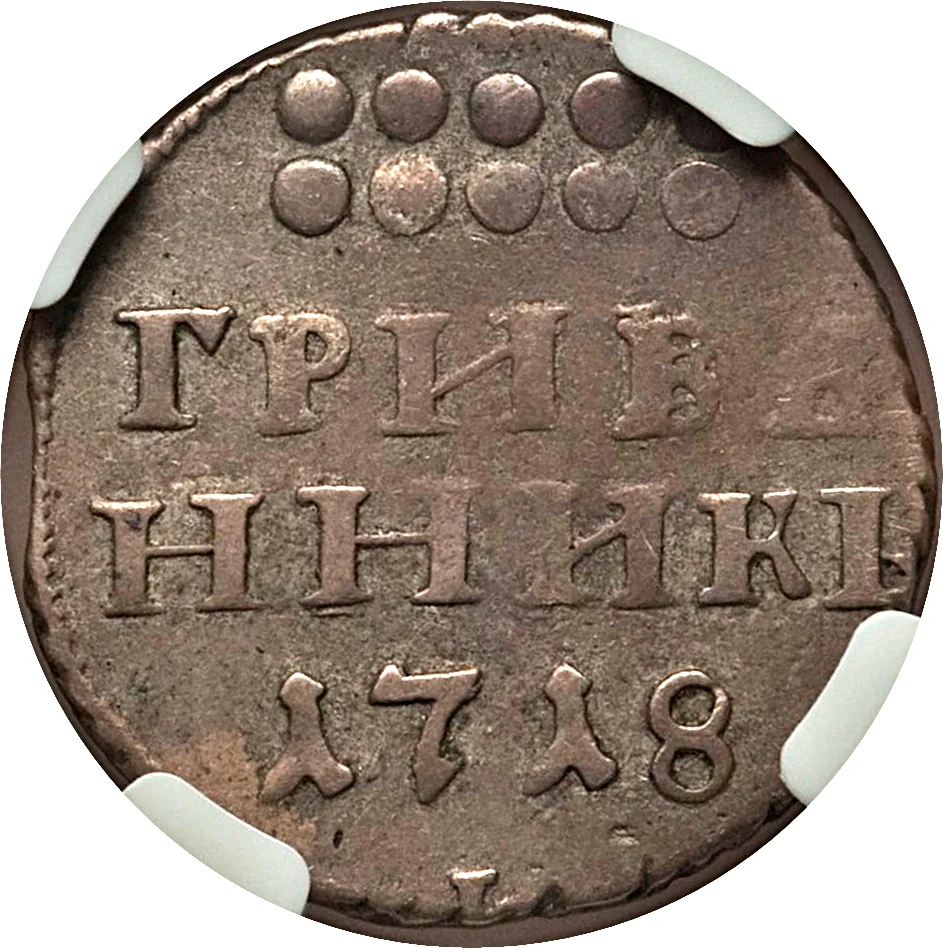
Reverse
Edge
Threadlike
Mintings
| Year | Mint Mark | Mintage | Quality | Collection |
|---|---|---|---|---|
| 1718 | — | — | ||
| 1718 | L | — | ||
| 1718 | Г | — | ||
| 1719 | — | — | ||
| 1720 | — | — |
Historical background
By 1718, the currency situation in the Russian Empire was defined by a severe and worsening crisis, largely a legacy of the Great Northern War (1700-1721). To finance his massive military ambitions, Peter the Great had resorted to a highly destructive policy of currency debasement. The state mint, under the direction of the "Profit-maker" Alexey Kurbatov, systematically reduced the silver content of the silver kopeck coins, while simultaneously increasing their face value. This practice, essentially a form of state-sanctioned counterfeiting, generated short-term revenue but triggered rampant inflation, a collapse in public trust, and a flight from the debased coinage.
The consequences were dire for the domestic economy. The old, full-weight pre-Petrine silver coins (yeфимки) were hoarded or melted down, while the new, lightweight coins flooded the market, causing prices to soar. This "copper revolt" of the financial system placed an enormous burden on the tax-paying population, particularly the peasantry, as state taxes were demanded in the old, sound currency while their own transactions were conducted in the depreciated new coins. The monetary system was fragmented and chaotic, undermining both commerce and state finances at a critical juncture in the war.
Recognizing the unsustainable nature of this policy, Peter I and his advisors were actively seeking a fundamental reform by 1718. This year marked a pivotal transition from chaotic debasement to systematic planning for a new monetary system. Drawing on European models, plans were being developed to introduce a decimal-based coinage with standardized gold, silver, and copper denominations, minted by machine rather than by hand. Thus, 1718 stands not as a year of stability, but as the crisis point that forced the groundwork for the comprehensive currency reform that would be implemented between 1718 and 1723, creating the modern Russian ruble.
The consequences were dire for the domestic economy. The old, full-weight pre-Petrine silver coins (yeфимки) were hoarded or melted down, while the new, lightweight coins flooded the market, causing prices to soar. This "copper revolt" of the financial system placed an enormous burden on the tax-paying population, particularly the peasantry, as state taxes were demanded in the old, sound currency while their own transactions were conducted in the depreciated new coins. The monetary system was fragmented and chaotic, undermining both commerce and state finances at a critical juncture in the war.
Recognizing the unsustainable nature of this policy, Peter I and his advisors were actively seeking a fundamental reform by 1718. This year marked a pivotal transition from chaotic debasement to systematic planning for a new monetary system. Drawing on European models, plans were being developed to introduce a decimal-based coinage with standardized gold, silver, and copper denominations, minted by machine rather than by hand. Thus, 1718 stands not as a year of stability, but as the crisis point that forced the groundwork for the comprehensive currency reform that would be implemented between 1718 and 1723, creating the modern Russian ruble.
✨ Legendary