

1 Rupee – Mughal Empire
India
Context
Years: 1686–1707
Country: India 
Issuer: Mughal Empire
Ruler: Aurangzeb
Currency:
(1540—1842)
Demonetized: Yes
Material
References
KM: #Click to copy to clipboard300.5
Numista: #91662
Value
Bullion value: $33.65
Obverse
Description:
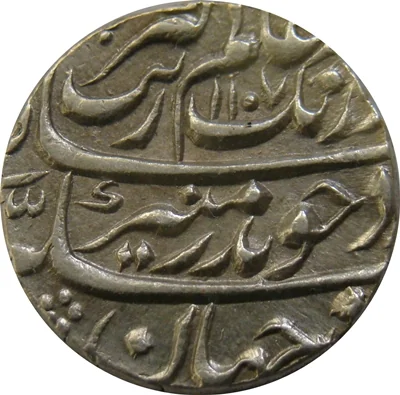
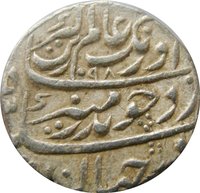
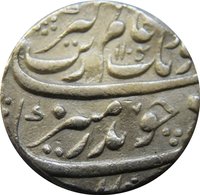
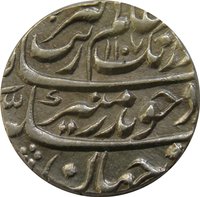
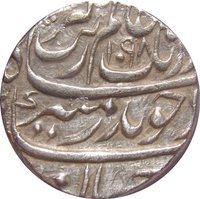
Badr Munir couplet, AH date.
Reverse
Description:
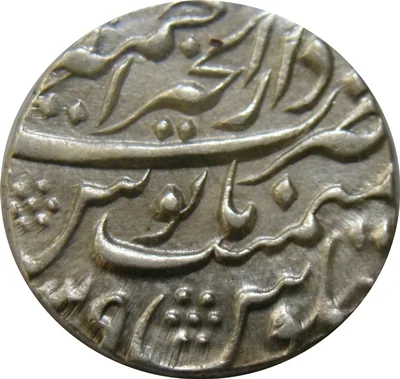
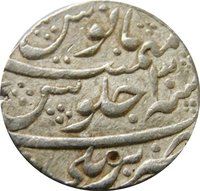
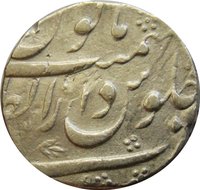
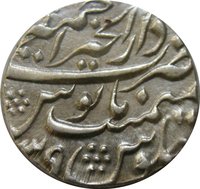
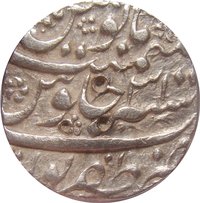
Dar-ul-Khair Mint
Edge
Mintings
| Year | Mint Mark | Mintage | Quality | Collection |
|---|---|---|---|---|
| 1686 | — | — | ||
| 1687 | — | — | ||
| 1689 | — | — | ||
| 1690 | — | — | ||
| 1692 | — | — | ||
| 1693 | — | — | ||
| 1694 | — | — | ||
| 1695 | — | — | ||
| 1696 | — | — | ||
| 1697 | — | — | ||
| 1698 | — | — | ||
| 1699 | — | — | ||
| 1700 | — | — | ||
| 1701 | — | — | ||
| 1702 | — | — | ||
| 1703 | — | — | ||
| 1704 | — | — | ||
| 1705 | — | — | ||
| 1706 | — | — | ||
| 1707 | — | — |
Historical background
In 1686, the Mughal Empire's currency system was a sophisticated and highly regulated bimetallic standard, centered on the silver rupee and the gold mohur. The reign of Emperor Aurangzeb Alamgir (1658-1707) was marked by immense territorial expansion and military campaigns, most notably the ongoing Deccan Wars against the Maratha Confederacy and the Sultanates of Bijapur and Golconda. This relentless warfare placed extraordinary fiscal strain on the imperial treasury, directly impacting the currency. To finance his armies, Aurangzeb increasingly relied on the steady flow of New World silver entering the empire via European trade, which was minted into rupees at imperial mints (mints). However, the costs of war began to outpace revenue, leading to treasury depletion and increased pressure on the monetary system.
The currency itself was remarkably pure and uniform, a legacy of reforms under Emperor Akbar. The standard silver rupee, often called the sicca rupee, was minted with great consistency in weight (approximately 11.5 grams) and fineness across a network of mints. The system's integrity was maintained by strict imperial oversight, with mint masters being held to high accountability. Yet, the fiscal demands of 1686 created vulnerabilities. While outright debasement (reducing precious metal content) was rare under the Mughals, there were instances of increased seigniorage (the mint's share) and the potential for older, slightly worn coins to circulate at a discount compared to newly minted sicca coins, causing minor complexities in trade and revenue collection.
Furthermore, the siege and annexation of the wealthy Sultanate of Golconda in 1687, immediately following the year in question, would have significant monetary repercussions. The capture of Golconda's legendary gold mines and Hyderabad mint would soon provide a crucial influx of bullion, temporarily alleviating fiscal pressure. Thus, the currency situation in 1686 represents a point of acute strain within an otherwise robust system, caught between the empire's vast economic strength and the immense, draining costs of Aurangzeb's military ambitions, on the cusp of a major but temporary replenishment of its precious metal reserves.
The currency itself was remarkably pure and uniform, a legacy of reforms under Emperor Akbar. The standard silver rupee, often called the sicca rupee, was minted with great consistency in weight (approximately 11.5 grams) and fineness across a network of mints. The system's integrity was maintained by strict imperial oversight, with mint masters being held to high accountability. Yet, the fiscal demands of 1686 created vulnerabilities. While outright debasement (reducing precious metal content) was rare under the Mughals, there were instances of increased seigniorage (the mint's share) and the potential for older, slightly worn coins to circulate at a discount compared to newly minted sicca coins, causing minor complexities in trade and revenue collection.
Furthermore, the siege and annexation of the wealthy Sultanate of Golconda in 1687, immediately following the year in question, would have significant monetary repercussions. The capture of Golconda's legendary gold mines and Hyderabad mint would soon provide a crucial influx of bullion, temporarily alleviating fiscal pressure. Thus, the currency situation in 1686 represents a point of acute strain within an otherwise robust system, caught between the empire's vast economic strength and the immense, draining costs of Aurangzeb's military ambitions, on the cusp of a major but temporary replenishment of its precious metal reserves.
💎 Extremely Rare