Logo Title
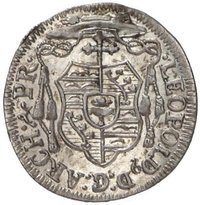
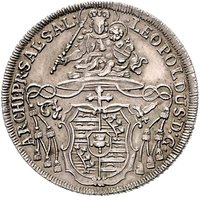
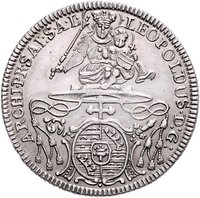
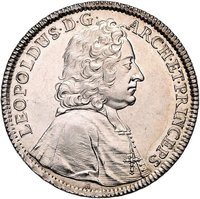
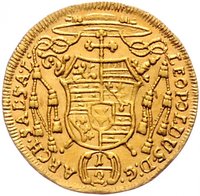
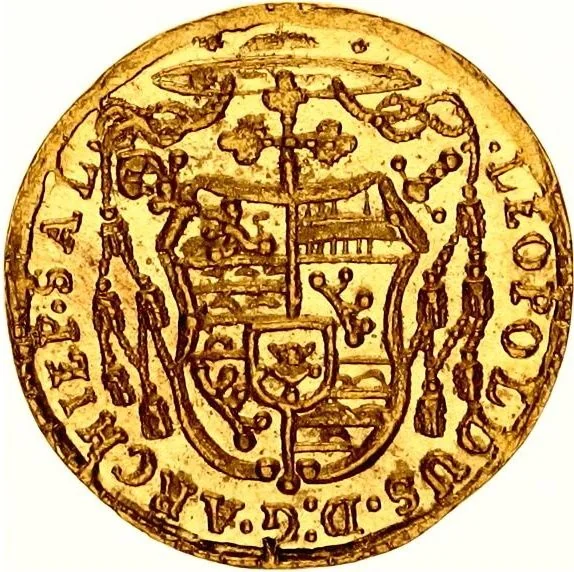
obverse
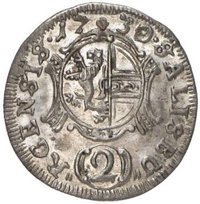
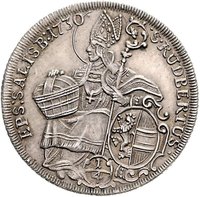
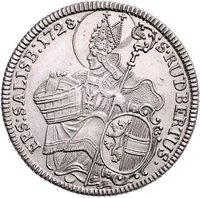
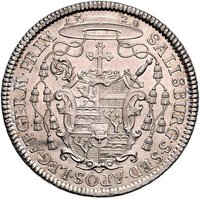
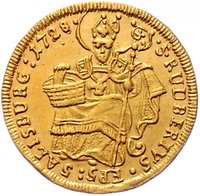
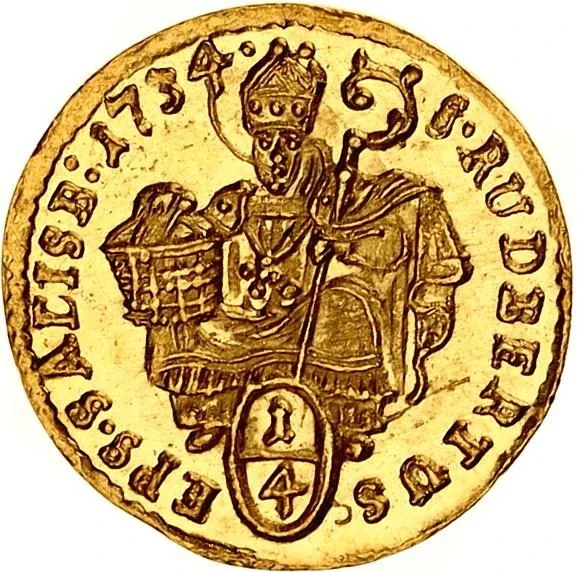
reverse
Katz Coins Notes & Supplies Corp.
Context
Years: 1728–1740
Country: Austria Country flag
Currency:
Demonetized: Yes
Material
Diameter: 14 mm
Weight: 0.88 g
Gold weight: 0.87 g
Shape: Round
Composition: 98.6% Gold
Magnetic: No
References
KM: #Click to copy to clipboard330
Numista: #91156
Value
Bullion value: $145.03

Obverse

Description:
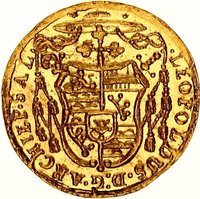
Archbishop's hat above a baroque-shielded coat of arms.
Inscription:
LEOPOLDUS D G ARCHIEP SAL
Script: Latin

Reverse

Description:
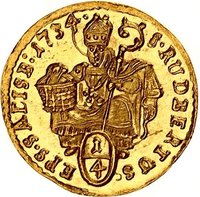
St. Rupert facing left, holding crozier and salt barrel, with halo. Denomination in cartouche below.
Inscription:
S RUDBERTUS (1/4) EPS SALISB 1734
Script: Latin

Edge

Mintings

YearMint MarkMintageQualityCollection
1728
1734
1740

Historical background

In 1728, the currency situation in the Prince-Archbishopric of Salzburg was characterized by complexity and instability, typical of the Holy Roman Empire's fragmented monetary systems. The territory did not mint its own gold or large silver coins but issued smaller silver denominations, primarily Kreuzers and Batzen, alongside its distinctive Salzburger Pfennig. However, these local coins circulated amidst a flood of foreign currency, including Reichsthalers from various German states, Dutch ducats, and Italian scudi, brought in through trade and the travels of the nobility. The relative value of these coins was in constant flux, based on their fluctuating silver and gold content, leading to confusion and frequent disputes in commerce.

This monetary chaos was exacerbated by deliberate debasement. Facing persistent financial pressures from lavish court expenditures, architectural projects like the ongoing Baroque transformations of the city, and military costs, the ruling Prince-Archbishop Leopold Anton von Firmian (reigned 1727-1744) resorted to reducing the precious metal content in newly minted subsidiary coins. This practice, while providing short-term fiscal relief, triggered inflation, eroded public trust, and harmed local economies as older, purer coins were hoarded or melted down (Gresham's Law). The year 1728 fell within a period of such manipulations, causing tangible hardship for ordinary citizens and merchants.

Consequently, daily transactions required expert knowledge. Money changers (Wechsler) held significant power, and published exchange rate lists were essential for commerce. The situation was a source of grievance for Salzburg's subjects, contributing to underlying social tensions. These monetary woes formed part of the broader financial backdrop to one of the archbishopric's most defining events later in Firmian's reign: the expulsion of the Protestant Salzburgers in 1731-32, a drastic measure also driven in part by fiscal and political calculus.
Legendary