

1 Rupee – Mughal Empire
India
Context
Years: 1708–1711
Country: India 
Issuer: Mughal Empire
Ruler: Bahadur Shah
Currency:
(1540—1842)
Demonetized: Yes
Material
References
KM: #Click to copy to clipboard347.18
Numista: #91078
Value
Bullion value: $33.21
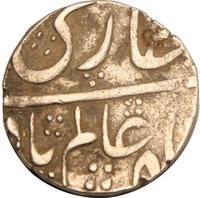
Obverse
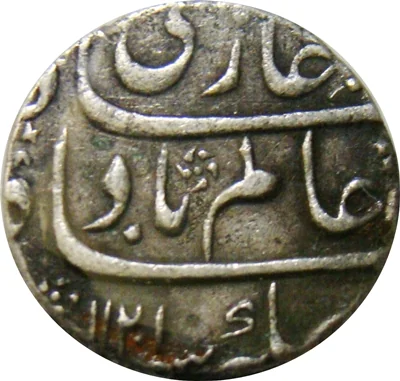
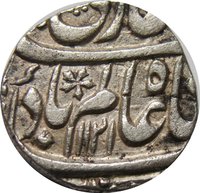
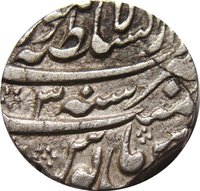
Description:
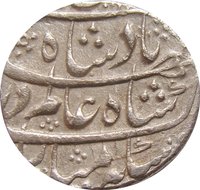
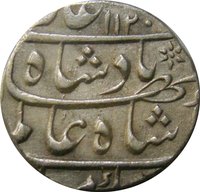
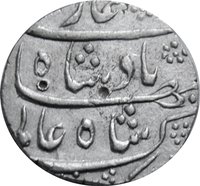
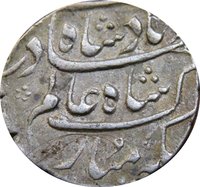
Inscribed, dated AH.
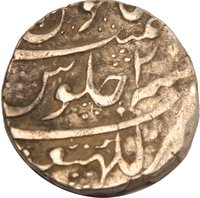
Reverse
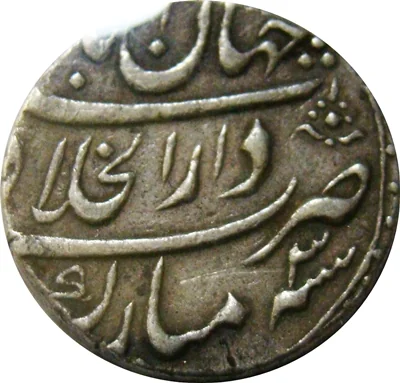
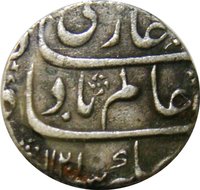
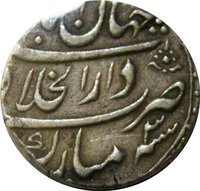
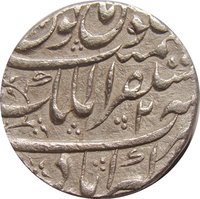
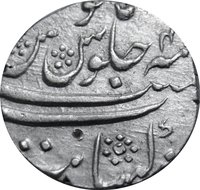
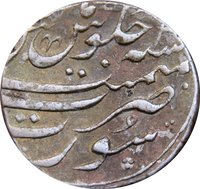
Description:
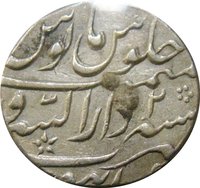
Dar-ul-Khilafat Mint
Edge
Mintings
| Year | Mint Mark | Mintage | Quality | Collection |
|---|---|---|---|---|
| 1708 | — | — | ||
| 1708 | — | — | ||
| 1709 | — | — | ||
| 1710 | — | — | ||
| 1711 | — | — |
Historical background
By 1708, the Mughal Empire's currency system, while still outwardly robust, was showing the first significant signs of strain that would later contribute to imperial decline. The foundation was the standardized trimetallic system established by Emperor Akbar: the gold mohur, the silver rupee (the primary unit for revenue and trade), and the copper dam. The rupee, particularly, maintained a high degree of purity and uniformity across mints (dar-ul zarb), facilitating a vast and integrated economy. However, the long and costly wars of Emperor Aurangzeb’s reign (1658-1707), especially the protracted Deccan campaigns, had severely drained the imperial treasury, leading to a reliance on debasement and the melting of older, purer coins to fund military expenses.
The immediate aftermath of Aurangzeb's death in 1707 created a political crisis that directly impacted the currency. The War of Succession (1707-1708) between his sons, which culminated in Bahadur Shah I's victory in 1708, caused regional disruption. While imperial mints continued to function, the political uncertainty encouraged provincial governors and local powers to assert greater control over their own mints. This began a subtle shift away from strict central uniformity, as regional issues started to vary slightly in weight and design, though not yet in intrinsic value. The outflow of silver to finance wars and a growing trade deficit with Europe also placed pressure on the silver rupee, the backbone of the system.
Consequently, the currency situation in 1708 stood at a critical juncture. The system itself was not yet in collapse; the rupee remained a trusted and dominant currency across South Asia. However, the fiscal exhaustion from previous decades and the new political instability had introduced vulnerabilities. The stage was set for the gradual fragmentation of monetary authority in the 18th century, where successor states like Hyderabad, Bengal, and the Marathas would eventually issue their own distinct currencies, eroding the Mughal monetary hegemony that had been a pillar of imperial unity and economic control.
The immediate aftermath of Aurangzeb's death in 1707 created a political crisis that directly impacted the currency. The War of Succession (1707-1708) between his sons, which culminated in Bahadur Shah I's victory in 1708, caused regional disruption. While imperial mints continued to function, the political uncertainty encouraged provincial governors and local powers to assert greater control over their own mints. This began a subtle shift away from strict central uniformity, as regional issues started to vary slightly in weight and design, though not yet in intrinsic value. The outflow of silver to finance wars and a growing trade deficit with Europe also placed pressure on the silver rupee, the backbone of the system.
Consequently, the currency situation in 1708 stood at a critical juncture. The system itself was not yet in collapse; the rupee remained a trusted and dominant currency across South Asia. However, the fiscal exhaustion from previous decades and the new political instability had introduced vulnerabilities. The stage was set for the gradual fragmentation of monetary authority in the 18th century, where successor states like Hyderabad, Bengal, and the Marathas would eventually issue their own distinct currencies, eroding the Mughal monetary hegemony that had been a pillar of imperial unity and economic control.
💎 Extremely Rare