

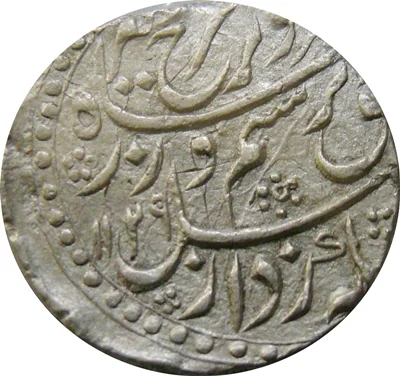
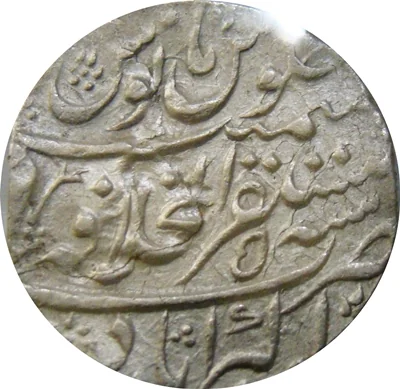
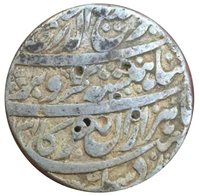
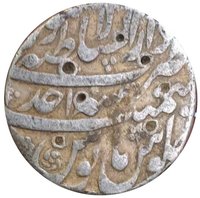
1 Rupee – Mughal Empire
India
Context
Years: 1717–1718
Country: India 
Issuer: Mughal Empire
Ruler: Farrukhsiyar
Currency:
(1540—1842)
Demonetized: Yes
Material
References
KM: #Click to copy to clipboard377.6
Numista: #90729
Value
Bullion value: $33.15
Obverse
Description:
Badr-e-Barr couplet, AH date.
Reverse
Description:
Mustaqir-ul-Khilafat mint.
Edge
Mintings
| Year | Mint Mark | Mintage | Quality | Collection |
|---|---|---|---|---|
| — | — | — | ||
| 1717 | — | — | ||
| 1718 | — | — |
Historical background
By 1717, the Mughal Empire's currency system, once a pillar of its administrative and economic strength, was showing significant signs of strain under Emperor Farrukhsiyar. The empire officially maintained a bimetallic system based on the silver rupee and the copper dam, with gold mohurs used for high-value transactions. The rupee, particularly the high-purity sicca rupee freshly minted in imperial mints, remained the standard for revenue assessment and large-scale trade. However, the central authority's control over currency was weakening. Provincial subadars and local potentates were increasingly operating their own mints, issuing coins of varying weight and purity, which led to complexity and erosion of uniform standards across the subcontinent.
This period was marked by a critical shortage of silver, the lifeblood of the currency. Decades of continuous warfare—including the draining Deccan campaigns against the Marathas—had depleted the imperial treasury. Furthermore, a negative balance of trade, where more silver was flowing out to pay for imports (like horses and luxury goods) than was coming in from exports, exacerbated the scarcity. The resulting currency crunch caused widespread economic distress, making it difficult for the state to pay its armies and bureaucracy reliably, which in turn fueled further political instability and regional defiance.
The year 1717 itself is historically notable for the farman (imperial decree) granted to the English East India Company, which carried profound monetary implications. Farrukhsiyar, in a bid for political support, granted the Company the right to trade duty-free in Bengal in return for a fixed annual payment. More crucially, the decree allowed the Company to mint its own coins in the Mughal territories using the Emperor's name and imprint. This concession not only provided the British with a formidable economic advantage but also symbolized the erosion of a core sovereign privilege—the exclusive control of currency—to a foreign trading entity, setting a dangerous precedent for the empire's economic sovereignty in the decades to come.
This period was marked by a critical shortage of silver, the lifeblood of the currency. Decades of continuous warfare—including the draining Deccan campaigns against the Marathas—had depleted the imperial treasury. Furthermore, a negative balance of trade, where more silver was flowing out to pay for imports (like horses and luxury goods) than was coming in from exports, exacerbated the scarcity. The resulting currency crunch caused widespread economic distress, making it difficult for the state to pay its armies and bureaucracy reliably, which in turn fueled further political instability and regional defiance.
The year 1717 itself is historically notable for the farman (imperial decree) granted to the English East India Company, which carried profound monetary implications. Farrukhsiyar, in a bid for political support, granted the Company the right to trade duty-free in Bengal in return for a fixed annual payment. More crucially, the decree allowed the Company to mint its own coins in the Mughal territories using the Emperor's name and imprint. This concession not only provided the British with a formidable economic advantage but also symbolized the erosion of a core sovereign privilege—the exclusive control of currency—to a foreign trading entity, setting a dangerous precedent for the empire's economic sovereignty in the decades to come.
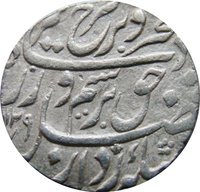
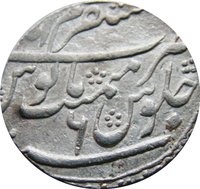
💎 Extremely Rare