

1 larin – Maldives
Add to wishlist
Maldives
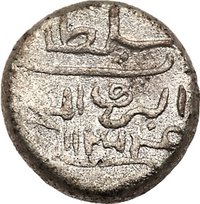
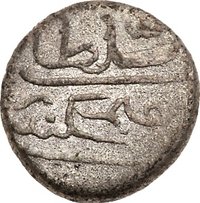
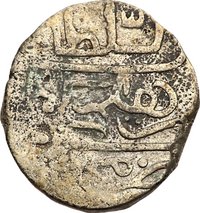
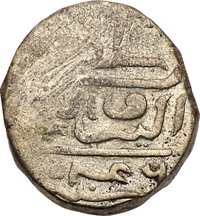
Obverse
Description:
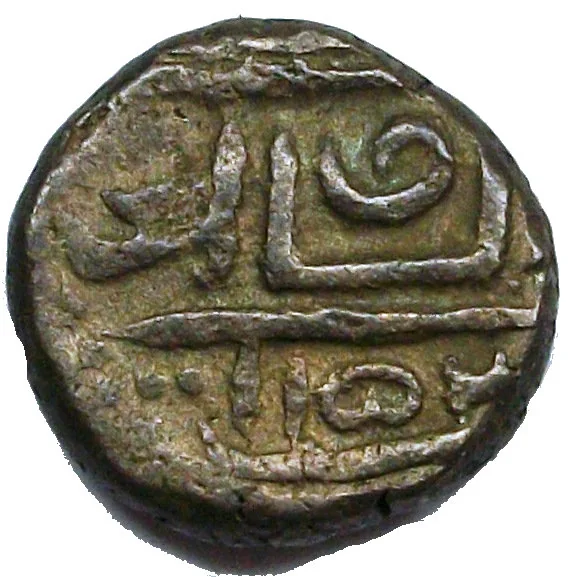
Sultan's title
Inscription:
السلطان
ابرهيم سكندر
ابرهيم سكندر
Reverse
Description:
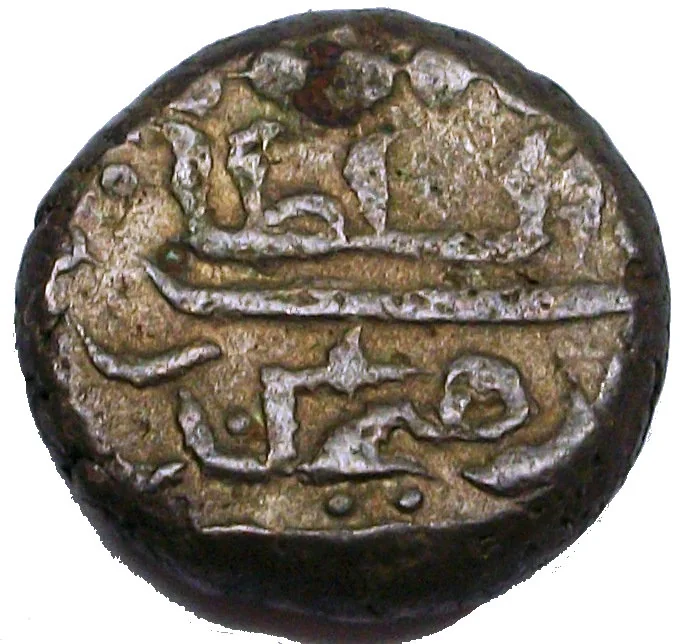
Sultan, [date]
Inscription:
سلطان
البر والبحر
١١٥٣
البر والبحر
١١٥٣
Edge
Mintings
| Year | Mint Mark | Mintage | Quality | Collection |
|---|---|---|---|---|
| 1722 | — | — | ||
| 1741 | — | — | ||
| 1741 | — | — |
Historical background
In 1722, the Maldives operated outside the formal global monetary systems of the European powers. The archipelago's economy was primarily subsistence-based and locally oriented, with cowrie shells (Cypraea moneta) serving as the most widespread and traditional form of currency. These shells, gathered from the Indian Ocean, were used for everyday small-scale transactions and were deeply embedded in the social and economic fabric of Maldivian society. Their value was stable within the local and regional context, facilitating trade across the islands and with nearby communities in South Asia.
However, the monetary landscape was not monolithic. External trade, particularly with merchants from the Indian subcontinent and the Arab world, introduced alternative currencies. The most significant of these was the Larín, a silver wire currency often bent into a hook or bracelet shape, which originated in Persia and circulated widely in the Indian Ocean. Spanish silver dollars (pieces of eight) and various Indian and Arabian gold and silver coins also entered the economy through commerce in valuable exports like dried tuna (Maldive fish), cowrie shells themselves, and coir rope. This created a dual system: cowries for local life and foreign silver for higher-value and international trade.
Politically, the Maldives in 1722 was a Sultanate under the influence of the Dutch East India Company (VOC), which had established a loose protectorate over the islands in the mid-17th century to secure its monopoly on the cowrie shell trade. The VOC exported vast quantities of Maldivian cowries to West Africa, where they were used as currency in the slave trade. This external demand did not displace the internal use of cowries but did link the Maldives' monetary substance to a brutal global economic system. Therefore, the currency situation reflected a confluence of ancient tradition, regional commerce, and the emerging forces of European colonial mercantilism.
However, the monetary landscape was not monolithic. External trade, particularly with merchants from the Indian subcontinent and the Arab world, introduced alternative currencies. The most significant of these was the Larín, a silver wire currency often bent into a hook or bracelet shape, which originated in Persia and circulated widely in the Indian Ocean. Spanish silver dollars (pieces of eight) and various Indian and Arabian gold and silver coins also entered the economy through commerce in valuable exports like dried tuna (Maldive fish), cowrie shells themselves, and coir rope. This created a dual system: cowries for local life and foreign silver for higher-value and international trade.
Politically, the Maldives in 1722 was a Sultanate under the influence of the Dutch East India Company (VOC), which had established a loose protectorate over the islands in the mid-17th century to secure its monopoly on the cowrie shell trade. The VOC exported vast quantities of Maldivian cowries to West Africa, where they were used as currency in the slave trade. This external demand did not displace the internal use of cowries but did link the Maldives' monetary substance to a brutal global economic system. Therefore, the currency situation reflected a confluence of ancient tradition, regional commerce, and the emerging forces of European colonial mercantilism.
💎 Extremely Rare