

1 Speciedaler – Denmark
Denmark
Context
Year: 1704
Issuer: Denmark 
Ruler: Frederick IV
Currency:
(1625—1813)
Demonetized: Yes
Total mintage: 309
Material
References
KM: #Click to copy to clipboard480
Numista: #90042
Value
Bullion value: $71.51
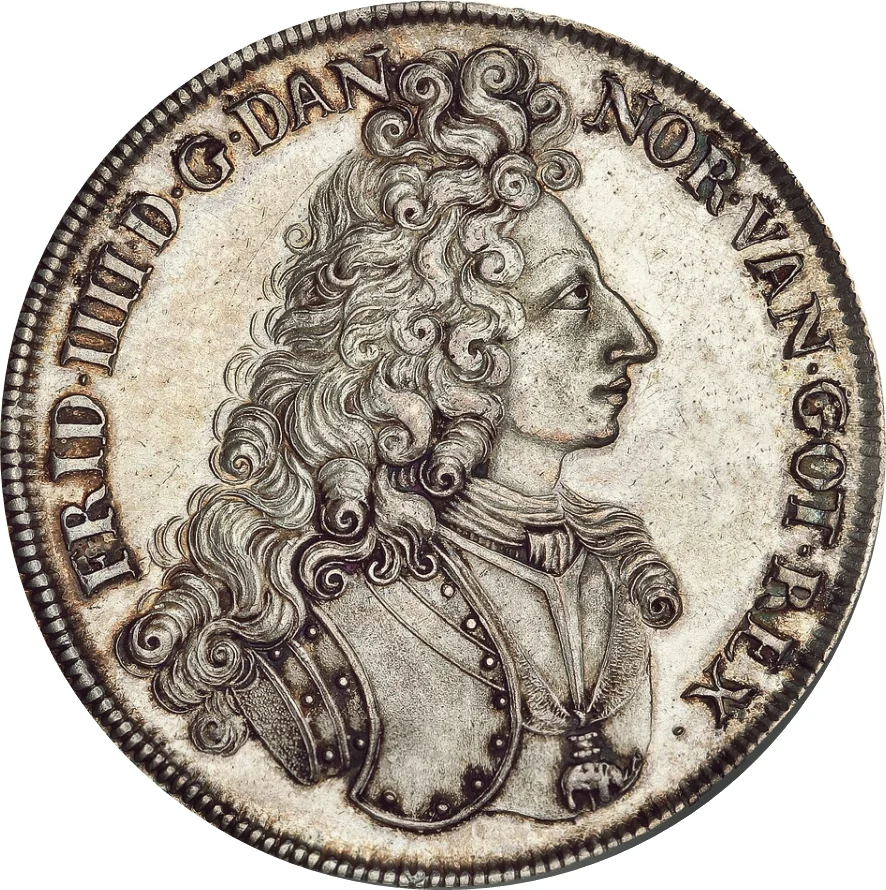
Obverse
Description:
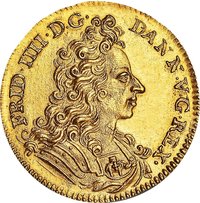
King Frederik IV in profile, with curled hair, ornate armor, a cravat, and the Order of the Elephant collar.
Inscription:
FRID • IIII • D • G • DAN • NOR • VAN • GOT • REX •
Script: Latin
Reverse
Description:
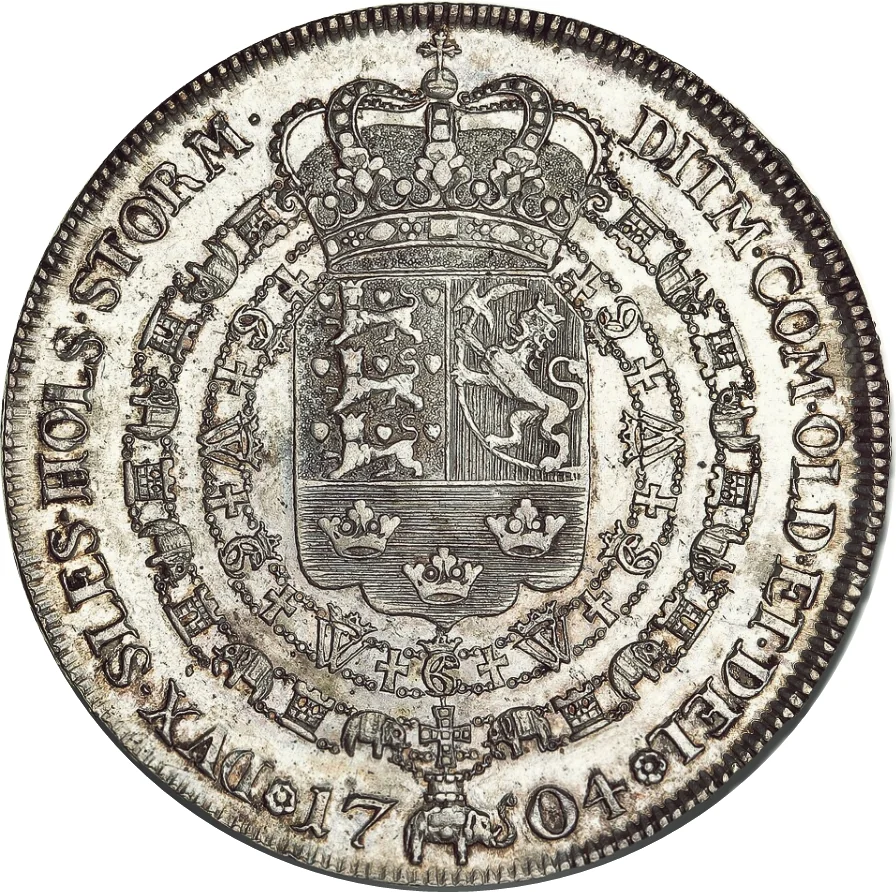
Danish, Swedish, and Norwegian crowned arms on a shield. Below, the Dannebrog collar (crosses and crowned "C5"/"W" monograms) and the Elephant collar (towers and elephants).
Inscription:
DVX · SLES · HOLS · STORM · DITM · COM · OLD · ET · DEL
🏵 17 04 🏵
🏵 17 04 🏵
Script: Latin
Edge
Plain or embossed lettering.
Legend:
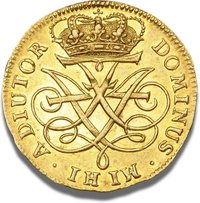
DOMINUS MIHI ADIUTOR ANNO REGNI QUINTO
Categories
| Person> Monarch |
| Symbols> Coat of Arms |
Mints
| Name | Mark |
|---|---|
| Royal Danish Mint | — |
Mintings
| Year | Mint Mark | Mintage | Quality | Collection |
|---|---|---|---|---|
| 1704 | — | 309 | ||
| 1704 | ♥ | — |
Historical background
In 1704, Denmark operated under a bimetallic monetary system, with both silver and copper serving as the foundation for its currency. The primary unit was the rigsdaler, a large silver coin, which was subdivided into marks and skilling. However, the state's chronic financial strain, exacerbated by the costly Great Northern War (1700-1721), created significant pressure. To fund the war effort, the government repeatedly resorted to debasement—reducing the silver content in coins while maintaining their face value. This practice, though fiscally expedient, eroded public trust and sparked inflation, as people hoarded older, purer coins.
A particularly disruptive feature was the widespread use of heavy copper money, notably the large klippe coins, which were physically cumbersome and of low intrinsic value relative to their size. Originally introduced in the previous century to utilize domestic copper resources, these coins became a symbol of a strained economy. Their practical inconvenience for large transactions and their tendency to drive out silver (following Gresham's Law) further complicated commerce and highlighted the disconnect between the official monetary system and economic reality.
Consequently, the currency situation in 1704 was one of instability and complexity. Merchants and the public had to navigate a confusing mix of old and new coins of varying metallic worth, alongside a growing mass of depreciating copper. This monetary confusion acted as a drag on the economy, creating uncertainty in trade and undermining the crown's financial credibility. The year falls within a protracted period of monetary experimentation and distress that would eventually lead to major reforms later in the 18th century.
A particularly disruptive feature was the widespread use of heavy copper money, notably the large klippe coins, which were physically cumbersome and of low intrinsic value relative to their size. Originally introduced in the previous century to utilize domestic copper resources, these coins became a symbol of a strained economy. Their practical inconvenience for large transactions and their tendency to drive out silver (following Gresham's Law) further complicated commerce and highlighted the disconnect between the official monetary system and economic reality.
Consequently, the currency situation in 1704 was one of instability and complexity. Merchants and the public had to navigate a confusing mix of old and new coins of varying metallic worth, alongside a growing mass of depreciating copper. This monetary confusion acted as a drag on the economy, creating uncertainty in trade and undermining the crown's financial credibility. The year falls within a protracted period of monetary experimentation and distress that would eventually lead to major reforms later in the 18th century.
✨ Legendary