

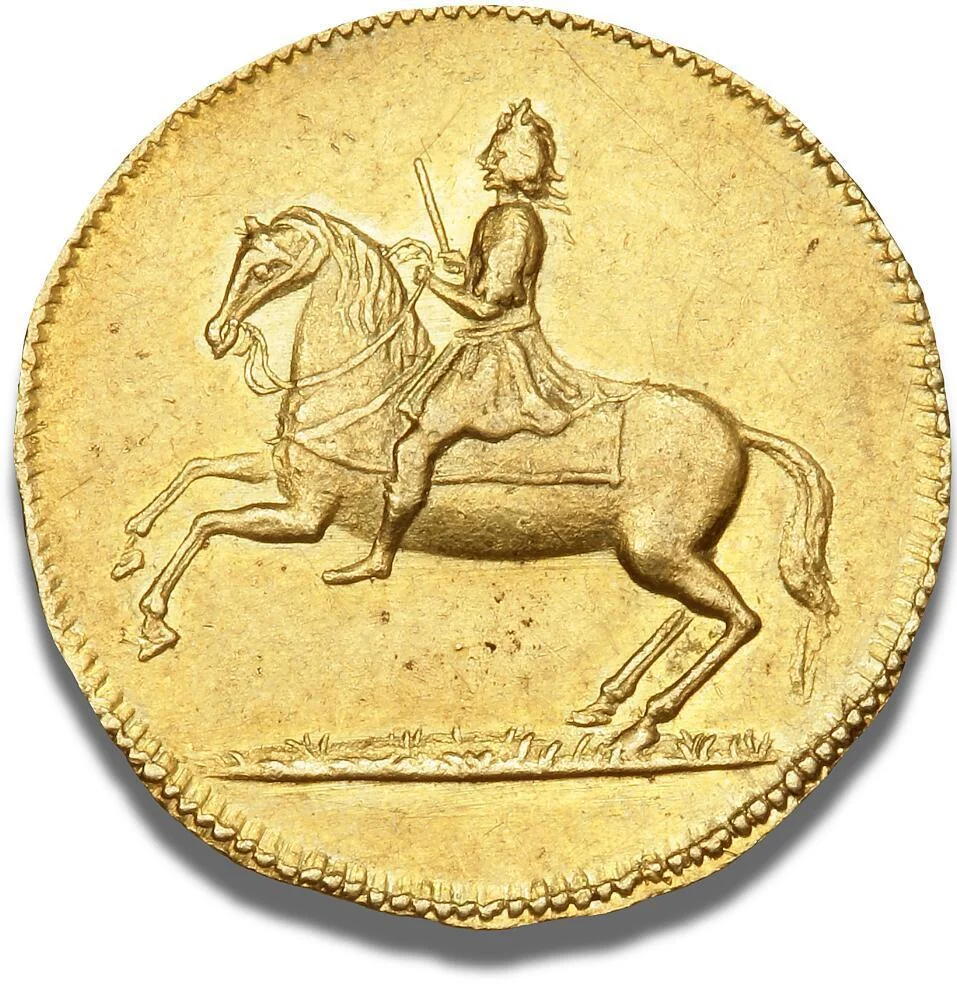
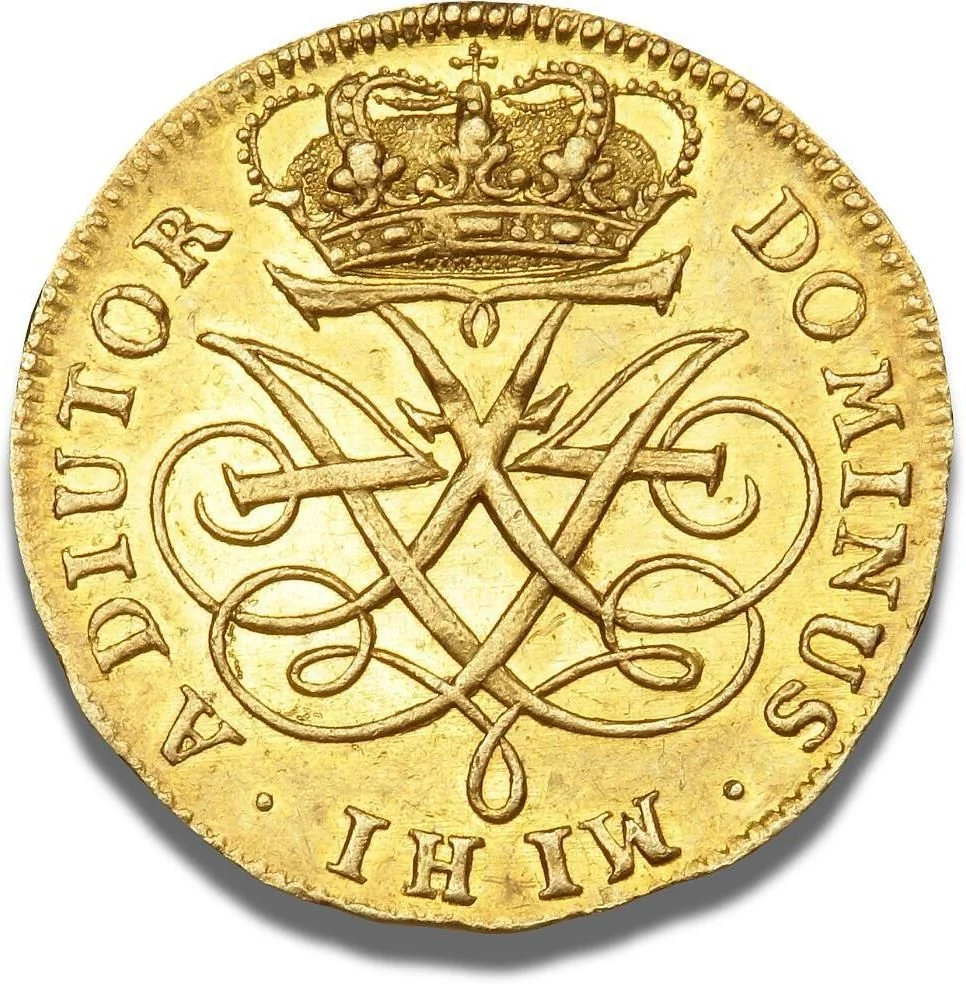
½ ducat – Denmark
Add to wishlist
Denmark
Context
References
KM: #
Numista: #328532
Value
Bullion value: $264.44
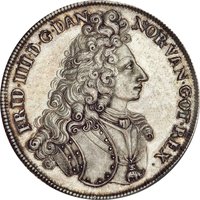
Obverse
Description:
Frederik IV on horseback
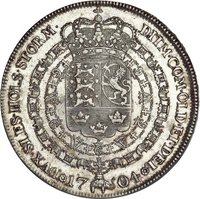
Reverse
Edge
Mintings
| Year | Mint Mark | Mintage | Quality | Collection |
|---|---|---|---|---|
| 1702 | — | — |
Historical background
In 1702, Denmark-Norway was navigating a complex and strained monetary landscape, a direct consequence of the Great Nordic War (1700-1721). King Frederick IV had inherited a realm financially exhausted by his predecessor's conflicts, and the ongoing war against Sweden demanded immense expenditure. The state's primary response was the continued debasement of the currency, particularly the silver skilling and mark denominations. By reducing the silver content in coins while maintaining their face value, the crown could mint more coins from the same silver reserves to fund the military, a short-term fix that eroded public trust and sparked inflation.
This period operated under a bimetallic system, but it was in disarray. The Danish rigsdaler was the central unit of account, defined as 6 marks or 96 skilling, but its value in actual coinage was unstable. A proliferation of older, better-quality coins circulated alongside the new, debased issues, leading to Gresham's Law in practice: "bad money drives out good." Citizens hoarded older, high-silver coins, further complicating daily commerce. The situation was exacerbated by a chronic shortage of small change, hindering market transactions for ordinary people.
Consequently, 1702 was a year of tangible economic anxiety. Prices for essential goods rose as the currency's real value fell, placing a heavy burden on the peasantry and fixed-income earners. While the debasement provided the treasury with crucial war funds, it undermined the integrity of the monetary system. This instability would ultimately compel the government to initiate major monetary reforms later in the decade, culminating in the introduction of a new, standardized coinage system in 1709.
This period operated under a bimetallic system, but it was in disarray. The Danish rigsdaler was the central unit of account, defined as 6 marks or 96 skilling, but its value in actual coinage was unstable. A proliferation of older, better-quality coins circulated alongside the new, debased issues, leading to Gresham's Law in practice: "bad money drives out good." Citizens hoarded older, high-silver coins, further complicating daily commerce. The situation was exacerbated by a chronic shortage of small change, hindering market transactions for ordinary people.
Consequently, 1702 was a year of tangible economic anxiety. Prices for essential goods rose as the currency's real value fell, placing a heavy burden on the peasantry and fixed-income earners. While the debasement provided the treasury with crucial war funds, it undermined the integrity of the monetary system. This instability would ultimately compel the government to initiate major monetary reforms later in the decade, culminating in the introduction of a new, standardized coinage system in 1709.
✨ Legendary